
THE 7 BEST MANUAL & LEVER ESPRESSO MACHINES IN 2024
The manual espresso machine can be one of the most challenging devices for brewing coffee.

On the flip side, being able to craft a perfect shot of espresso is extremely rewarding. Skipping the automatic machines for a manual one lets you take complete control over your espresso brewing process.
At A Glance:
- MY TOP PICK: Electra Microcasa Leva
- RUNNER UP: Flair 58
- EASIEST TO USE: Cafelat Robot
Manual and lever espresso machines allow you to enjoy the highest quality coffee at home. To find the one that suits you, I put the top brands through a battery of tests. Here are the seven that came out on top, plus a guide to choose the best one for you.
The 7 Best Manual Espresso Makers in 2026
| IMAGE | PRODUCTS | DETAILS | |
|---|---|---|---|
|
Electra Microcasa Leva |
|
|
|
Flair 58 |
|
|
| No products found. | ROK Manual Espresso Maker |
|
|
|
La Pavoni Europiccola |
|
|
|
La Pavoni Professional |
|
|
|
Cafelat Robot |
|
|
| No products found. | Flair Espresso Maker |
|



Here are the seven best espresso machines that consistently impressed me during testing, delivering exceptional espresso shots and an enjoyable user experience. Get ready to level up your coffee game!
1. Electra Microcasa Leva
Boiler: Yes
- Capacity: 61 oz
- Portafilter size: 49 mm
- Dimensions (HxWxD): 19.5” x 10.5” x 10.5”

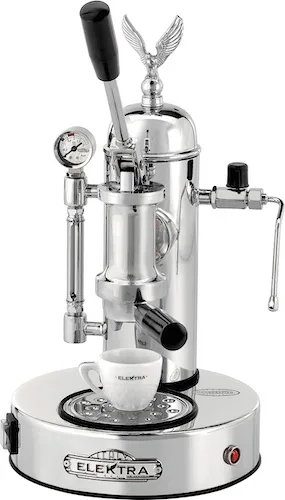
The Elektra S1 Microcasa looks like a living memory of a Milanese café in the Belle époque with its eagle-topped dome and elaborate mirror-finish platform. It’s available in two finishes, chrome or copper and brass, the latter of which is my favorite. But I didn’t award this machine Best Overall for its fancy styling.
The Elektra S1 Microcasa offered the best balance between shot quality and ease of use of any I tested. You can make incredible espresso with little effort.

The machine has an in-built heater, so you don’t need to fuss with kettles or temperature management. Thanks to the exceptionally large 1.8 L boiler, I prepared four consecutive lattes without running out of hot water or steam pressure.
I found the spring piston more forgiving than some other lever-operated machines, as it intuitively guides the extraction pressure. This makes consistent results straightforward, particularly when paired with the pressure gauge.
Note that many of this machine’s heating parts are fully exposed, in keeping with its retro style. Take your time adjusting to the workflow to avoid a nasty burn.
PROS
- Spring-loaded piston for smooth extraction
- Fantastic espresso quality
- Large capacity
- Steam wand included
CONS
- Expensive
- Not portable
2. Flair 58
Boiler: No
- Capacity: ~3.0 oz
- Portafilter size: 58 mmDimensi
- ons (HxWxD): 11.5” x 7.5” x 14”
The first Flair espresso maker launched on Kickstarter in 2016 to considerable acclaim. The brand has continued to innovate since, releasing increasingly advanced models in response to user feedback. The Flair 58 is the latest, representing a huge step forward.
The biggest change is the addition of a heating element. While you’ll still need a kettle to heat your brew water, pre-heating the brew head is unnecessary. My workflow, efficiency, and shot consistency improved significantly versus other Flair models I’ve tried.

The other major update is the commercial standard 58mm portafilter that lends it its name – and makes it unique on this list. The standard portafilter size means you can use third-party accessories like tampers and precision filter baskets. Even better, it allows for the larger doses of ground coffee common in cafes. In testing, I packed in up to 22 grams.
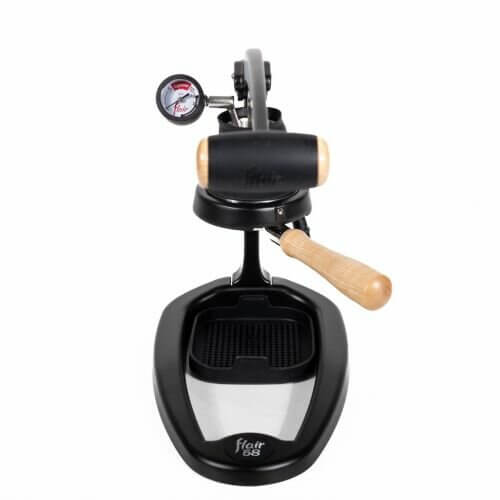
I love the design of the Flair 58, with sleek curves, a matte black finish, and gorgeous wooden accents. Plus, the new lever handle is much more comfortable. I was able to pull shots easily and modulate brew pressure reliably.
Note: If you’re only interested in the redesigned handle and 58mm portafilter, there is a version without the heating element, the Flair 58x, with a lower price tag.
Learn more in our review of the new Flair 58 here.
PROS
- Includes a heating element
- Commercial-standard 58-mm portafilter
- Beautiful design
- Reasonable price
CONS
- Still need a kettle to heat water
- Less portable than previous Flair models
3. Rok Espresso Maker
Boiler: No
- Capacity: ~3.4 oz
- Portafilter size: 50 mm
- Dimensions (HxWxD): 11.5” x 5.13” x 8.75”
ROK’s Presso Espresso Maker is more austere than the other models on this list. It’s a no-frills machine designed with functionality in mind. That’s just fine by me; the important thing is it makes great espresso.

The Presso has a sturdy build and a 10-year warranty. It requires no electricity and is straightforward to use. Just push down to build pressure. The trade-off for this simplicity is that it’s difficult to achieve consistency. You can get incredible espresso from the ROK, but in my experience, it’s a “practice makes perfect” situation.
The ROK Presso is relatively light, weighing less than 4 pounds, and comes with a tin for storage. I like it for car camping because it’s virtually indestructible, and the base keeps it firmly in place as you use it – even if you’re on a rough picnic table.
Read our ROK Espresso Maker review.
PROS
- Most affordable option
- Super durable
- Easy to clean and operate
- Portable
CONS
- Results can be inconsistent
- No pressure gauge
4. La Pavoni Professional
Boiler: Yes
- Capacity: 40 oz
- Portafilter size: 51 mm
- Dimensions (HxWxD): 14” x 16” x 10”

The Pavoni name is familiar to espresso connoisseurs around the world as the first brand to produce commercial espresso machines. Although the espresso landscape has changed, the company continues to make high-quality machines for those who want a taste of the old world.
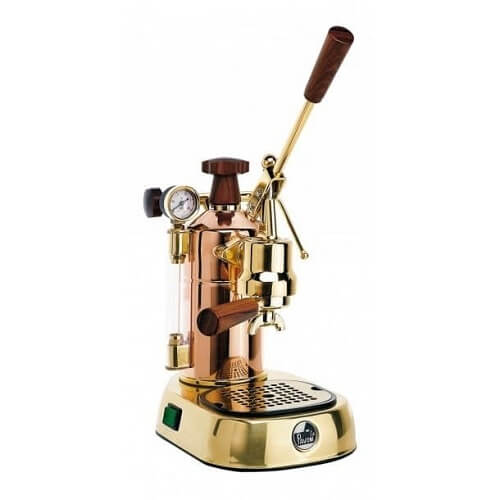
The La Pavoni Professional is an icon. Made from brass and copper, the machine features an elegantly streamlined design, a built-in steam wand, and a large 40-ounce boiler. In testing, I pulled ten shots back-to-back without a hitch.

Unlike the Elektra Microcasa, the Professional lever isn’t spring-loaded, so achieving consistent shots was a bit of work initially. But once I mastered it, the espresso was stunning – the sweet and rich brew that’ll make you a lever machine evangelist.
In my experience, you want to raise the lever and feel it latch into position. Wait a few seconds to see a little “free-run” coffee trickle out of the portafilter. Then, start the pull – a slow, steady pressure of around 25-30 seconds.
My main complaint with this Italian espresso maker is the relatively small capacity of the filter basket. I struggled to fit enough freshly ground coffee for my ideal double shot. It could also be more bottom-heavy. I’d suggest practicing holding down the base while lifting the lever.
Read our La Pavoni Professional Espresso Machine review.
PROS
- Cafe-level espresso quality
- Large capacity for back-to-back brewing
- Steam wand included
- Beautiful design and high-quality build
CONS
- Expensive
- Small filter basket
5. La Pavoni Europiccola
Boiler: Yes
- Capacity: 20 oz
- Portafilter size: 51 mm
- Dimensions (HxWxD): 13” x 7.5” x 10.25”
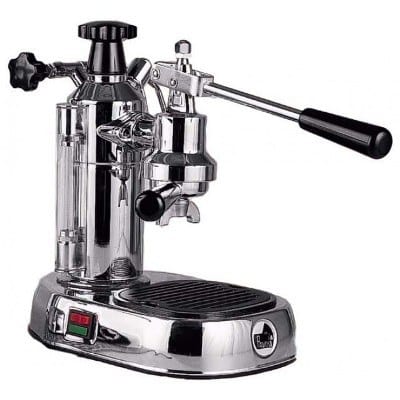
The Europiccola is the little cousin of the Professional. It features the same impeccable build quality and outstanding espresso but weighs under 15 pounds and has half the capacity.
In my opinion, it’s best suited for a single person or a couple. I made four espresso shots or two lattes in a row before waiting for the boiler to recover.

I like the middle-ground appeal of this machine. With a heating element and steam wand, It’s a clear step up from the cheapest machines. But its small size and reasonable price make it more approachable than the Elektra or Professional.
Like other La Pavoni lever espresso makers, it operates on a piston powered by the user. I’m a fan of this complete control over brewing, even if the initial learning curve is steep.
Read our La Pavoni Europiccola review.
PROS
- Excellent temperature stability
- Includes a steam wand
- Encourages home barista mastery
- Beautiful, iconic design
CONS
- Takes time to learn how to use
- Limited steam capacity
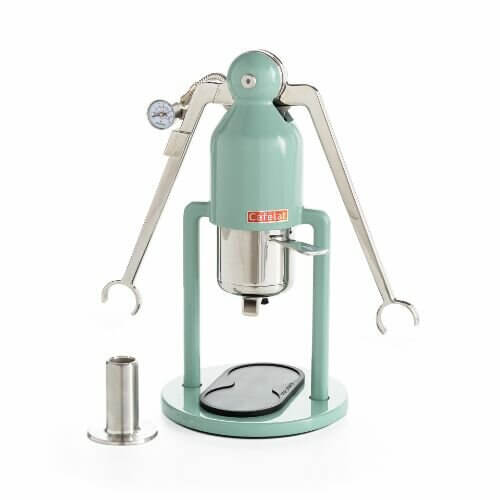
6. Cafelat Robot
Boiler: No
- Capacity: ~5 oz
- Portafilter size: 57.5 mm
- Dimensions (HxWxD): 12” x 10” x 6.5”
The Cafelat Robot is immediately identifiable by its quirky design, which feels straight out of a retro sci-fi movie. But don’t let its fun aesthetics distract you; this is a serious espresso maker. Form follows function, not the other way around.
The Cafelat Robot doesn’t have a boiler or heating element. So you don’t need electricity, but you do need to manage brew temperature.
That brings us to why I love the Robot. It has minimal thermal mass in the brewing chamber, so preheating is unnecessary.

It has the simple workflow of the Flair 58 without the expensive and cumbersome addition of a heating element. That said, I do find preheating helpful when extracting very light roasts.
There are two models of the Robot, either with or without a pressure gauge. I highly recommend paying for the gauge. You’ll have more success (and more fun) tracking brew pressure during extraction.
My only complaint is that the Robot hands are a little awkward to grasp when applying a lot of force. Cafelat actually sells robot “mittens” to make the grip more comfortable. But I’d rather they solve the problem than force me to buy an accessory.
Get all the details in our Cafelat Robot review.
PROS
- Simple and easy to use
- No need to preheat brew chamber
- Cute design
- Fantastic espresso
CONS
- Can be awkward to hold
- Takes practice to master
7. Flair Signature
Boiler: No
- Capacity: 2 oz
- Portafilter size: 40 mm
- Dimensions (HxWxD): 10.5” x 6.2” x 12.5”
Older versions of this article recommended the original Flair, now known as the Classic. But as the product line has expanded, I can’t help but update my pick to the new-and-improved Flair Signature. It’s a sleek, portable espresso maker that pulls shots to rival high-end electric machines.
See the Flair Classic in action here as Scott reviews it:
The Flair Signature is only a few dollars more than the Classic and offers some noteworthy upgrades. For me, the pressure gauge is the most important. I can pull high-quality shots reproducibly and explore pressure profiling.
The Signature comes with the custom Bottomless 2-in-1 Portafilter, which offers the flexibility to pull spouted or naked shots. A bottomless portafilter doesn’t just yield great Instagram content, it allows you to assess the quality of your puck preparation. I speak from experience when I say you’ll know if channeling is an issue.
Finally, the Flair Signature is – to my eyes, anyway – more aesthetically pleasing. It’s available in either silver, matte white, or matte black, all with a stunning copper-plated portafilter base. It’s my top pick for portability, but it’s an equally splendid showpiece on your home kitchen counter.
The only thing I don’t care for is the tiny 40-mm Flair filter basket, which is why I’m more partial to the Flair 58. The Flair Signature excels at single shots.
Read our Flair espresso maker review.
PROS
- Excellent espresso quality
- Beautiful design and quality build
- Includes carrying case for travel
- Patented 2-in-1 bottomless portafilter
CONS
- Small filter basket
- Need to pre-heat with boiling water for best results
Are manual and Lever espresso machines better?
Manual espresso makers offer more space for customization compared to other machines. You can tweak every detail of your brewing process according to your preferences, which can be very rewarding as it’s more of a challenge.
They offer a more artisanal, tactile brewing experience, allowing you to truly appreciate the skill of making good espresso. That’s missing when you just press a button and expect an espresso shot.
They often don’t require electricity, representing an energy-saving espresso option for use in remote areas. Yes, they’re zombie apocalypse-proof.
Some Considerations
Okay, your heart is set on a high-quality, manual pump espresso machine, but you don’t want to rush your choice. That’s smart. You wouldn’t want to waste $1000 (or more) on the wrong home espresso machine – not to mention wasting precious coffee beans (1).
It is easy to be seduced by a good-looking machine or high-tech features, but … before committing to a purchase, ask whether the machine really fits your needs.
Before digging deeper into all the benefits of manual machines, watch our video on espresso basics. Depending on your level of expertise, this video can be a great reminder or an amazing brewing guide:
How Difficult Is It To Use?
Fully manual machines have a reputation for being difficult to use. This is not wholly undeserved. But just as a Ferrari is more challenging to drive, it’s much more fun if you have the skills.
Although the working mechanism itself is very simple, lever machines require a deep knowledge of the brewing process to produce a good shot of espresso (2).
Grind, weight and time are key factors when brewing espresso, and most likely you’ll have to adjust one or more of these elements several times to get your shot dialed in.
This means the learning curve is much steeper versus automatic machines (3). But if it’s too easy, where’s the fun in that?
If you’re considering getting a lever espresso maker, you’re probably a person who likes tweaking and experimenting with their coffee. However, some lever machines are more difficult to use than others. This is worth considering, especially when buying one for the first time.
Factors like the design of the machine, whether it has a heating element, and the size and responsiveness of the lever all impact ease of use. Find a machine that suits your style of brewing.
You can also read our reviews of the best automatic espresso machines and our top-rated espresso machines.
Is It Portable? And Does That Even Matter?
The best portable espresso makers are small, lightweight, and packable. Opt for a model that is simple in design and doesn’t require lots of additional equipment. Choose one that doesn’t need electricity for rugged adventures off the grid.
Will It Last? Or Will You Need To Buy Another In 2 Years?
Depending on the material and the quality of engineering, many hand-lever machines can last a lifetime. To ensure you can enjoy your manual espresso machine for many years, pick one made with durable materials. Think chrome, brass, steel, and aluminum.
Before buying, research the procedures for getting the machine fixed if something goes wrong. Find out if local technicians are available or if it can be easily shipped to the distributor for repairs.
From a technical viewpoint, simple machines tend to have a longer life than those employing a complex working mechanism. Research these details before settling on one to ensure everything goes smoothly.
The Verdict
Every machine on this list is an excellent choice for someone who wants to truly appreciate the craft of making espresso. However, the Elektra Microcasa stands out to me as the best lever espresso machine on the market.
The Microcasa has superior features that justify its premium price. Its spring lever gives you control over the brewing process and intuitively guides the pressure, making it easier to produce consistent espresso shots. It has excellent ergonomics, and it’s so beautiful that it wouldn’t look out of place in an art museum!
The new Flair 58 is my runner-up for the best lever coffee machine. It is the ultimate culmination of the user feedback Flair has received over the years, featuring a gorgeous design with wooden accents, a built-in heating element, and a 58 mm portafilter.

FAQs
A manual espresso machine is a classically designed piece that provides baristas complete control over grind, temperature, tamp, extraction pressure, and timing to produce the perfect espresso shot. In comparison, a semi-automatic espresso machine uses an electronic pump to control pressure.
The best pressure for an espresso machine is usually 9 bars of pressure, though it is not set in stone. While some machines advertise a higher bar pressure, the sweet spot for manual espresso maker is between 7 and 9 bars, with an initial low-pressure pre-infusion.
Yes, you can use regular coffee beans for espresso. Espresso beans are labeled as such because the roaster has prepared them specifically for use in an espresso machine. That means they’re easy to extract quickly and often have the classic espresso flavor profile.
The best coffee grind for espresso is very fine, finer than you would use for a drip coffee maker or Aeropress. The coffee grounds should resemble a mix of powdered sugar and fine beach sand. For reference, I used settings 12 to 17 on a Baratza Encore ESP coffee grinder in testing. If the grind is too coarse, the espresso will taste weak and watery. If it’s too fine, the resulting espresso will be bitter and burnt-tasting.
References
- M. H. (2019, January 05). Understanding The Different Types of Espresso Machine. Retrieved June 8, 2019, from https://perfectdailygrind.com/2018/12/understanding-the-different-types-of-espresso-machine/
- Lever espresso coffee machines versus automatic espresso coffee machines. (n.d.). Retrieved June 8, 2019, from https://www.liminicoffee.co.uk/lever_automatic
- Produce Great Espresso. (n.d.). Retrieved June 8, 2019, from https://www.stumptowncoffee.com/pages/brew-guide-espresso
