
THE BEST ORGANIC COFFEE BEANS (USDA 100% CERTIFIED ORGANIC)
The best organic coffee can provide all the best coffee features in one aromatic cup.

Photo: Home Brews Coffee
We’re all here to find better coffee, but better can mean different things. Are we talking about better taste? Better compensation for growers? Better for the environment?
In this article, I’ll educate you on the organic coffee industry and recommend seven organic coffees I’ve tried and loved this year. Don’t risk getting sucked in by some marketer’s organic slogan. Stick with me, and I’ll steer you right.
How I Tested The Best Certified Organic Coffees
Great coffee is a matter of personal taste. So while I tried and enjoyed every coffee on this list, I also shared each with as many people as possible – friends, family, and co-workers with a range of preferences and coffee-drinking experience.
I brewed each coffee using the same recipe and a good-quality drip machine for my personal taste tests. This allowed a direct comparison of flavor profiles – and is representative of how most people brew coffee. When sharing coffee with friends, I expanded the brewing methods to what I thought suited the coffee beans best. That included French press, Moka pot, and espresso for the darker roasts; pour over and Aeropress for the lighter roasts.
I personally vetted every coffee on this list by contacting the company to verify its organic status.
The 7 Best Organic-Certified Coffee Brands This Year
| IMAGE | PRODUCTS | DETAILS | |
|---|---|---|---|
|
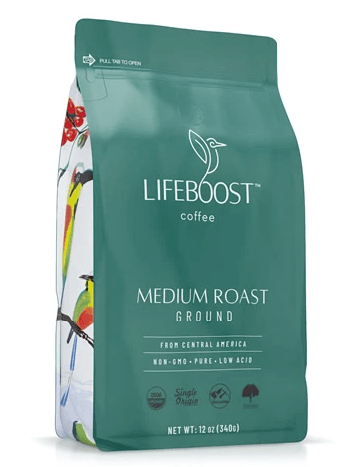
Life Boost Organic Coffee |
|
|
|
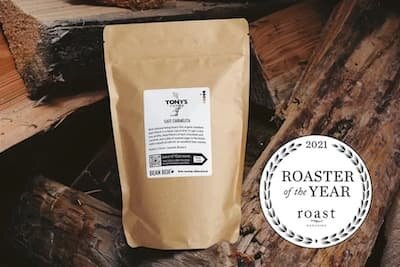
Tony’s Coffee Cafe Carmelita |
|
|
|
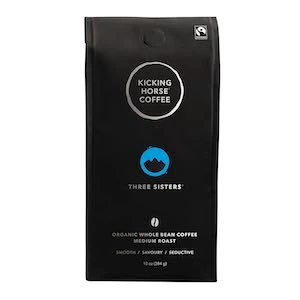
Kicking Horse Three Sisters |
|
|
|
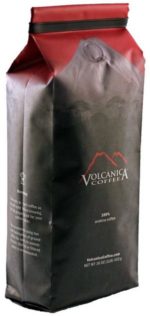
Volcanica Organically Grown Ethiopian Yirgacheffe |
|
|
|
Peet’s Yosemite Dos Sierras Organic |
|
|
|
Gimme! Sumatra Gayo Highlands |
|
|
|
Fabula Coffee Decaf |
|






What is the best organic coffee? Here are the top organic brews I sampled this year, featuring various flavor profiles and roast options. If you’re wondering how to find the bean that suits your needs, don’t skip the buying guide below.
1. Life Boost Organic Coffee
Roast level: Light, Medium, and Dark
- Tasting notes: Varies
- Origin(s): Nicaragua
Lifeboost Coffee was born when physician Dr. Charles Livingstone set out to roast healthy, clean coffee – for consumers, producers, and the environment. That means organic, shade-grown, sustainable farming practices, and free of mold, mycotoxins, and hundreds of other contaminants.
I’ve tried many Lifeboost coffees over the years and have been consistently impressed, but the one I keep buying again is the Embolden Dark Roast.
I’d put it closer to medium-dark, with no oily sheen on the beans and none of the bitter or smoky flavors that characterize an Italian or French roast.
This is a crowd-pleasing coffee with a medium body and a gentle chocolatey sweetness. I usually brew it with my espresso machine, and its robust flavor makes for a lovely latte or cappuccino.

Photo: Julia Bobak
Lifeboost Embolden is notably low acidity, a surprise for high-elevation Central American beans. In fact, it’s the only coffee I serve to my aunt, who finds most brews upset her stomach. It’s available as whole bean coffee, ground coffee, or in K-Cups pods for Keurig brewers.
2. Tony’s Coffee Cafe Carmelita
Roast level: Medium
- Tasting notes: Caramel, cocoa, raw sugar
- Origin(s): n/a

This year’s runner-up is Cafe Carmelita, the best-selling organic blend from Tony’s Coffee, winner of Roast Magazine’s prestigious Roaster of the Year award in 2021.
Cafe Carmelita was the most versatile coffee of any I tried – and the most widely beloved among tasters. I brewed it as espresso, pour over, French press, and drip coffee, and each cup of coffee was unique and lovely, showcasing sweet flavors of caramel, chocolate, and spices.
The surprise hit among the Home Brews Coffee team was when I used it to make iced coffee. It was super smooth and – with a dash of cream added – had Häagen-Dazs coffee ice cream vibes. This might be my go-to summer coffee!Tony’s Coffee was among the first to prioritize sustainable coffee. The brand is carbon neutral as of 2023, and Cafe Carmelita beans are certified Fair Trade and Organic. Drinking this coffee will make you feel good for all sorts of reasons.
3. Kicking Horse Coffee Three Sisters
Roast level: Medium
- Tasting notes: Cocoa, stone fruit, sweet tobacco
- Origin(s): Indonesia, Central & South America
As a Canadian, I’ve been drinking Kicking Horse Coffee since the company’s early days. It’s roasted in the heart of the Canadian Rockies, not far from where I live. But don’t worry, I’m not biased in their favor. Everyone who tried this coffee loved it.
Kicking Horse is known for easy-drinking blends. They mostly stick to popular medium and dark roast beans and deliver smooth coffee with flavors of chocolate, nuts, and fruit. In short, it’s a good brand to turn to for a reliably crowd-pleasing and affordable brew.
Now let me tell you why Three Sisters is my favorite. It’s an unusual post-roast blend; light, medium, and dark beans are mixed in the same bag to give something akin to a medium roast coffee, but with far more complexity than average. It’s comforting and exciting. I can taste the bright fruit flavors of the Latin American beans and the darker, earthier notes of the Indonesian beans. As one taster eloquently put it, “It’s a party in my mouth.”
4. Volcanica Organically Grown Ethiopian Yirgacheffe
Roast level: Medium
- Tasting notes: Earth, Hazelnut, Cocoa
- Origin(s): Mexico
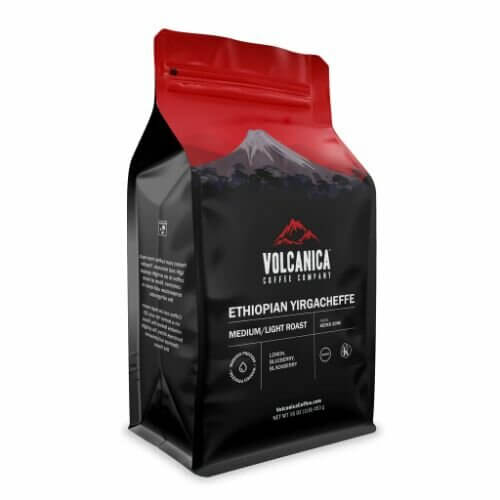
The majority of the world’s organic coffee is grown in Latin America, primarily Mexico and Peru. But if you can’t get enough of the complex and juicy flavors of an Ethiopian brew, this best-selling organic single-origin from Volcanica will be right up your alley.
Light roast coffees can be divisive among coffee lovers, but these beans from the famed growing region of Yirgacheffe are the exception. Everyone I served this coffee to enjoyed it – including my dad, an avowed old-school dark roast fan.

Photo: Julia Bobak
I think this coffee’s broad appeal comes from the fact that, while it has some of the bright acidity that characterizes high-grown Ethiopian beans, the dominant flavor is sweet and juicy. I tasted fruity blueberries and blackberries first, only getting a hint of lemony citrus at the back.
I suggest preparing this coffee as a pour over or slow-drip cold brew, methods that allow its complexity to shine. I’d skip fast, pressure-based extraction methods, like espresso or Moka pot, unless you’re a skilled barista. It’s too easy to end up with an intensely sour brew.
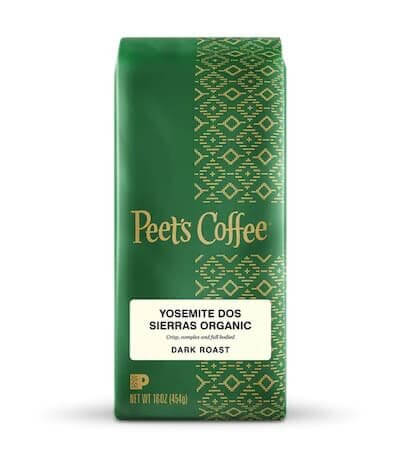
5. Peet’s Yosemite Dos Sierras Organic
Roast level: Medium-dark
- Tasting notes: Apricot, toasted almond, milk chocolate
- Origin(s): Colombia
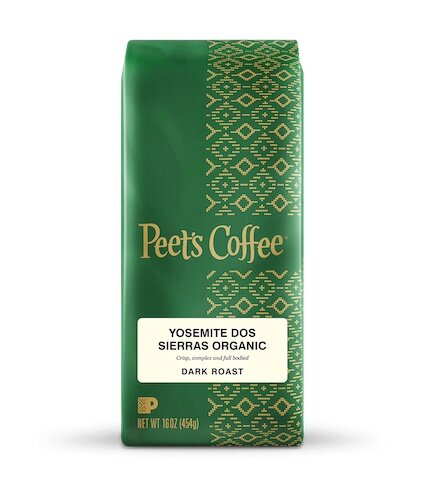
I’ve said it before, and I’ll say it again. When in doubt, buying a single-origin Colombian medium roast from a reputable brand is a surefire way to get a lovely coffee.
All the tasters loved this rich medium-dark roast from Peet’s coffee, regardless of their previously stated preferences. It’s bright and juicy enough to satisfy Third Wave light roast fans. It’s chocolatey and balanced enough to please more traditional coffee drinkers. And it’s affordable enough to appease the holder of the purse strings.
The balanced nature of Peet’s Yosemite Dos Sierras Organic gives it great brewing versatility. An espresso machine, Moka pot, or French press shows off its heavy body, creamy mouthfeel, and bolder chocolate notes. But I liked it just as much prepared slowly with a pour over dripper, which produced a nuanced brew highlighting the fruit character.
Each bag of Yosemite Dos Sierras is roasted to order and shipped on the day of roasting. It’s Organic, Bird Friendly, and Rainforest Alliance certified. And for every bag purchased, Peet’s donates a portion of the proceeds to the Yosemite National Conservancy.
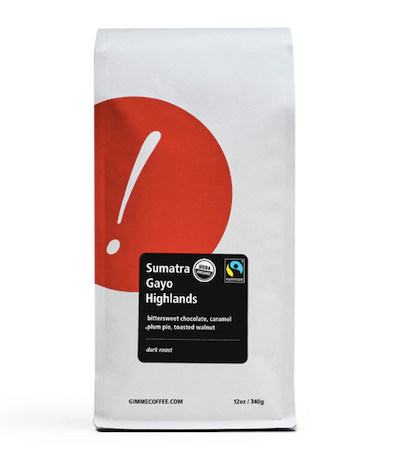
6. Gimme! Sumatra Gayo Highlands
Roast level: Dark
- Tasting notes: Bittersweet chocolate, caramel, plum pie, toasted walnut
- Origin(s): Sumatra
Whenever I want a classic big, bold dark roast coffee, I always turn to Sumatran beans. The wet-hulling processing method common in the region is particularly well suited to a deep roast, producing a heavy-bodied coffee that is rich, earthy, and very low in acidity.
Organic coffee farming isn’t widespread in Sumatra yet, so I was thrilled to discover this wonderful specialty coffee from Gimme! – one of my favorite artisan roasteries.
I was impressed with the complexity of flavor when brewed this coffee with a drip machine; dark roasts can so often be one-note. The Gimme! beans tasted of bittersweet chocolate, plums, sugary caramel, and toasted walnuts.
That said, this coffee is just begging to be an espresso. I served a batch of crema-capped Americanos at the office that had everyone raving.
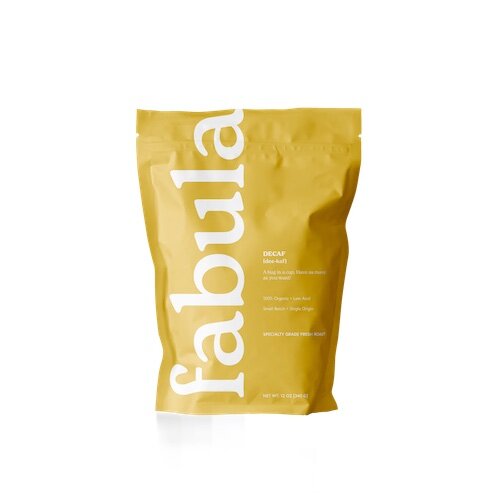
7. Fabula Decaf Coffee
Roast level: Medium
- Tasting notes: Dark chocolate, nutty
- Origin(s): Mexico
When I first got into coffee, decaf was widely regarded as a subpar class of coffee. Remember those “death before decaf” t-shirts? Well, I’m happy to report that this is no longer the case!
High-end roasters like Fabula Coffee treat their decaf beans with the same respect as their caffeinated counterparts, and it shows.
I loved this coffee. I made a sneaky point of never mentioning its caffeine content when serving it to others, and not a single person noticed. I received comments like “bold, “flavorful,” “robust,” and “fudgy.” No one mentioned burnt or bland – two prominent characteristics of bad decaf.
Fabula’s Decaf is a single-origin organic coffee from Mexico that is Swiss Water decaffeinated. It claims to be a medium roast, but I thought it was closer to the dark end of medium. It has a rich, full body, and bold flavors of dark chocolate and nuts. It was very smooth and sweet with little acidity, making me think it would be the perfect soothing after-dinner drink.
What Is The Best Organic Instant Coffee?
I hesitated to include instant coffee on this list because even the best instant coffee pales compared to freshly ground beans. But sometimes the convenience of an instant brew is hard to beat – camping, traveling, etc. Fortunately, there are now several brands on the market offering delicious instant coffee.
Try Mount Hagen Instant Coffee or Whole Foods 365 Instant Coffee if you’re looking for the classic coffee powder. Four Sigmatic Mushroom Coffee adds the health benefits of lion’s mane and chaga mushrooms, and I thought it tasted like an earthy dark roast – not like mushrooms, thankfully!
My favorite “instant” coffee on the market is the single-serving coffee sachets from Purity Coffee. They provide fresher flavor than the traditional freeze-dried powder with the same “just add water” convenience.

Photo: Julia Bobak
What To Know When Buying Organic Coffee Brands
What is organic coffee? What’s the difference between organic coffee vs regular coffee? Organic means grown without pesticides. It’s simple, right?
Not quite. How the coffee is grown is only one part of the equation. You also need to consider where it’s grown and how it’s processed and sold. Keep reading if you’d like to truly understand organic coffee.
Organic Standards (are not all the same)
There are different organic standards around the world, which complicates things when you look at the organic labeling regulations in any given country. In the US, the USDA organic certification can only be used where the crop has been grown to US organic guidelines, no matter where in the world it comes from (1).
If that makes your head spin, imagine being a coffee farmer. You need to make sure you’re adhering to the organic regulations of your country and to those of any country you might sell to.
For simplicity’s sake, we’re going to consider the common USDA organic standards. When dealing with other organic labels, follow the same principles outlined here with your own country or region’s rules.
What’s involved?
To sell organic in the US, you must be certified to put the organic label on your coffee, unless you sell $5,000 or less per year. If you want to be labeled USDA Organic, coffee sold cannot be grown using synthetic substances – often found in the fertilizers and pesticides used on coffee plants – or GMOs (2). However, only 95% of the beans must meet the criteria.
NOTE: Keep in mind that organic does not automatically mean “ethical.” Things like labor standards and environmentally safe growing conditions are not part of the certification.
Can the organic stamp always be trusted?
The USDA takes careful pains to ensure that its standards are up to par and that all organic labeling is approved by a certified agent. Anyone caught selling under their label without certification can be fined $11,000 for each violation!
However, international trade complicates things for the USDA. You’re not entirely stuck if you’re uncertain about an organic label. It’s possible to do your own research if you’re suspicious.
The national list of USDA-approved substances that can be used in organic farming is a great tool for your inquiries (3). You can also contact the National Organic Program department of the USDA or the farm directly.
Organic Growing: The Fine Print
Most people know of organic farming as farming that doesn’t use synthetic fertilizers and pesticides. There are some differences around the world in how long land must have been chemical-free for the crop to be considered organic. Some countries ask for a wait of 3 to 5 years to allow residues to work their way out of the soil. For others, it’s how you treat that particular crop that counts.
It’s a popular misconception that organic crops are grown without any fertilizers or pesticides. To ensure the health of the crop, both are needed. The difference is that organic plants will be given a nutritional boost using natural fertilizers such as chicken manure, coffee pulp, or compost.
Pest control is a little more difficult. Modern coffee production has moved to growing in the open sun to maximize the crop, leaving the plants and cherries vulnerable to pests. Organic growers generally choose ‘the old way’ and grow their plants at least partially in the shade. This encourages natural insect and bird life to thrive and make a meal of crop-destroying pests.
Organic Processing
The producer must be careful to ensure that the beans don’t get contaminated at the processing stage, whether the coffee is wet or dry processed. That includes things like the bags used by pickers during harvest and the sacks the processed beans are packed in.
The simplest way to organically process is to use dry processing. Wet processing takes much longer unless chemical additives are used to speed it up. It also uses a lot of water, which has an environmental impact, as does disposing of the by-products.
Organic Roasting
For coffee to be sold as organic, it must be roasted in a roaster that hasn’t been used for anything other than organic beans. If it’s been used for non-organic, chemical residues could be transferred into the organic beans during the process.
An organic roaster won’t add any chemicals or additives during the roasting process. Organic arabica beans come out as pure and untainted as they went in.
Organic Decaffeination
There are three main methods used to decaffeinate coffee, but only the Swiss Water Process and Carbon Dioxide Process are organic. On the bright side, these are the two best decaf methods for flavor, so you’re not losing out by sticking to your organic principles.
Benefits of Brewing With Organic Beans
Besides the fact that organic is so hot right now…
Organic Coffee Is Better For The Planet
Coffee is one of the most sprayed crops in the world, so growing it organically benefits the environment in several ways.
- Organic farming eliminates chemical pesticides and fertilizers from the environment, benefitting local plant and animal life, encouraging biodiversity, and promoting soil health.
- The production of chemical pesticides and fertilizers is a resource-intensive process in itself, so the less we use, the better. Organic farms have a smaller carbon footprint.
- Most coffee grown organically is grown in the shade. Growing coffee in the sun means cutting down forests. This destroys the habitats of the animals who live there and depletes soil nutrients.
It is important to remember that many farmers, particularly those in poorer regions, use sustainable farming techniques but lack the resources to go through the organic certification process. An organic certification guarantees environmentally friendly practices, but the lack of a certification doesn’t necessarily indicate the opposite. That’s why doing your own research is worthwhile.
Is Organic Coffee Really Healthier?
Many people choose organic over non-organic coffee for health reasons, but is organic coffee actually better for you than regular coffee? I combed through the scientific literature for real answers (not the ones provided by organic brands), and there is surprisingly little research on the matter.
One study found that non-organic coffee beans were richer in nutrients like iron, copper, and zinc but that these compounds were extracted better from organic beans (4).
A 2020 study found that organic coffee is richer in antioxidants, which is no surprise given that it is grown in healthier soil. But it also concluded that the brewing method has a stronger influence on antioxidant content than how the beans are grown (5).
There is no research indicating that conventional coffee, once processed and roasted, has traces of chemicals in amounts that pose a risk to human health.
All that said, there are certainly no health drawbacks to brewing organic coffee at home, and you’ll enjoy the mental health benefits of knowing you’re doing something good for the planet!
The Verdict
Not long ago, organic coffee was a niche market, and chemical-free options came at a premium. Now, it has gone mainstream. It’s easy to make the switch, with many coffee companies offering organic blends and single origins. That’s great for the environment but certainly makes choosing the best beans more difficult.
I took it upon myself to tackle this problem by drinking a lot of organic coffee, which I’ll admit was not a huge hardship. Lifeboost was a brand that consistently impressed. Their range of organic, healthy coffee was reliably rich, flavorful, and smooth – with the Embolden Dark Roast being a particular stand-out.
FAQs
The healthiest coffee to drink is caffeinated black coffee. Coffee contains antioxidants, and caffeine provides a physical and mental energy boost. Caffeinated black coffee has been linked to myriad health benefits, including preventing Alzheimer’s disease, type-2 diabetes, cardiovascular disease, and certain cancers (6). And a cup of black coffee only has about 5 calories.
Arabica beans are considered the best quality, especially those grown in the shade and at high elevations. Compared with the other major commercial coffee crop, Robusta beans, Arabica coffee has more complex flavors and natural sweetness. However, coffee quality depends considerably on the skill of the grower, processor, and roaster.
The least harmful coffee, from an environmental standpoint, is Bird Friendly coffee. This certification goes beyond organic, requiring coffee to be grown in a way that protects the habitat of migratory songbirds. It is one of the most rigorous certifications, with criteria around plant diversity, shade, canopy structure, buffer zones, living fences, and so on.
References
- Organic Standards | Agricultural Marketing Service Retrieved from https://www.ams.usda.gov/grades-standards/organic-standards
- Organic Labeling | Agricultural Marketing Service Retrieved from https://www.ams.usda.gov/rules-regulations/organic/labeling
- eCFR – Code of Federal Regulations Retrieved from https://www.ecfr.gov/current/title-7/subtitle-B/chapter-I/subchapter-M/part-205/subpart-G
- Carvalho et al. Organic and Conventional Coffee (Coffea arabica L.): Differences in the Content of Minerals and Studies in Healthy and Induced Cancer Rats. J Nutr Food Sci. 2014, 4:6 DOI: 10.4172/2155-9600.1000313
- Górecki M, Hallmann E. The Antioxidant Content of Coffee and Its In Vitro Activity as an Effect of Its Production Method and Roasting and Brewing Time. Antioxidants (Basel). 2020 Apr 10;9(4):308. doi: 10.3390/antiox9040308.
- Poole R, Kennedy OJ, Roderick P, Fallowfield JA, Hayes PC, Parkes J. Coffee consumption and health: umbrella review of meta-analyses of multiple health outcomes. BMJ. 2017 Nov 22;359:j5024. doi: 10.1136/bmj.j5024. Erratum in: BMJ. 2018 Jan 12;360:k194.
