
LA PAVONI PROFESSIONAL REVIEW: THE ICONIC ESPRESSO MACHINE
For truly authentic espresso, you can’t beat a traditional made-in-Italy lever espresso machine like the La Pavoni Professional!
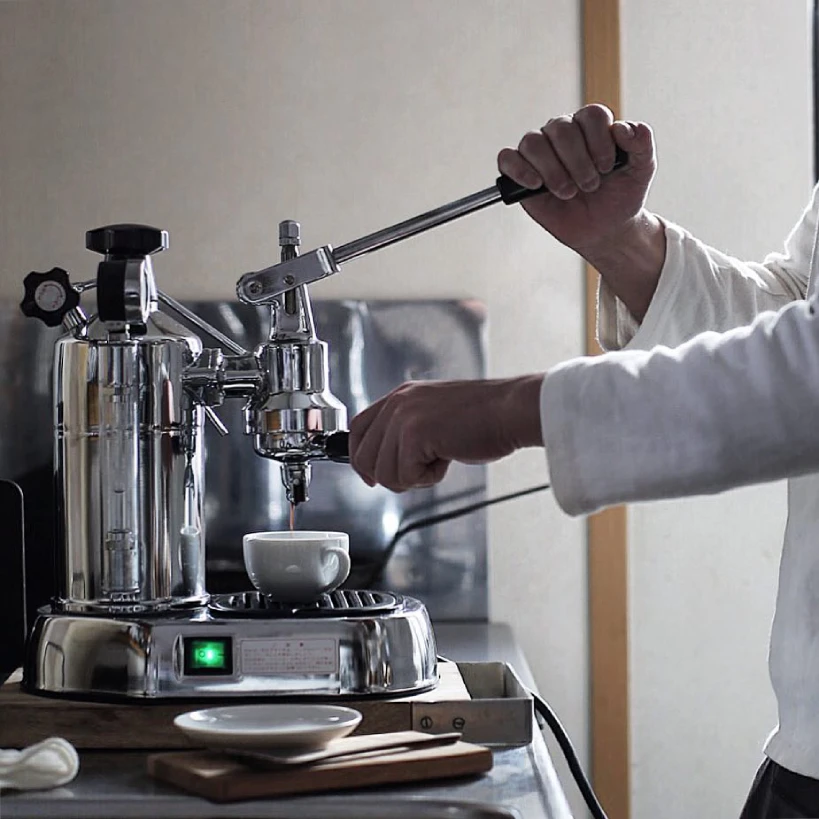
The La Pavoni Professional is the perfect way to bring the authentic Italian espresso tradition home. It pairs classic styling and old-school manual lever operation with enough modern technology to keep it user-friendly.
In this review, I’ll discuss the pros and cons of my experience with the La Pavoni Professional after weeks of putting it through its paces. If you’ve considered putting one of these iconic lever machines on your coffee bar, read carefully.
What I Liked:
- Complete control over extraction variables
- Includes both steam wand and auto-frother
- Iconic, beautiful design
- Durable build can last decades
What I Didn’t Like:
- Takes practice to get good espresso
- Small baskets and portafilter
- Low steam pressure
The Full La Pavoni Professional Manual Espresso Machine Review
Founded in 1905, La Pavoni is an Italian brand that has been intricately linked with the development of the espresso machine (1). The company has remained committed to quality over quantity throughout its lifetime, and the Professional benefits from that ethos.
My experience with this lever coffee machine was uniformly positive, but whether it’s right for you depends on your needs and experience. I hope this review can help guide your decision.
How I Rated It:
-
Brewing Capability
-
Espresso Flavor
-
Ease Of Use
-
Build Quality
-
Value For Money
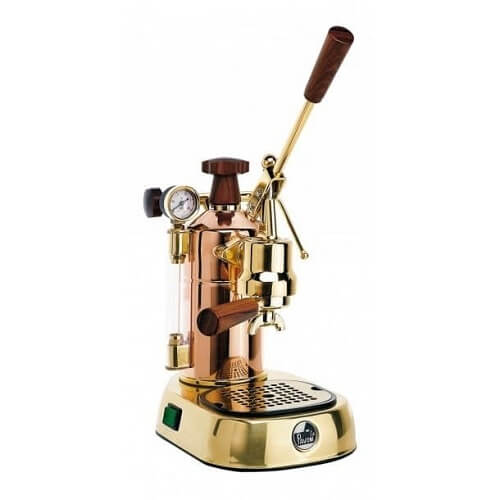
What To Expect From The La Pavoni Professional
The La Pavoni Professional is a manual lever espresso machine, which means that it doesn’t include a pump.
The pressure required for extraction is generated by you, the barista, raising and lowering a lever to force water through the coffee puck.
This is a very different experience from a semi-automatic machine. Some people prefer the more intimate connection and control of the lever; you can really feel the extraction. Others just think it’s hard work. Every espresso lover needs to make that decision for themselves.
Unlike more basic manual machines, the Professional uses electricity to heat water in a small nickel-plated brass boiler. It has a 38-ounce capacity, so you can pull about 16 double shots before it needs to be refilled and allowed to reheat. Of course, the number of shots drops if you’re also steaming milk.
Pressure Gauge
I’m happy that the La Pavoni Professional includes a pressure gauge, which I think is an absolute must for a manual machine. Nailing the ideal extraction pressure is much easier with real-time feedback.
Pre-Infusion
Soft pre-infusion is a major perk of a lever machine. In fact, many automatic machines are programmed to mimic the lever action.
All you need to do is raise the lever until you feel it catch at the top of its travel, then wait about five seconds until you see a few drops of espresso trickling out of the portafilter. This low-pressure pre-wetting of the coffee grounds ensures they saturate and settle evenly in the basket, yielding a more even extraction and better-tasting shot of espresso.
What size portafilter does La Pavoni use?
La Pavoni home machines use notoriously small filter baskets with a diameter of 51 mm (49 mm for the models from before the year 2000). In my experience, you can pack about 8 grams of ground coffee into the single shot basket and 14 grams into the double.
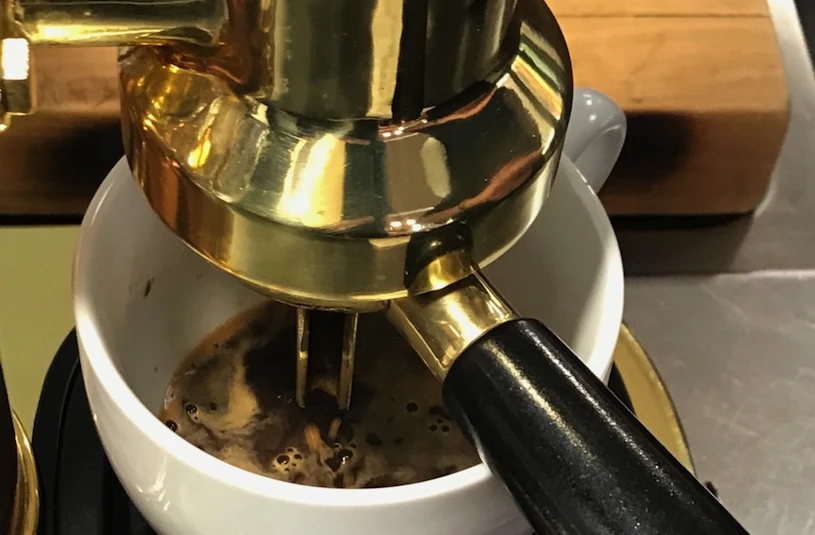
This reflects the brand’s Italian tradition, rather than what is currently trending in modern specialty coffee shops. In Italy, a standard single shot is 1 ounce and a double shot is 2 ounces, but the shots tend to be powerfully strong, favoring intense, dark roast espresso beans (2).
Keep this in mind if you want to buy a decent tamper to replace the plastic one included with purchase. There are fewer options at this non-standard size.
How long does it take to heat up La Pavoni?
The La Pavoni Professional espresso machine has a relatively small boiler, so it doesn’t take too long to hit the ideal brew temperature. However, the best practice is to let it heat long enough that the entire water pathway, from boiler to spout, is stable at that temperature. You don’t want your water to cool en route to your cup.
In my experience, it needed a minimum of 10 minutes, but 20 minutes produced better results. Make sure you heat the machine with the empty portafilter installed. It needs to heat, too. And always pre-heat your espresso cups.
La Pavoni Professional Vs Europiccola
The major difference between the La Pavoni Europiccola and Professional models is their capacity. The Europiccola’s boiler is half the size of the Professional’s, so it’s best suited for a single person or couple. Additionally, the Europiccola lacks a pressure gauge and automatic milk frother and is, of course, less expensive. There are also a few aesthetic differences, with different finishes available for the two models.
How To Use A La Pavoni Manual Lever Espresso Machine
The fun of using a manual espresso machine is that you have complete control to tweak every variable in the quest for a perfect espresso shot, but that is also the challenge. Plan to experiment with grind size, dose, tamping, brew pressure, coffee-to-water ratio, and timing to make the best espresso with your favorite coffee beans.
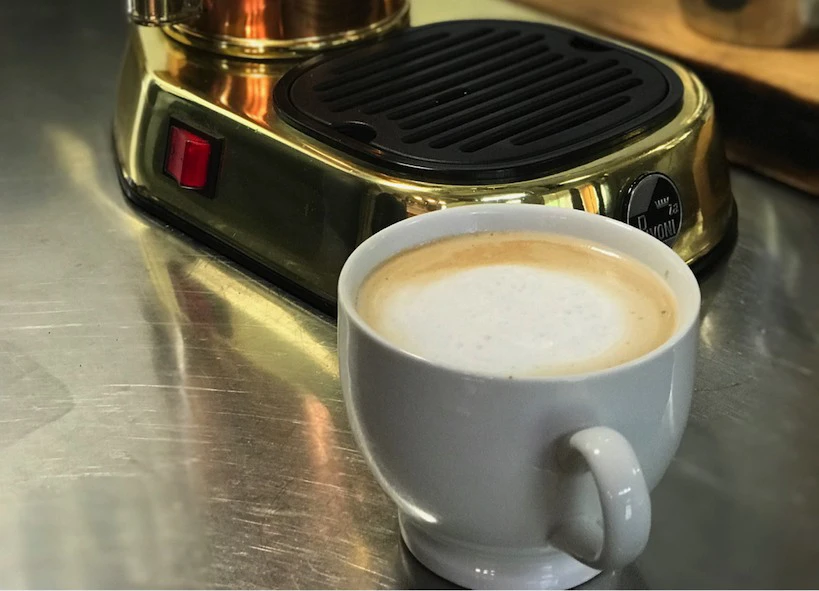
Here are some basic instructions for pulling a double shot to get you started:
- Turn the machine on, ensure the boiler is full of water, and let it preheat for 20 minutes.
- Add 14 grams of finely ground coffee to the portafilter and tamp firmly.
- Slot the portafilter into the machine and place a pre-heated demitasse below the spout.
- Start a timer. Raise the lever to the top position and wait a few seconds until you see the first drops of espresso.
- Slowly pull the lever down, keeping an eye on the time relative to the lever position. You want to aim for a 30-second pull and perfectly horizontal is halfway, so watch for the 15-second mark to get the lever flat and keep that pace.
- Ideally, this should yield 2 ounces of rich espresso capped with a thin layer of crema.
Lever machines tend to yield a thinner crema layer than pump machines, but don’t let this sway your opinion of the espresso quality. Lever espresso is every bit as rich and full-bodied and is usually even sweeter and more nuanced.
Note that the Professional can be a little top-heavy, especially when the boiler is full, so I like to keep one hand on the front of the base when lifting the lever and then a hand on the filler knob when pulling a shot.
What is the best pressure for La Pavoni?
Traditionally, the suggested ideal pressure for espresso extraction has been 9 bars, and that’s a great place to start (3). But as baristas have become increasingly experimental, we’re realizing that different coffees benefit from different pressures – and even varying pressure profiles throughout a shot (4).
There are alternatives to the nine bar tradition. For all its benefits, it doesn’t allow the barista or prosumer to explore all the possible nuances of high-quality coffee.
That’s one of the great things about a lever machine like the La Pavoni; you have complete manual control over the extraction pressure, allowing for as much experimentation as you need to produce great espresso at home.
How do you maintain La Pavoni?
You’re on your own when it comes to cleaning the machine, just like brewing. There are no reminder lights or automated programs. Fortunately, it’s simple. Just run a descaling solution (or mix of water and white vinegar) through it once every 3 to 6 months – or less if you make espresso with filtered water.
Use a damp kitchen towel to remove dust, coffee powder, etc., from the machine’s exterior. A coat of jewelry varnish over the metal surface prevents tarnishing, so you don’t need to use abrasive cleaners or metal polish—in fact, doing so is a bad idea.
If you use the steam wand, purge it with hot steam and wipe the exterior after every drink. It can be removed and soaked in a cleaning solution overnight for a deeper clean. The automatic milk frothing attachment can be cleaned by using it to “froth” hot water instead of milk. Just be sure to put a cup under it or it’ll spit steam all over your counter.
Another tip is to get into the habit of soaking the portafilter and filter baskets in a little hot water with dish soap at the end of the day, or at least weekly. That helps ensure no stale coffee film clings to the equipment. Because the portafilter to this prosumer machine is varnished brass and the baskets are stainless steel, it’s safe to leave them in the cleaning solution overnight without worrying about rust or corrosion.
Cleaning the group head is a little trickier because it’s hard to see when coffee gets into the recess where the portafilter fits. A cotton swab or soft brush does the job nicely, or you can invest in a special tool (5). To clean the brew head screen, simply install the portafilter with a basket (but no coffee!) and run a little water through it.
All that might sound like a lot, but in practice, it only amounted to a few minutes a week, and it pays dividends. Keeping your machine clean helps it last longer and benefits the flavor of your coffee.
Can La Pavoni steam milk?
The La Pavoni Pro machine comes with two ways to steam milk: a classic steam wand and an auto-frothing attachment. Personally, I prefer the steam wand because it allows more control, but it’s simple to swap between them. Both press onto the boiler fitting with a notch to hold them in place.
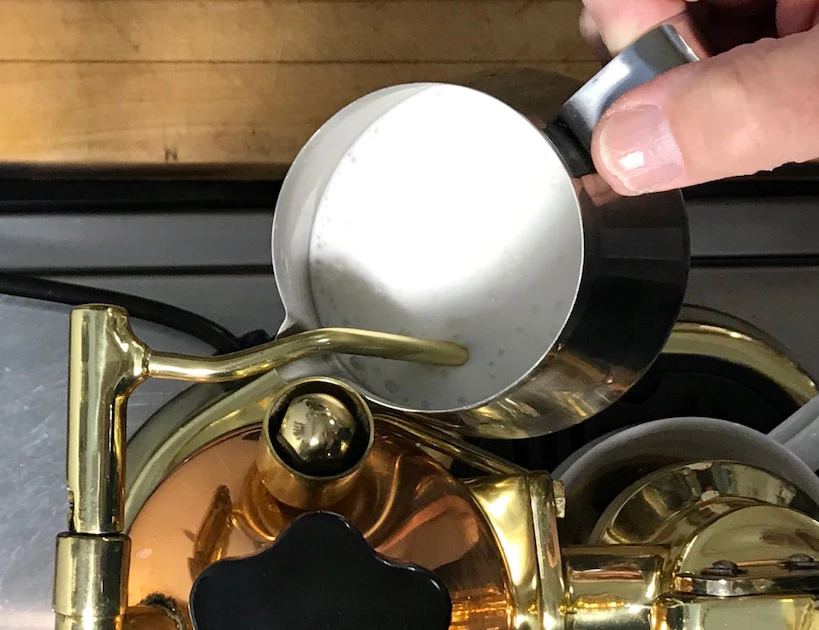
The steam wand is perfectly capable of generating the fine microfoam of a traditional latte, but it takes time. The small boiler and three-hole steam tip produce a relatively low steam pressure compared to most prosumer machines. I found that it took some practice to get the texture I wanted without overheating the milk.
The steam tip screws on and off, and if you’re serious about lattes, I definitely recommend buying and swapping in a one-hole tip, which greatly improves the experience.
The auto-frother trades control for convenience. Just drop the end of the supply tube in a container of cold milk, place your cup (with espresso) under the business end, and open the steam valve. In a few seconds, the auto-frother draws milk up the tube and dispenses froth atop your cappuccino. It’s foolproof, but there’s no way to control the milk texture or pour latte art.
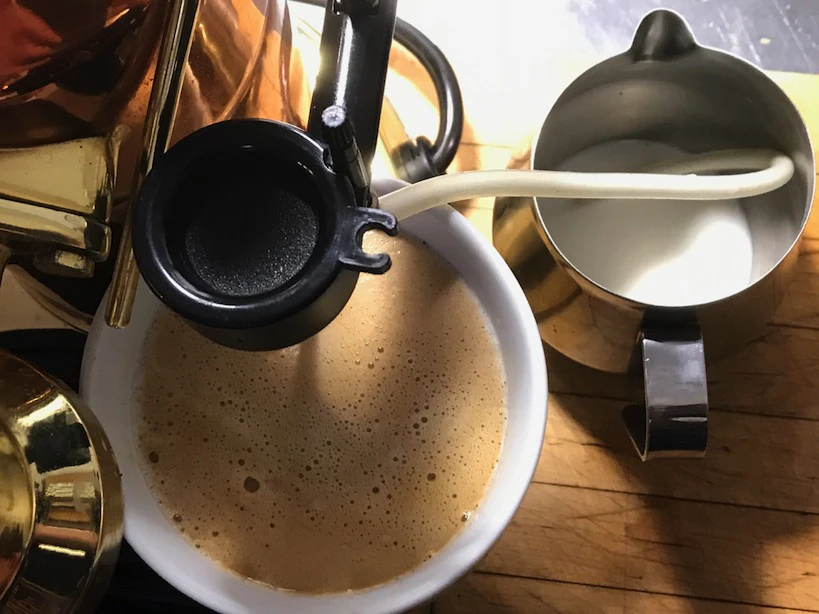
While coffee geeks like me might not use the auto-frother often, I still think it’s wonderful that La Pavoni includes it. It’s perfect if you usually drink espresso but want an occasional cappuccino to treat yourself or guests.
An Icon Of Italian Design And Engineering
I don’t often use the word “iconic” when describing coffee gear—only the Chemex and Moka Express jump to mind—but it is well deserved in the case of La Pavoni espresso machines.
They’re immediately recognizable by their tall, slender form and polished look, which is equal parts Art Deco and steampunk.
The Professional is available in several shiny metal finishes, from basic chrome to copper, brass, and gold. You can also add wooden accents in place of the basic black handles and knobs, which definitely adds a warm appeal to this beautiful machine — though all aesthetic upgrades come with a notable price increase.
La Pavoni machines are well-known for their durability. Over time – we’re talking decades, not months – the seals and gaskets may need replacing, but these are readily available and easy to swap in and out. Current models have more effective electrical and thermal overload devices than the older ones, but it’s worth pointing out that La Pavonis from the 1970s are still brewing killer espresso.
What size is the La Pavoni Professional?
The Profesional is very compact compared to a standard home espresso machine – a nice perk of skipping the pump, water tank, and associated electronics and plumbing. It measures 7.9” wide by 11.4” deep by 12.6” tall, so it will fit comfortably in any kitchen. But keep in mind it requires substantially more height when in use. It’s 19.3” tall with the lever extended.
Is The La Pavoni Professional Worth The Price?
The La Pavoni PC 16 Professional is one of the more expensive single-boiler espresso machines on the market, especially given that it doesn’t have a pump. But I would still argue that it offers incredible value for the right user. After all, this is truly a one-of-a-kind espresso maker.
Lever machines with electrically heated boilers and steam wands are few and far between, let alone models with La Pavoni’s pedigree and incredible style. The Professional ranges from about $1200 to $1500 depending on the exact specifications you choose, and I think it’s worth every penny.
I haven’t spoken to a single La Pavoni owner who regrets their purchase, many of whom have been pulling incredible shots for decades.
Of course, if you’re not interested in riding the learning curve of a manual espresso maker or if you could care less about flashy design and Italian tradition, there are many better-value alternatives to consider. I’ve got a few suggestions for you below.
Don’t Buy The La Pavoni Professional If…
- You prefer a more hands-off approach: If you’re not interested in pulling shots manually, choose a semi-automatic or automatic espresso machine with a pump that does the work for you. There are plenty of options at or below the price of the La Pavoni. Check out the Rancilio Silvia for a semi-automatic prosumer option or the Breville Barista Pro for a user-friendly automatic machine with a built-in grinder.
- You’re on a tight budget: If you want a traditional lever machine but can’t stomach the price tag of a La Pavoni, consider a more basic alternative like the Flair, Flair 58, or Cafelat Robot coffee maker. None can froth milk and all require a separate kettle to heat water, but they’re fun to use, very affordable, and pull amazing espresso shots.
- You prefer milky drinks to straight espresso: If you’re a serious latte or cappuccino lover, consider investing in a machine that can brew espresso and steam milk simultaneously. The Rocket Appartamento or Lelit Mara are two reasonably affordable heat exchanger machines, or check out the unique Quick Mill Silvano Evo, which uses a separate thermoblock for steam.
The Verdict
Steampunk styling and a classic Italian coffee shop vibe make this a unique and satisfying machine for anyone willing to learn its ways. I loved the weeks I spent experimenting with the La Pavoni Professional lever machine. Not only did I enjoy wonderfully robust espresso shots and creamy lattes, but I also felt like a much better barista by the end.
If you consider espresso to be a passion or a hobby – not just a drink – there is just no substitute for the intimate control of a manual lever espresso machine. You’ll have no regrets bringing home a La Pavoni.
References
- Stamp, J. (2012, June 19). The Long History of the Espresso Machine. Retrieved from https://www.smithsonianmag.com/arts-culture/the-long-history-of-the-espresso-machine-126012814/
- Rao, S. (2017, December 18). The 2:1 Ratio. Retrieved from https://www.scottrao.com/blog/2017/12/17/the-21-ratio
- Specialty Coffee Association. (2018, February 17). Defining the Ever-Changing Espresso – 25 Magazine: Issue 3. Retrieved from https://sca.coffee/sca-news/25-magazine/issue-3/defining-ever-changing-espresso-25-magazine-issue-3
- Lapierre, F. (2022, October 13). Feeling the pressure: Why baristas are ditching the 9-bar standard for espresso. Retrieved from https://newgroundmag.com/2022/10/baristas-ditching-9-bar-standard-espresso/
- Espazzola and Hygienic Innovations Offer New Tools for Cleaning Espresso Machines. (2017, March 1). Retrieved from https://dailycoffeenews.com/2017/03/01/espazzola-and-hygienic-innovations-offer-new-tools-for-cleaning-espresso-machines/
