
DIFFERENT TYPES OF COFFEE MAKERS: FIND YOUR BEST WAY TO BREW
With so many types of coffee makers, how do you find the perfect brewer for you?

There is an overwhelming number of different coffee makers, with even more variations within each broad category. So it’s no surprise that it feels impossible to select just one, or even several, as the perfect type of coffee maker for you. Let me give you a hand with that.
In this article, I’ll list the most common types of coffee makers, including how they work and the style of coffee they brew. Keep reading, and I promise you’ll find the best one – or ones – for your best morning cup of joe. But first, here’s a quick list, then we’ll discuss what each type does.
- Automatic drip machines
- Single Serve Machines
- French Press
- Aeropress
- Pour-Over Coffee Maker (aka Manual Dripper)
- Hybrid Pour-Over Devices
- No-Bypass Brewers
- Moka Pots
- Percolators
- Vacuum Brewers
- Cold Brew Coffee Makers
- What About Iced Coffee?
- Unique Brewers From Specific Regions
- The Vietnamese Phin
- The Turkish Cezve
- Costa Rican Chorreador
Automatic Drip Coffee Machines
The automatic coffee machine is the most popular brewing method in North America, found in nearly every home and office. There are many different types of coffee machines available in all shapes and sizes, varying widely in quality and price.
They comprise a basket lined with a filter (either paper or metal mesh) where you add medium-coarse ground coffee. When you start the automatic brewing cycle, hot water flows into this brewing chamber. Coffee is extracted and drips into a carafe below.
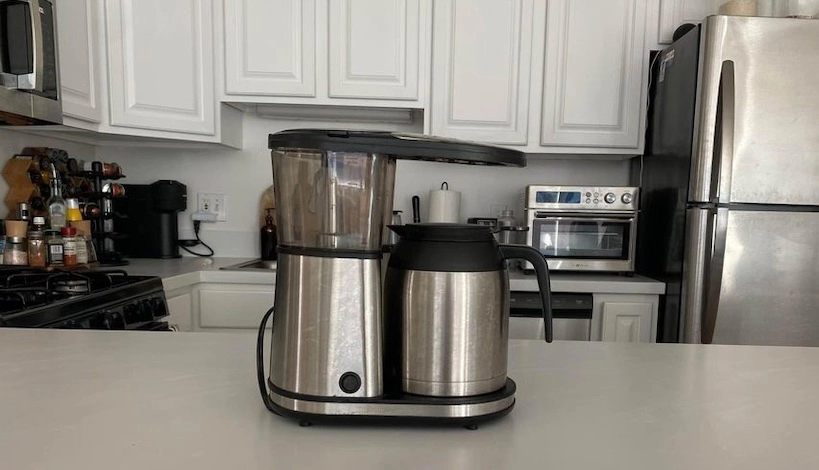
The carafe can be glass – in which case the machine is usually equipped with a hot plate to keep your coffee hot – or vacuum-insulated stainless steel. I tend to prefer a thermal carafe, which is more durable and avoids the need for a warming plate.
At one end of the drip coffee makers spectrum, you’ll find affordable models from brands specializing in small household appliances, like Cuisinart, Black+Decker, Mr. Coffee, and so on. At the other end are the Specialty Coffee Association (SCA) certified coffee machines, which have been rigorously tested to meet high brewing standards. These are more expensive but well worth it if you are interested in specialty coffee.
Related: The best coffee makers
Single Serve Coffee Machines
Any coffee maker capable of brewing a single cup of coffee at a time fits this category, but typically, we’re talking about pod coffee machines. They brew using sealed capsules of pre-ground coffee. During brewing, the capsules are punctured to allow hot water to flow through and extract the coffee.
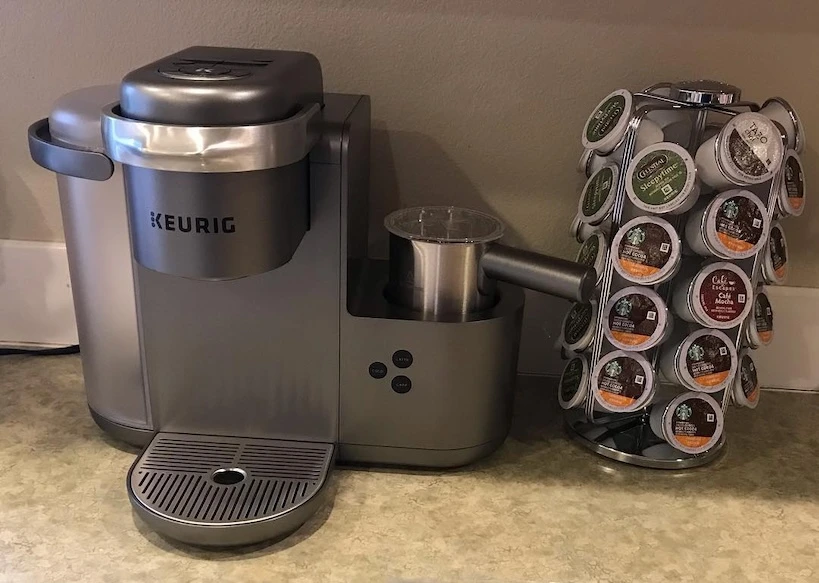
Many brands make single-serve capsule coffee makers, but we tend to classify these machines as either Keurig or Nespresso style – the two biggest companies in the space.
Nespresso-type machines use small, hermetically sealed aluminum capsules. When coffee is brewed, the machine punctures the capsule and pumps in highly pressurized water until coffee bursts out, resulting in a small, full-bodied coffee shot similar to espresso.
Keurig machines use larger plastic coffee pods that water flows through gently, more like an automatic coffee machine. Their coffee resembles a mild drip coffee.
Coffee from pod brewers is rarely as good as the other methods because it is never as fresh, plus there are the negative environmental implications of single-use pods (1). However, single serve coffee makers remain popular for their convenience.
French Press Coffee Maker
The French press coffee maker is a fantastic brewer, particularly for anyone learning to make coffee at home for the first time. It’s easy to use, inexpensive, and works well with virtually any coffee beans (2).
With some pouring methods, you have to be much more careful about how you pour water and not to do it too fast. With the French press, there’s no such risk. It’s almost infallible.
A French press is an immersion brewer, meaning the coffee grounds steep in hot water before being strained out (3). Immersion brewing generally gives a bolder flavor profile and greater body than drip brewing.

It consists of a glass or metal brewing chamber, a lid, and a metal filter attached to a plunger. The metal filter is an essential feature of the French press. It ensures the coffee oils end up in the cup, contributing a more prominent flavor and richer mouthfeel.
A French press can also be used to froth milk by adding warmed milk to the chamber and moving the plunger rapidly up and down. This is an excellent hack for making lattes at home.
Aeropress
The Aeropress is another example of an immersion brewer. It relies on steeping coffee grounds in a small chamber before a plunger forces the hot coffee out through a paper filter. Aeropress coffee tends to be very strong, like a pseudo-espresso, so people often dilute it with hot water for an Americano-style drink.

The Aeropress coffee maker yields a cleaner cup than the French press because of the paper filter, though there are metal filter options available if you prefer a richer brew.
Pour-Over Coffee Maker
Pour-over brewing is considered by many to be a more advanced technique, and while it does have some room for error, there’s no reason anyone can’t master it. It’s essentially a manual version of an automatic drip coffee machine.
Related: https://homebrewscoffee.com/drip-coffee-vs-pour-over/
Pour over coffee makers are either cone or flat-bottom basket-shaped devices with a paper filter inside that you set on top of a mug or carafe. You add ground coffee to the filter and pour hot water over it. Though simple in theory, this set-up entails plenty of variables — and thus plenty of different pour-over brewers.

Pour-over brewers can be ceramic, plastic, glass, or metal. They can also be different shapes and have different numbers of holes at the bottom. Even your choice of filter has an impact (4).
How you pour your pour-over is where skill is required, with different baristas espousing different techniques.
Generally, you add a small amount of water first to let the coffee bloom before continuing with a more consistent pour, often in a spiral pattern. I strongly recommend using a gooseneck kettle to facilitate precise pouring.
Coffee from a pour-over dripper tends to have a light body and clean flavors. It’s a suitable method for highlighting more subtle and complex tasting notes, so it’s popular with lighter roasts.
There are hundreds of pour-over brewers on the market. Some common cone-shaped options are the Hario V60, Chemex, Melitta Cone, and Origami Dripper. Flat-bottom drippers include the Kalita Wave and Fellow Stagg.
Hybrid Pour-Over Devices
Two modern devices worth mentioning here are the Clever Dripper and Hario Switch, both of which are hybrids between pour-over and immersion brewing. They look like classic cone-shaped pour-over brewers that sit on top of a mug and use a paper filter. However, both have a unique valve system that keeps water from dripping through.

These systems take some of the skill out of pour-over brewing, making them an ideal entry point to the method – not to mention a way to brew a delicious coffee that is equal parts clean and bold.
No-Bypass Brewers
No-bypass brewers, including the TriColate and NextLevel, became trendy around 2022. But the concept is not novel. The Aeropress and Vietnamese Phin, for example, are inherently no-bypass.
Bypass is the term for the water that flows around the filter in a pour-over dripper. It ends up in the cup without extracting any coffee. No-bypass brewers eliminate that route, improving consistency and ensuring better coffee yields.
Moka Pot
A Moka pot is a traditional Italian coffee maker consisting of an upper and a lower chamber with a filter basket of finely ground coffee in between. The lower chamber is filled with water, and when heated on a stove, steam pressure forces the water up through the filter basket, where it extracts the coffee. The upper chamber fills with delicious java until the lower chamber runs dry.
Moka pots are also known as stovetop espresso makers because they use pressure to brew, similar to an espresso machine.
However, the pressure in a Moka Pot only is much lower, so it doesn’t make true espresso. Instead, it produces a powerful cup of coffee, similar to an Aeropress but with more body and a richer mouthfeel.
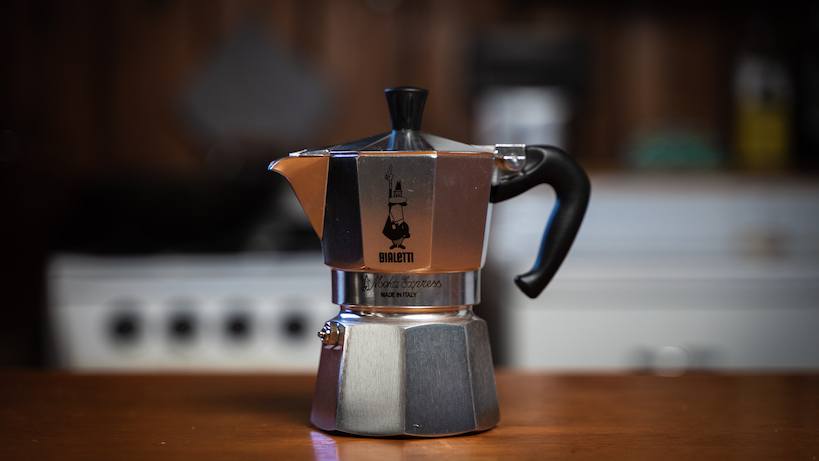
Moka Pots have many advantages. They are inexpensive, durable, and straightforward to use – whether at home or out camping. While they have a reputation for brewing burnt or bitter-tasting coffee, that is more often a result of poor technique.
The most popular brand is Bialetti, maker of the original Moka pot in 1933 (5).
Percolator
People frequently confuse percolators and Moka pots, presumably because both are stovetop coffee makers. But the percolator is a distinct brewing method, and in fact, many percolators are now electric and don’t even require the stove.
A percolator looks like a kettle from the outside, but inside, it has a tube running up its center and a filter basket near the top. To brew, you fill the filter basket with medium-coarse ground coffee and the main chamber with water. The kettle is then heated until the water comes to a slow boil, known as percolation.
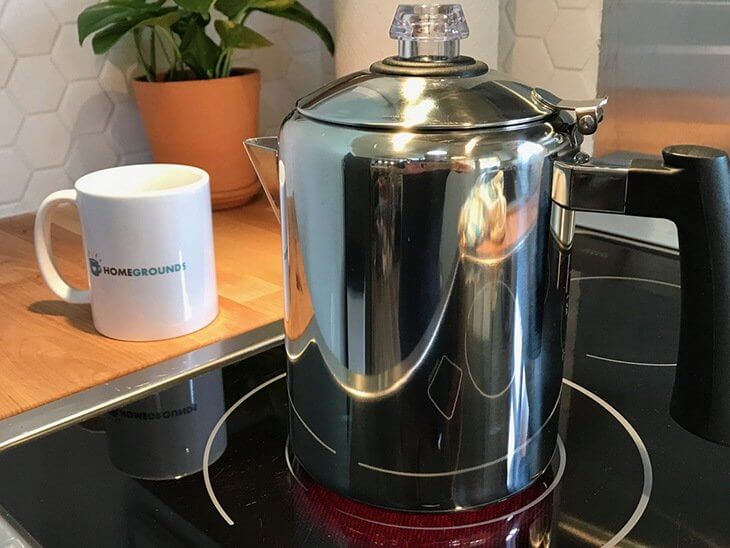
Water travels up the central tube and showers over the coffee to extract it. The water and coffee continually cycle through this process as long as the heat is maintained, with the coffee getting stronger throughout the brew time.
Percolators were far more prevalent in decades past, before the invention of the first automatic drip coffee maker, but have become less common as coffee tastes have refined.
They aren’t well suited to brewing specialty light roasts, but if you like a medium or dark roast brewed very strong and hot, a percolator is the ideal tool for the job.
Electric percolators need less attention, usually shutting off automatically or switching to a “keep warm” mode after brewing. Stovetop percolators have greater longevity and don’t require electricity.
Vacuum Brewers
Vacuum brewers, also known as siphon brewers, often come with an eye-catching aesthetic. Some look like something from a mad scientist’s lab, while others have a steampunk vibe.
In any case, you’re buying a conversation piece as well as a coffee maker.
At its most basic, a siphon brewer consists of an upper and a lower chamber with a hollow stem connecting the two. You fill the lower section with water and add a filter and ground coffee to the upper. When the lower chamber is heated, the water rises to saturate the grounds above, extracting the coffee.

You then remove the brewer from heat, which drops the pressure in the lower chamber. This creates a vacuum that sucks the brewed coffee down into the lower chamber, leaving the coffee grounds behind in the filter.
Vacuum brewing is an immersion method that yields a boldly-flavored but clean-tasting cup with a medium body. While the coffee is undeniably delicious, these coffee makers can be finicky to use and clean.
Cold Brew Coffee Makers
Cold brewing is one of the easiest ways to make coffee at home. All you need to do is submerge coarsely ground coffee beans in room temperature water for between 12 and 24 hours, then strain out the grounds.
Dedicated cold brew coffee makers like the Toddy exist to simplify this process, but you don’t need one to make cold brew. You can easily do it in a French press or even just a large Mason jar.
What About Iced Coffee?
Iced coffee differs from cold brew because it is brewed hot and then poured over ice to be served cold. Traditional iced coffee is made by brewing a slightly more concentrated brew so that it doesn’t taste too dilute as the ice melts.
There are specific iced coffee makers on the market, but in many cases, you’ll simply find an iced coffee setting on your drip machine or single-serve coffee maker. You can also do it manually by brewing an extra-strong pour over or French press and letting it cool slightly before pouring it over ice.
Unique Brewers From Specific Regions
Certain regions of the world are known for unique coffee makers and distinctive coffee styles. While these brewers might not be familiar at your local coffee shop, you can easily find them online if you’re curious.
The Vietnamese Phin
In Vietnam, people traditionally brew coffee using a phin. It consists of a round, perforated plate topped with a brewing chamber. A second perforated insert sits inside the chamber under which the ground coffee is compressed, and a lid keeps the heat in. The whole setup is designed to sit atop a mug during brewing.
To brew, you add hot water to the top chamber a bit at a time to avoid overflowing. Check out this video for a detailed look:
Phin coffee tends to have a very thick, syrupy body. Dark roasts and Robusta coffee beans are common in Vietnam, resulting in an intense brew. Sometimes hot water is added, but more commonly, sweetened condensed milk and ice are added for a delicious Vietnamese iced coffee (6).
The Turkish Cezve
The Cezve Turkish coffee maker is one of the oldest and simplest coffee brewing methods. Known by many other names across Eastern Europe and the Middle East, it is no more than a small pot, usually made of brass or copper, with a long handle and a pouring spout.
To brew Turkish coffee, very finely ground coffee and water are added to the pot and brought to a boil. As soon as the mixture begins to froth, it is removed from the heat and poured into cups. The coffee isn’t filtered, but the grounds are left to settle to the bottom of the cup.
The coffee tends to take on a bit of a bitter or burnt edge due to the boiling, so sugar is a common additive – as are spices native to the region, like cinnamon and cardamom.
Costa Rican Chorreador
The Costa Rican chorreador is a traditional method of brewing coffee that is still commonly used in the tiny roadside cafes frequented by older generations of coffee drinkers. A cloth filter resembling a coffee sock is suspended over a mug from a simple wooden scaffold. Ground coffee is added to the filter, followed by hot water, resulting in a basic pour-over brew.
The cloth filter provides a nice balance between the rich mouthfeel of a metal-filtered coffee and the clean cup of paper-filtered coffee.
Espresso Machines
The various types of espresso coffee makers could easily fill their own article, but I’ll summarize them briefly here. They are classified by degree of automation. More automatic machines are generally easier to use but deliver poorer quality espresso, though this also depends on price and quality.
- Super-automatic espresso machines do everything for you, including grinding coffee beans, tamping, pulling the shot, and sometimes frothing the milk. They are often called bean-to-cup machines. They require very little skill to operate, with drinks available at the press of a button.
- Automatic espresso machines require a bit more know-how. You need to prepare the portafilter by adding freshly ground coffee and tamping. However, once you lock the portafilter in the machine and start the shot, it takes over. These machines might have a manual steam wand or an automatic frothing system.
- Semi-automatic espresso machines are similar to automatic, but the key difference is that you must start and stop the shot. The timing is not automated, so your full attention is required.
- Manual espresso machines are the hardest to master but can deliver uniquely exceptional results. The barista must generate pressure manually with a lever rather than relying on a mechanical pump.
Another category to consider is prosumer espresso machines, which get their name by combining “professional” and “consumer.” These expensive machines are designed for keen home baristas but rely on commercial-grade components, making them equally suitable for small cafes. They can be semi-auto, auto, or manual machines.
Final Thoughts
There are dozens of popular types of coffee makers and thousands of different models, each with its pros and cons. With so much variety, it’s no wonder it feels overwhelming to choose the right one for your coffee in the morning. I hope this article has provided some much-needed guidance.
Did I miss any popular brew methods? How do you brew your coffee? Leave a note in the comments, and if you enjoyed this piece, be sure to share it with the coffee lovers in your life!
FAQs
The four main types of coffee are Arabica, Robusta, Liberica, and Excelsa. However, in recent years, Excelsa has been reclassified as a type of Liberica. Arabica and Robusta dominate commercial coffee production, accounting for well over 90% of the world’s supply.
Barista is the Italian word for “barkeeper,” which has been adapted for use in coffee bars in the English-speaking world. It refers to a person who makes and serves coffee drinks, typically in a commercial setting.
Yes, an expensive coffee maker makes a difference. Expensive coffee makers have higher quality components – for example, stainless steel instead of plastic – and will last longer. They use better brewing technology to mimic a professional barista. That means a more precise water temperature and an improved water shower.
References
- Stokel-Walker, C. (2016, February 19). Is there a serious problem with coffee capsules? Retrieved from https://www.bbc.com/news/magazine-35605927
- Otero, M. (2020, August 13). Improving Your French Press Coffee Brewing. Retrieved from https://perfectdailygrind.com/2020/08/improving-your-french-press-coffee-brewing/
- Burgess-Yeo, S. (2019, March 15). Drip and immersion brewing: A battle of two methods. Retrieved from https://perfectdailygrind.com/2019/03/drip-pour-over-vs-immersion-the-battle-of-the-coffee-brew-methods/
- SanMax, I. M. (2021, June 23). Choosing the best paper filter for your pour over coffee. Retrieved from https://perfectdailygrind.com/2021/06/choosing-the-best-paper-filter-for-your-pour-over-coffee/
- Clayton, L. (2018, August 9). Coffee Maker History: The Moka Pot. Retrieved from https://www.seriouseats.com/moka-pot-history-coffee-maker-italian-caffetiera
- Truong, P. (2019, June 20). The Vietnamese Coffee Tool That Lets You Take a Breather. Retrieved from https://www.eater.com/22262801/phin-vietnamese-coffee-filter-tool
