
BEST PROSUMER ESPRESSO MACHINE (2026 TRUSTED REVIEWS)
My picks for prosumer espresso machines this year revolve around brands like La Marzocco, Slayer and Rocket.

So you’ve caught the espresso bug? One day you think you might want to try to make an espresso at home, and from there, it’s a slippery slope to spending your kid’s college fund on a prosumer espresso machine.
At A Glance:
- OUR TOP PICK:La Marzocco Linea Mini
- BEAUTIFUL AND HIGH-PERFORMANCESlayer Single Group
- SMALL AND MIGHTY:Rocket Appartamento
I get it. I’ve been there.
But if you’re going to deny your offspring an education, let’s at least make sure you can offer them a great espresso. Here are 9 of the best prosumer espresso machines worth skipping calculus for.
The 9 Best Prosumer Espresso Machines in 2026
| Image | Product | Details | |
|---|---|---|---|
|
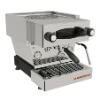
La Marzocco Linea Mini |
|
|
|
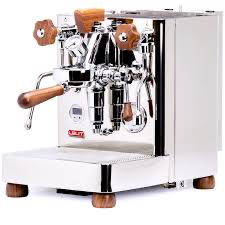
Lelit Bianca |
|
|
|
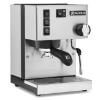
Rancilio Silvia V6 |
|
|
|
|
Stone Plus Espresso Machine |
|
|
|
Rocket Giotto Evoluzione R |
|
|
|
Izzo Alex Duetto IV Plus |
|
|
|
La Pavoni |
|
|
|
Slayer Single Group |
|
|
|
|
Rocket Appartamento |
|





Each prosumer espresso machine on this list is capable of incredible espresso and perfect steamed milk. So the best one for you depends on your style, budget, and kitchen space. Check out our prosumer espresso machine reviews and then consult the buyer’s guide below to make your decision.
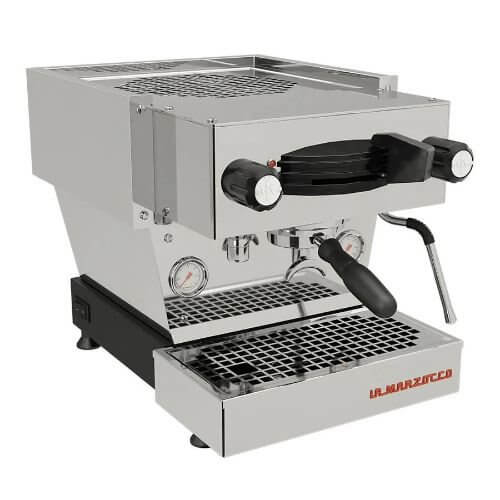
1. La Marzocco Linea Mini
-
Boiler: Dual Boiler
- Dimensions (HxWxD): 15” x 14” x 21”
- Pump: Rotary
- Operation: Semi-automatic paddle
La Marzocco’s classic Linea espresso machines have long been found in top cafes around the world (1). The introduction of the Linea Mini brings that same high quality to the home market. I had high hopes when I brought this one in for testing, and it met most of my expectations, earning it top spot on this list.
The Linea Mini is handmade using the same commercial-grade components as its larger namesake, including two stainless steel boilers. That means it’s built to last, but it’s heavy! At over 70 pounds, it took three of us to wrestle it out of the box and onto the counter.
The big innovation is the integrated brew group, a more compact version of the original’s saturated brew group. I was impressed with its temperature stability and accuracy, with no more than 1 ℉ of variation in my tests. Though I’ll admit to being a bit annoyed by the manual wheel used to set the temperature; I expect a digital PID controller at this price.

Perhaps the most impressive feature of the Linea Mini is the milk steaming, which is best in class and rivals the top-of-the-line La Marzocco machines. Just ask coffee shop owner and coffee expert Chris Baca:
You cannot tell the difference in end texture between [the Linea Mini] and the Strada that we have in the cafe. It’s literally that good.
It’s so powerful that it took some practice to control. I’m pretty sure my first attempt landed some milk on the ceiling. But after a few tries, I could steam milk for a latte in under 30 seconds – the quickest of any machine tested!
I assumed the paddle on the group allowed for flow control, or at least for manual pre-infusion. So I was disappointed to find that it’s just a nice-looking on/off switch.

From a quality perspective, there’s nothing to fault on the Linea Mini. No surprise from the La Marzocco brand. It has IMPECCABLE Italian styling that makes it stand out from the shiny stainless crowd. It’s available in seven colors, and built-in barista lights make your espresso shot feel like a Broadway star.
There was some fanfare recently around the release of the smaller Linea Micra, with some reviewers suggesting it might render the Mini obsolete. But having tested them both, the Linea Mini gets my vote unless you’re really pressed for space.
PROS
- Best-in-class steam pressure
- Impressive temperature stability
- Unique style with legendary build quality
CONS
- Expensive
- No control over flow rate or pre-infusion
2. Lelit Bianca
-
Boiler: Double Boiler
- Dimensions (HxWxD): 15.75” x 11.4” x 19.1”
- Pump: Rotary
- Operation: Semi Automatic with Flow Control
While the Lelit Bianca may not have the name recognition and flashy style of the Linea Mini, I’d argue it’s a worthy rival in terms of functionality. And it comes in at just over half the price.
I was most excited by the flow control feature of the Lelit Bianca. Unlike the Linea Mini, that paddle isn’t just for show; it controls water flow through the E61 group head to adjust brew pressure during extraction. I teased brand-new flavors out of coffees I thought I knew well.
The Bianca is a dual-boiler machine with stainless steel boilers, each with independent PID temperature control, and a rotary vane pump. It also has no-burn hot water and steam wands (2).


I love the aesthetics of the Bianca. The wooden accents and the shiny stainless casing give it a classy but warm look, like it belongs in a home. The latest model is available in equally eye-catching black and white options. Cleverly, the water reservoir can be mounted on either side, so you can configure it to fit your kitchen.
I appreciate that Lelit includes a bottomless portafilter along with the standard dual-spout. Not only was it quick to inform me when my puck prep was sub-par, but I was able to produce some drool-worthy Instagram videos of shots in action.
PROS
- Manual paddle for flow control
- PID temperature control for both boilers
- Incredible value for money
CONS
- Less well-established brand
- Drip tray is finicky to remove when full
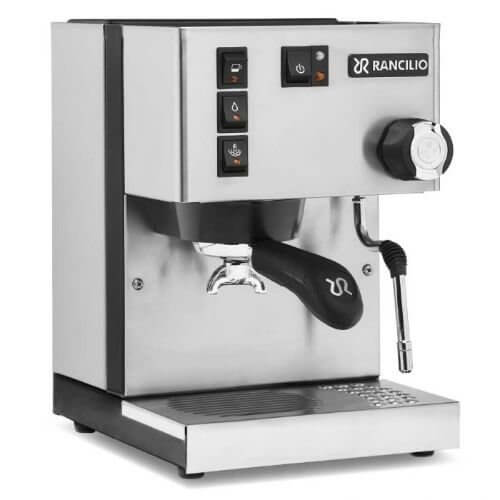
3. Rancilio Silvia
-
Boiler: Single Boiler
- Dimensions (HxWxD): 13.75″ x 9.25″ x 12″
- Pump: Vibratory
- Operation: Semi-Automatic
The Rancilio Silvia is comparable in price to many entry-level espresso machines, but I think its quality and performance put it squarely in the best semi professional espresso machine category. It offers incredible value that novices and long-time espresso lovers will appreciate.
The low cost comes from the fact that it’s a single boiler machine, so you can’t steam milk while pulling an espresso shot. This does affect the quality of my milk-based drinks, but you need a pretty sensitive palate to notice. For a double-boiler version, check out the outstanding Silvia Pro.


The Silvia is known for offering incredible steam power for a machine in this price range. I could make high-quality microfoam for latte art – a rarity for a machine at this price and surely a direct result of Rancilio’s experience building commercial espresso machines.
That experience is evident in the build quality as well. With a steel frame and stainless steel exterior, Silvias are known to last decades.
I poked around this machine extensively and couldn’t find anything to criticize, not a single weld out of place.
The fit and finish are impeccable, though I won’t claim it’s the best-looking machine around.
I found the Silvia very easy to operate once I had the timing down for switching between brewing and steaming. Simple rocker switches control power, brewing, water, and steam.
PROS
- Excellent steam pressure
- Super durable build
- Great value for money
CONS
- Can’t brew and steam simultaneously
- No pressure gauge
4. Stone Plus Espresso Machine
-
Boiler: Heat Exchange
- Dimensions (HxWxD): 14” x 8.85” x 17.3”
- Pump: Vibratory
- Operation: Semi-Automatic
Stone is a new low-cost spinoff of the famous Rocket brand, and their debut product is the Stone Espresso Machine. It was designed to appeal to a younger generation, people with lower incomes and less space who still care about quality espresso. I would argue that definition applies to many of us older coffee lovers too!
It’s a heat exchanger espresso machine, but thanks to its dual-element heating design, it has an easy-to-use plug-and-play operation and fantastic temperature stability. As much as I love to tinker with my espresso, it was a treat not worrying about timing cooling flushes to get the right brew temperature. I was impressed with the very first shot I pulled, and they only got better the more I dialed in the grind and dose.

The second in-group heater also makes for a speedy warm-up time. I pulled shots and steamed milk in as little as 15 minutes after powering up.


Stone espresso machines are manufactured in the Rocket factory by the brand’s skilled craftsmen, which means you’re getting the same engineering and attention to detail as much more expensive models. I love the look of this machine. The removable side panels are a clever way to offer customization at an approachable price point.
Some sacrifices have been made to keep the cost low and the footprint small, most of which are fairly inconsequential, in my opinion (plastic drip tray, plastic side panels, small water tank, no PID). I was most disappointed with the plastic paddle used to start extraction. It is such a prominent feature, and it looks and feels cheap. Just like the Linea Mini, the paddle offers no control over flow rate or pre-infusion. Though at about a fifth of the cost of the Mini, it hurts less in this case.
The Stone Espresso Machine is available in several versions with alternate finishes, but even the most expensive option is still comfortably under $2000.
PROS
- Easy-to-use design
- Excellent temperature stability
- Premium build quality at an affordable price
CONS
- No controllable pre-infusion
- Small water tank
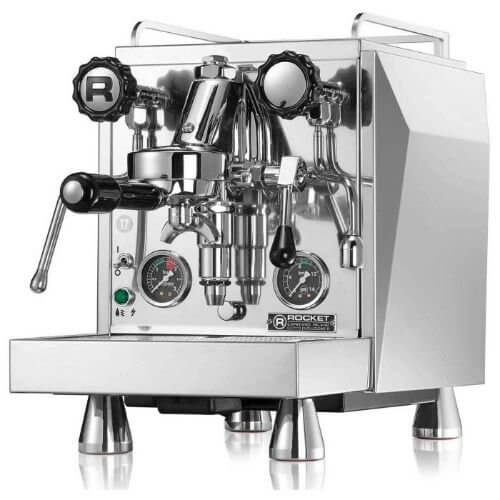
5. Rocket Giotto Evoluzione R
-
Boiler: Heat Exchanger
- Dimensions (HxWxD): 16.5” x 12” x 17”
- Pump: Rotary
- Operation: Semi-Automatic
Heat exchange espresso machines are less expensive than comparable dual boilers but still allow you to pull a shot and steam milk at the same time. So they’re a great way to get more bang for your buck.
The Rocket Giotto Evoluzione R is my pick for the best heat exchanger espresso machine on the market this year. It’s super versatile, delivering everything I want in a high-quality espresso machine without any cost-increasing extras. That includes a reliable E61 group, PID temperature control, and an easily adjustable OPV.

The Giotto Evoluzione R uses a rotary pump, which is rare in heat exchanger machines and a welcome surprise. For one, it means you can plumb it directly or rely on the 98-ounce water reservoir. But more importantly, it makes this one of the quietest heat exchangers I’ve tested.
One thing I love about Rocket is their commitment to the aesthetic. Handmade in Milan, Italy, Rocket espresso machines have an old-school vibe and elegant styling, which is why the PID controller is hidden behind the drip tray (3). I like this from a design perspective, but it gets tiresome if you like to adjust the temperature frequently.
PROS
- Quiet rotary pump
- PID temperature control
- High-quality build and elegant aesthetic
CONS
- Have to remove drip tray to access PID
- Large and expensive
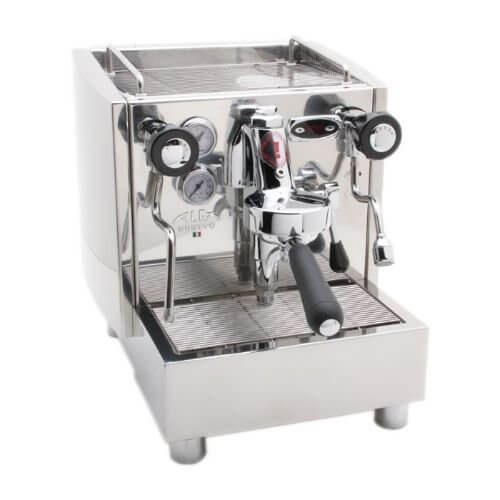
6. Izzo Alex Duetto IV Plus
-
Boiler: Dual Boiler
- Dimensions (HxWxD): 16.5” x 14.25” x 17.25”
- Pump: Rotary
- Operation: Lever action semi-automatic
Izzo’s Alex Duetto IV Plus is my favorite dual boiler espresso machine this year, with two copper boilers that deliver excellent temperature stability and accuracy. I love that the boilers can be controlled independently. So when I’m craving straight espresso, I only need to power on the brew boiler. This cuts the heat-up time to less than 10 minutes and does good things for my power bill.
This is one of the quietest prosumer espresso machines on the market, even more so than the Rocket Giotto. Izzo carefully configured the interior to minimize noise from the rotary pump and even added magnets to the drip tray to reduce vibrations. I can confidently make coffee early in the morning without fear of retribution from my neighbors.


The Alex Duetto relies on the same well-known E61 grouphead seen on most of these coffee machines, which includes automatic low-pressure pre-infusion (4). Upgrades to the latest model include more space under the grouphead for larger mugs and an improved PID with shot timer.
The build quality is stand-out, with the frame, outer casing, and most components made from stainless steel. Some manufacturers use cheaper materials on small parts you won’t notice, but I checked all the usual sneaky spots, and Izzo uses stainless steel throughout.
PROS
- Two boilers with independent PID temperature control
- Ultra-quiet design
- Excellent build quality
CONS
- Large and heavy
- Mirror finish shows dirt and scratches
7. La Pavoni Professional 16-Cup
-
Boiler: Single Boiler
- Dimensions (HxWxD): 14” x 10” x 16”
- Pump: n/a
- Operation: Manual Lever
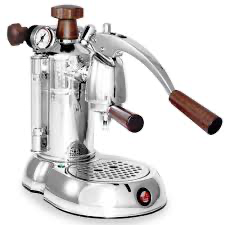
If you’re the kind of espresso lover who appreciates the control and satisfaction that only a manual machine can provide, you’re sure to enjoy the La Pavoni Professional. Sure, it’s not quite as easy as a semi-automatic, but I think mastering it is part of the fun!
Lever espresso has been enjoying a bit of a moment of late, and there are many new models on the market. I’ve tested a number of them, but I can’t help but remain loyal to the classic La Pavoni.

The Professional is an up-market follow-up to the popular Europiccola, adding a pressure gauge and doubling the capacity. Larger households will appreciate the size increase, but everyone will enjoy the pressure gauge. I use it to ensure consistent extraction and experiment with pressure profiling.
It’s a single boiler espresso machine, so you have to wait between pulling espresso and steaming milk. But that wait is short; it heats in about 5 minutes.
This machine comes with both single and double-shot baskets, though with a smaller-than-standard 52 mm diameter. This is probably my biggest complaint about the Professional. Not only does it make it harder to buy accessories, but it only supports a dose of about 14 g.

The Professional offers two ways to steam milk, and you can easily swap between them. There’s a traditional steam wand with a 3-hole tip and an auto-frothing attachment. I found the auto-frother handy for cappuccinos, but you’ll need to master the steam wand for latte art.
La Pavoni’s manual espresso machines, handmade in Italy, are as much a work of art as they are an appliance. I love their cool steampunk aesthetic, which remains true to the original all these decades later. Just remember that they need extra height to accommodate the lever, so plan your espresso bar accordingly.
PROS
- Classic old-school lever design
- Fast heat-up time
- Compact footprint
CONS
- Small 52-mm filter basket
- Can’t brew and steam simultaneously
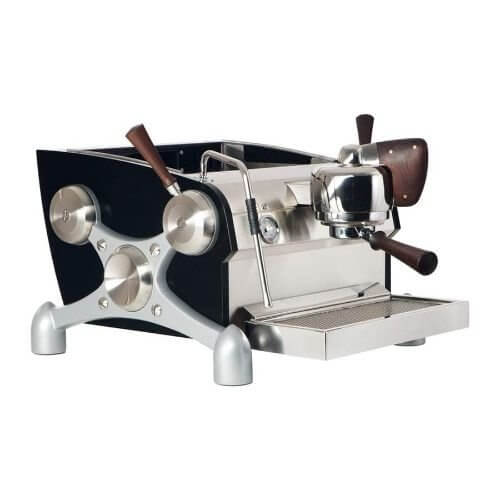
8. Slayer Single Group
-
Boiler: Dual Boiler
- Dimensions (HxWxD): 14.5” x 24.3” x 18.1”
- Pump: Rotary
- Operation: Semi-Automatic with Manual Needle Valve
If money is truly no object, buy the Slayer Single Group espresso machine. Not only does it have the chops to make high-end espresso, but it’s so beautiful that I wouldn’t be surprised to encounter it in a modern art exhibit. Testing this one was bittersweet, knowing I couldn’t afford to keep it forever.
Slayer’s stated aim is to make the absolute best espresso machine, regardless of time, cost, or effort. I’d say they nailed it (5)! Though at nearly double the price of the Linea Mini, the next most expensive machine on our list, it won’t be for everyone.

What do you get for those extra dollars?
The most exciting feature is definitely Slayer’s patented needle-valve technology, which gives you complete control over water flow during extraction. As an espresso obsessive, I love machines with flow profiling. It’s a chance to optimize one more variable in the quest for the best flavor in the cup – absolutely worthwhile if you’re buying specialty coffee beans.

The Slayer has two stainless steel boilers, a rotary pump, and a commercial-grade electronic grouphead. It delivers incredible temperature stability, certainly the best of any home machine I’ve tested, with an SSR circuit board and a PID controller adjustable in 0.1-degree increments. I found it pretty easy to navigate its features with the LCD touchscreen display, though a larger screen wouldn’t hurt.
The Slayer look is already iconic. I love the distinctive X-shaped side panels and classy wood accents, and as you’d expect at this price, the craftsmanship and materials are top-of-the-line. Indeed, the latest model includes even higher-grade internal components for better longevity. Because this was conceived as a commercial espresso machine, it lacks a water reservoir. Plan on plumbing this machine to a water line or setting up an external tank.
9. Rocket Appartamento
-
Boiler: Heat Exchanger
- Dimensions (HxWxD): 14” x 10” x 16”
- Pump: Vibratory
- Operation: Semi-Automatic
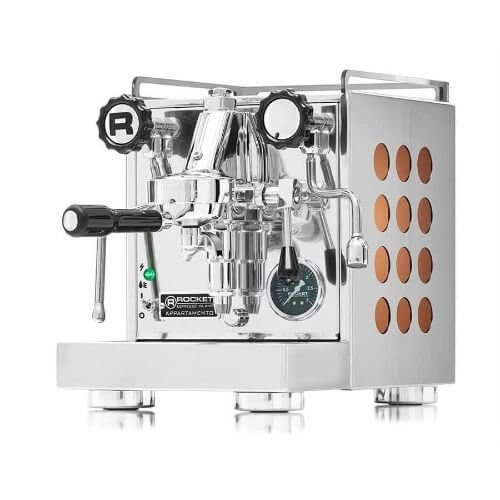
Rocket designed the Appartamento to be compact enough to fit the smallest urban dwellings; appartamento is Italian for apartment. As someone living in an apartment, I feel especially qualified to report how they fared. I’m happy to report that even my little kitchen doesn’t feel overwhelmed by this machine.
Despite its diminutive size and relatively low price, Rocket’s Appartamento has everything you need to craft top-quality espresso at home.
I think the heat exchange boiler is a smart choice, allowing for the flexibility to brew espresso and steam milk simultaneously while taking up less space than a dual boiler of similar capacity. This is paired with the classic E61 brew group with mechanical pre-infusion.

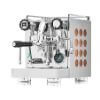
Like all Rocket machines, the Appartamento is handcrafted in Italy to rigorous standards. I like the design of this one even more than the other Rocket models. It keeps the polished steel aesthetic and classic R-labeled knob but adds circular side panel cut-outs available in various colors to suit any decor.
Despite the machine’s small size, I was impressed to find a surprisingly large 61-ounce steam boiler. I had plenty of steam power to make proper microfoam and could easily prepare four lattes in a row before giving the boiler a chance to recover. I’m also pleased with the dedicated hot water tap, as this is usually one of the first things cut when making a machine more compact.
What are the drawbacks to this lower-cost option? The vibratory pump is a bit loud, but as with the Giotto, Rocket has tried to muffle the sound and dampen vibrations. While not as quiet as rotary models, I didn’t find it unpleasant, even first thing in the morning. This machine also has a relatively tiny drip tray, but that’s a minor inconvenience. I just make sure to rinse it out once a day, which should be standard practice anyway.
PROS
- Gorgeous and compact design
- Large boiler provides excellent steam pressure
- Reliable E61 group with pre-infusion control
CONS
- Small drip tray
- Low clearance under the spout
How I Tested These Machines
Testing a prosumer espresso machine requires a more in-depth approach versus a standard home espresso machine. For the most part, these aren’t plug-and-play designs; there’s a learning curve.
Some objective tests are quick and easy. To get a baseline for each model, I measured heat-up time, brew water temperature accuracy and stability, the number of shots I could pull before the boiler needed recovery, and the time it took to steam 8 ounces of milk.
Taste testing is more challenging because it takes time to dial in each machine. It’s not a matter of pulling one or two or even ten shots. I spent enough time with each machine to master its features and quirk until I was confident I was getting the best espresso quality. Then I recruited other team members to taste test and give qualitative feedback. We used a medium-dark roast espresso blend as a benchmark and experimented with lighter roast single origins. Both straight shots and milk-based drinks were tasted.
Lastly, I scored each machine based on unmeasurable quantities like how it felt to set up and use. Were the controls intuitive? Was the pressure gauge easy to see during brewing? Was it missing features like a hot water tap or accessible OPV? How did the included features measure against the price?
Full List Of Prosumer Espresso Brands
If you’re looking to find a prosumer machine by a specific manufacturer, you can find a full list of the most popular brands below.








How to Choose A Prosumer Espresso Machine
Choosing the best pick among these high-rated prosumer espresso machines is a big decision. It’s not like sampling a new brand of coffee or picking out an easy-to-use espresso machine for newbies. You’ll be dropping a lot of cash, so you want to make sure you know what you want and what type of machine you’re getting.
To avoid potential disappointment, read this guide to the best prosumer machines carefully. It covers the important specifications you need to consider to find the best espresso maker for you.
Manual, Semi-Automatic, or Automatic?
Most prosumer espresso machines are semi automatic, which provides a nice balance between convenience and control.
- In a semi-automatic espresso machine, a pump generates the necessary 9 bars of pressure to pull an espresso shot, but the barista does everything else. That means you’re responsible for variables like grind size, dosing weight, tamping pressure, and shot timing. Some semi-auto espresso machines have an automatic pre-infusion step, while others will leave this in the hands of the barista.
- With a manual espresso machine, not only will you be in charge of all these same steps, but you need to manually generate the water pressure as well. This is usually via a pump or lever.
- In an automatic espresso machine, often called volumetric in the prosumer space, the barista no longer controls shot timing. Instead, the pressure stops automatically when a certain volume of water has flowed through the coffee puck.
The Heart of Your Espresso Machine: Vibratory vs. Rotary Pumps
Prosumer espresso machines come with two distinct styles of pump: electromagnetic vibratory pumps and mechanical rotary pumps. Appliance-grade home espresso makers use almost exclusively vibratory pumps, while commercial machines rely on rotary pumps.
Prosumer espresso machines occupy the middle ground and can make use of either.
The main advantages of vibratory pumps are that they are smaller, less expensive, and easier to repair and replace. However, they have a shorter lifespan and are louder when they operate, though good design principles can minimize the noise issue. In comparison, rotary pumps are whisper-quiet and more durable but also larger and more expensive (6).
To be very clear, none of these pros and cons has a measurable impact on the quality of espresso itself.
P.S. Special machines like these deserve equally-special grinders. If you want to go all-in and upgrade your gear, here are some of the best prosumer coffee grinders.
Direct Plumbing
Depending on your needs, another potential advantage of espresso machines with rotary pumps is that they can be plumbed directly to a water line. By contrast, vibratory pumps only pull water from a reservoir.
In commercial settings, direct-line plumbing is pretty much mandatory, but it can be equally valuable at home. Provided you can handle the plumbing logistics, you never have to worry about the reservoir running dry, and it allows for a proper low-pressure pre-infusion (7).
Choosing a Boiler: Design and Materials
All but the least expensive prosumer espresso machines allow you to pull a high-quality shot of espresso and steam milk simultaneously. You do this in two ways. You can either have two boilers, or you can rely on a heat exchanger system within one boiler. Let’s dig deeper into the pros and cons of each system. Or watch Steven from Home Brews Coffee compare all boiler designs in this video:
In a heat exchange (HX) boiler, the brew water is pulled from a pipe that runs through the boiler, while the steam and hot water come directly from the boiler. The pipe’s design is calibrated to ensure perfect brewing temperature.
HX machines are more affordable than dual-boiler machines because material costs are lower, and they have a smaller footprint with only one boiler. The trade-offs are less precise temperature control and less consistency in high-volume situations like coffee shops.
In comparison, dual boiler machines have two separate boilers for steam/hot water and brew water. That means both boilers can be ready and at the perfect temperature at all times, which is nice for the home brewer but crucial in a busy coffee shop. The downsides are that dual boiler machines tend to be larger and more expensive.
The cheapest prosumer machines, usually those under $1000, will have one boiler without a heat exchange system. In this case, you must wait for the boiler to adjust its temperature between brewing coffee and steaming milk. A single-boiler espresso machine will be far less expensive and can have a much smaller footprint, but you’ll never nail that perfect coffee shop-quality latte.
Boiler Materials
Once you’ve committed to a style of boiler, you should still take into account the impact of the material. The most common boiler materials you’ll encounter are stainless steel, copper, brass, and aluminum, each offering its own perks.
- Aluminum is usually only found on small and inexpensive espresso machines, so you won’t see it in any of the prosumer machines on this list. It’s mainly used because it’s cheap, lightweight, and has a relatively high thermal conductivity.
- Copper is the most expensive material but has the highest thermal conductivity, which is why you see it so often in high-end cookware. It’s also naturally antimicrobial. Copper boilers usually have brass endplates to make it easier to attach other components.
- Brass is an alloy of copper and zinc. It isn’t quite as thermally conductive as copper alone, but it’s less expensive and easier to manufacture. Many brass boilers are nickel-plated to make them more resistant to corrosion.
- Stainless steel is popular because it’s relatively inexpensive, easy to work with, and incredibly durable. Because it lacks the thermal conductivity of copper, it takes a tad longer to heat up.
Measure Twice, Buy Once
Compared with average domestic espresso machines, prosumer espresso machines tend to be larger than you expect, except for the Decent Espresso DE+1 Pro, which is in a different league. So measure your space carefully before choosing a model.
If you’re short on space, look for a machine with a heat exchange boiler instead of dual boilers, and a vibratory pump rather than a rotary.
Another size consideration is the clearance between the group head and the drip tray. If you like larger drinks, this can be a crucial factor that is often overlooked. If you only drink straight espresso shots, you don’t need to worry about it.
Grouphead Designs
Steady boiler temperature is great, but a well-designed grouphead is vital for maintaining ideal water temperature while pulling the espresso shot — arguably the most important part of the whole process (8).
There are two well-known group designs, with slight variations of each between brands. The classic E61 grouphead has long been the most popular, and it continues to be widely used. This is especially true for the home setting.
The temperature stability, especially when combined with double boilers, is excellent for low volume use in a domestic setting.
This is because the E61 grouphead constantly circulates hot water through pipes between the grouphead and the boiler.
In recent years, the saturated grouphead has offered even better temperature stability. In this case, the grouphead is bolted directly to the brew boiler, and hot water flows from the boiler to the group.
A third solution, which is rare in the home market, is to have an electronic grouphead with a heating element built right in. These offer the most control but are also more expensive.
Milk Steaming
With entry-level espresso machines, there are a ton of milk frothing options, all designed to dumb down the process. You’ll come across froth enhancers, Pannarello steam wands, automatic milk frothing, frothing carafes, and so on.
But if you’re choosing among top prosumer espresso machines, expect to need a little expertise. Most are equipped with commercial-style steam wands. They might take some practice, but they’re your best route to silky-smooth microfoam.
Given that every prosumer espresso machine has a similar steam wand, you’ll want to consider the range of motion, the size of the steam boiler, how cool the wand stays while in use, and whether there is a separate hot water wand. The importance of these factors will depend on your needs.
If you’re in the business of latte art, opt for a fully articulated steam wand and a larger steam boiler, even if that means a bigger espresso machine. The larger steam boiler means better steam power and temperature stability, especially if you’re making a few milky drinks in a row. If you value an Americano more than a cappuccino, you may want to prioritize the hot water
Best Overall
Premium Choice
Budget Pick
The Verdict
Every machine reviewed here is more than worthy of a place in any espresso lover’s home.
Still, our all-around favorite this year is the La Marzocco Linea Mini. It stands out from the crowd thanks to its compact frame, commercial-grade components, best-in-class milk steaming, and colorful retro style. You’ll never regret adding one to your home espresso bar.
FAQs
How long should an espresso machine last?
A prosumer-grade espresso machine can last 10 or 15 years, if not longer, though you may need to replace or repair some components along the way. That said, given the constant evolution in technology, you might be tempted to replace your machine once a decade regardless.
What is flow profiling?
Flow profiling is when you adjust the rate of water flow through the group during espresso extraction to optimize the flavor of the espresso. It has become increasingly common with the current influx of specialty coffees.
Flow rate can impact every phase of the extraction, including the pre-infusion. And as more baristas experiment with the technique, it’s being found that different coffees benefit from different flow rates (9).
How often should I backflush my espresso machine?
You should backflush your espresso machine about once a week. Backflushing is an important part of cleaning and maintaining your espresso machine. In a home setting, with a machine that gets daily use, aim to backflush using just water about once a week. Then do a proper backflushing with an appropriate cleaning solution approximately once every 200 shots.
References
- Reznick, A. (2013, May 13). Inside La Marzocco: Starbucks’ original espresso machine gets a high-tech makeover. Retrieved from https://www.geekwire.com/2013/meet-linea-pb-la-marzocco-unveils-generation-linea-classic/
- Korhonen, J. (2020, June 15). Milk Steaming 101 – Basics of Creating Microfoam. Retrieved from https://www.baristainstitute.com/blog/jori-korhonen/june-2020/milk-steaming-101-basics-creating-microfoam
- Velits, M. (2017, July 18). Andrew Meo founder of Rocket Espresso Interview. Retrieved from https://isadore.com/blog/article/andrew-meo-founder-of-rocket-espresso-interview?do=CloseMaskPopup
- Marcocci, M. (n.d.). Coffee group heads 101. Retrieved from https://www.beanscenemag.com.au/coffee-group-heads-101/
- Wolfson, J. (2018, May 4). Behind the Scenes with Slayer Espresso. Retrieved from https://coolhunting.com/food-drink/slayer-espresso/
- Hurlbatt, M. (2016, April 15). Why Rotary Vane Pumps are Essential for Espresso. Retrieved from https://pumpsolutions.com.au/why-rotary-vane-pumps-are-essential-for-espresso/
- Prestidge, J. (2016, January 13). 8 Steps to Purchasing the Perfect Espresso Machine. Retrieved from https://perfectdailygrind.com/2016/01/8-steps-to-purchasing-the-perfect-espresso-machine/
- Burton, G. (2011, January 11). The E61 Group Head: An Oldie but a Goodie. Retrieved from https://fivesenses.com.au/blogs/news/the-e61-group-head-an-oldie-but-a-goodie/
- Grant, T. (2020, July 29). How Flow Profiling Impacts Espresso Extraction. Retrieved from https://perfectdailygrind.com/2020/07/how-flow-profiling-impacts-espresso-coffee-extraction/
