
MR. COFFEE CAFE BARISTA REVIEW: A WORTHY ESPRESSO MACHINE?
Automatic espresso machines typically come at a price point that makes them inaccessible to the average coffee lover on a budget. But the super-affordable Mr. Coffee Cafe Barista bucks that trend. It offers one-touch espresso shots, lattes, and cappuccinos for little more than the cost of a decent drip coffee maker.
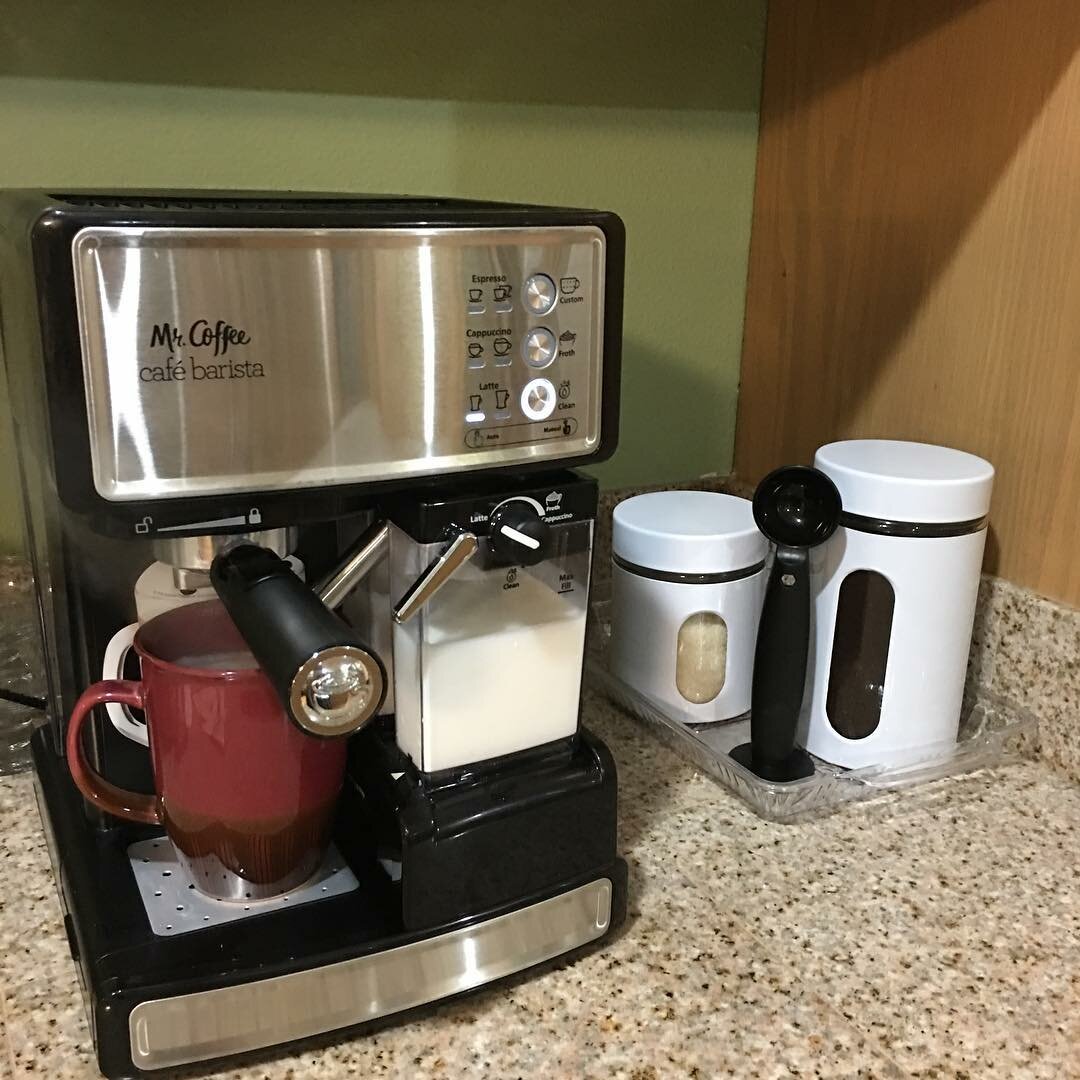
Of course, when it comes to espresso machines, a low price doesn’t always equal a great value. So I tested the Cafe Barista espresso machine to find out how its performance and build quality stack up against its cost. Read on for my honest thoughts.
What I Liked:
- Easy-to-use one-touch drinks
- Adjustable milk froth texture
- Detachable milk carafe can be stored in the fridge
- Compact design
- Very affordable price
What I Didn’t Like:
- Inconsistent brew temperature
- Mostly plastic parts
- Inconvenient milk cleaning cycle
The Full Mr. Coffee Cafe Barista Espresso Maker Review
The Mr. Coffee Cafe Barista Espresso and Cappuccino Maker is an entry-level machine clearly targeted at those first looking to explore the world of home espresso. If you want to learn the basic barista skills you need to finally break your coffee shop habit, it’s a great starting point. But it’s definitely not the end-game.
How We Rated It
-
Brewing System And Features
-
Milk Frothing
-
Coffee Flavor
-
Ease Of Use
-
Build Quality
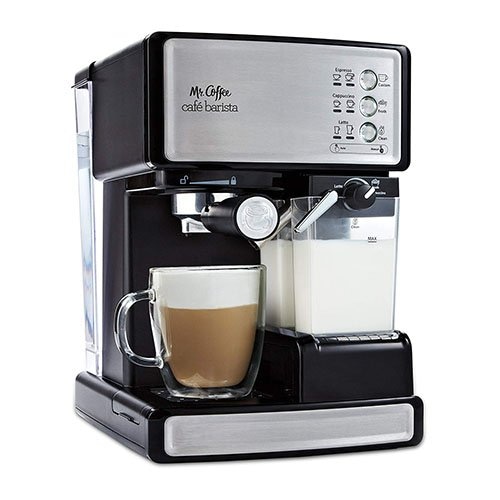
What Is The Cafe Barista?
The Cafe Barista is a beginner-friendly automatic espresso machine with a built-in automatic milk frother. Mr. Coffee inexplicably describes this as a semi-automatic machine, but using it quickly reveals this is not the case. Indeed, if you come across a review that describes it as “semi-automatic,” that’s probably a good indication that the reviewer is regurgitating details from the website and has little knowledge of espresso machines.
Key Features And Customizable Options
The Cafe Barista offers six pre-programmed one-touch drink options: espresso, double espresso, small latte, large latte, small cappuccino, and large cappuccino. The difference between the latte and cappuccino is the ratio of frothed milk to coffee, and the larger drinks are made with double shots of espresso.
The preset drinks are not customizable. You can’t adjust brew temperature, milk temperature, drink volume, or ratio of espresso to milk. However, you can pull an espresso shot manually, allowing something closer to a ristretto or lungo. And you can manually add extra milk foam to any drink.
Pressurized Filter Baskets
The Cafe Barista has a 51-mm-diameter portafilter equipped with two interchangeable pressurized filter baskets – one for single shots and one for double shots. The relatively small basket (commercial machines use a 58-mm filter) limits the amount of coffee you can pack in. I maxed out around 7 grams of ground coffee for the single espresso and 15 grams for the double. This is akin to old-school Italian espresso, but modern cafes often use as much as 22 grams for a double shot (1).
Pressurized filter baskets limit the quality of espresso, but they’re a savvy choice for a beginner machine. They produce a decent shot with a nice layer of crema even if you haven’t mastered puck prep or you’re relying on pre-ground coffee beans.
What is the Mr. Coffee Cafe Barista pump pressure?
The Cafe Barista has a 15-bar pump, but it’s a common misconception that pump pressure dictates extraction pressure. The extraction pressure, which ideally is around 9 bars, is generated when the pressurized water hits the compact puck of ground coffee.
Does Mr. Coffee Cafe Barista make regular coffee?
No, you can’t make coffee with this machine. The closest you can get is to ready the portafilter for a double shot and use the manual espresso mode, which allows you to pull a longer shot up to 5 ounces. Top this off with hot water to make something similar to brewed coffee at home. Unfortunately, you’ll need a separate kettle; this machine doesn’t have a dedicated hot water tap.
Pros And Cons Of The Milk Frothing System
The Cafe Barista uses an automatic milk frother with a detachable milk carafe. I have mixed feelings about this design, so I’ll relay my experiences and thoughts to let you decide for yourself.
The Good
The obvious advantage of an auto-frother versus a steam wand is its ease of use. Just fill the carafe with milk and press a button.
I was happily surprised to find this machine lets you adjust the milk texture using a dial on the front of the carafe.
Many budget brands, like Mr. Coffee, that don’t specialize in espresso machines fail to recognize that not all frothed milk is created equal. This machine lets you toggle between an airier froth for a cappuccino and a creamier foam for a latte.
I’ve seen some reviewers complain that this adjustment isn’t automatically programmed into the buttons, but I disagree. By adjusting it manually, you get more specific control, which can be handy when frothing different milks (2). I achieved reasonably silky milk foam when testing oat and almond milks.
The Neutral
This isn’t necessarily a criticism, but it definitely caught me off guard. When you ask this machine to make a latte or cappuccino, it adds the frothed milk to the cup first and then the espresso – the opposite of a typical barista preparation. Your latte is really more a latte macchiato.
The Not So Good
The biggest downside I experienced with this frother was a lack of consistency. Both the volume and temperature of milk dispensed varied substantially, often depending on recent usage. I might get 3 ounces of milk in my first cappuccino and nearly 4 ounces in the second.
There are no markings on the carafe to tell you how much milk to add, but if you add too much, the carafe can be removed and the excess stored in the fridge. So I didn’t find milk waste was a big issue.
Cleaning The Frother
Mr. Coffee recommends cleaning the frother after every milk-based espresso drink. I found it fine to make two in a row, but you’ll definitely want to clean it at least once a day, and it’s a little annoying compared to how easy it is to purge a steam wand.
Remove the carafe and place an empty cup under the milk dispensing tube. Then turn the control knob to Clean. Press and hold the Latte/Clean button until it starts the cleaning cycle which takes 30 seconds to complete. It’s not challenging, but it’s tiresome after every coffee drink. And you don’t want to take your chances with rancid milk in the plumbing.
How To Use The Mr. Coffee Cafe Barista
This is a very user-friendly espresso machine, as you’d hope given its target audience. I didn’t find there was much of a learning curve. It has an On switch on the side and three buttons on the front, each with an indicator light.
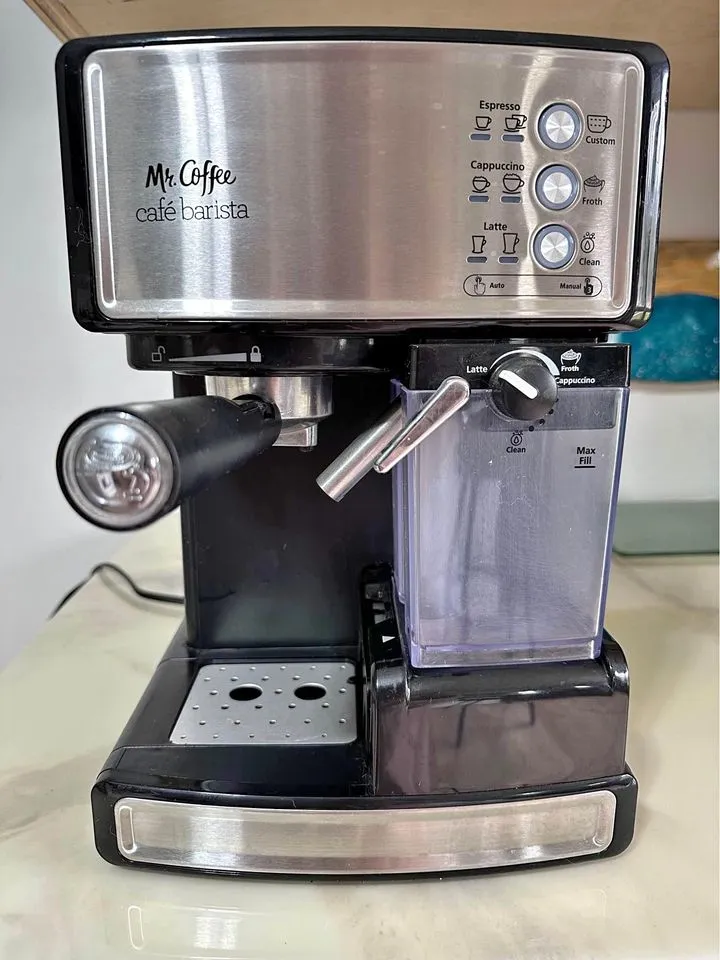
The three buttons correspond to espresso, cappuccino, and latte. Double-clicking any button doubles the volume of the drink, so make sure you have chosen the corresponding double or single-shot filter basket before making espresso.
To brew a double espresso:
- Turn the machine on and let it heat while you prepare the portafilter.
- Add 15 g of ground coffee to the filter basket.
- Distribute the coffee grounds evenly and tamp firmly.
- Slot the portafilter into the machine and set a cup below the spouts.
- Double-click the espresso button. It stops automatically.
Preparing a cappuccino or latte requires a few extra steps:
- Complete steps 1 – 4 above, ensuring your cup is below both the espresso and milk spouts.
- Add milk to the milk reservoir.
- Adjust the milk froth control knob.
- Double-click the latte or cappuccino button. It performs the rest automatically.
The User’s Manual is organized and easy to follow, so it won’t take you long to memorize and master all the features. Like every appliance, you’ll learn its quirks and charms as you use it.
I quickly noticed that it tended to clog when I used my standard espresso grind, likely due to the pressurized baskets (3). I recommend using a slightly coarser grind and favoring darker roasts for the best results.
Each button has a different function if you press and hold. Holding the espresso button lets you pull a shot manually up to 5 ounces. Holding the cappuccino button froths milk without brewing. And holding the latte button starts the frother cleaning mode.
Cleaning And Maintenance
Other than the milk reservoir demanding extra attention, as already discussed, this machine has typical cleaning requirements. I like to pull a shot through an empty portafilter every day or two, which rinses the group with hot water. Once a week, I’ll disassemble the portafilter for proper cleaning with soap and water.
Mr. Coffee descaling the unit every 40 to 80 brew cycles, but you can push this much longer by only using filtered water in the reservoir.
Does The Mr. Coffee Espresso Machine Make Good Espresso?
The Mr. Coffee Cafe Barista is a bargain buy, and its espresso quality reflects its price. It’s fine but not a competitor to your local coffee shop.
I found the shots to be a little weaker than I’d prefer. Thanks to their layer of crema, they looked rich, but they lacked the heavy body and creamy mouthfeel of a shot from a high-end espresso machine.
This is likely because you can’t grind fine enough for a complete extraction without risking clogging the pressurized filter basket. There is no solution to this problem, but it’s considerably mitigated by sticking to darker roasts (4).
Consistency Issues
Lack of consistency is a hallmark of budget espresso machines. My measurements of brew water temperature varied as much as 12 F between shots, which can have a significant impact on extraction (5).
It has been observed using a standardised recipe and solid brewing technique that brewing hotter will result in higher extraction yields, while brewing colder will extract content at a slower rate.
It’s frustrating to pull a delicious single shot of espresso and then be unable to repeat it.
Build Quality And Design Features
This Mr. Coffee machine has a reasonably attractive modern design, but it was not built to last – nor would I expect it to be at this price. It has a fully plastic body with a few metal accents on the front. It comes with a plastic tamper and coffee scoop, which I’d definitely recommend upgrading to a metal tamper.
It has a 1-year warranty, and my experience with espresso machines of this caliber suggests it will last about three years with proper care and maintenance. I think that’s suitable for an entry-level espresso machine. If you’re still enthusiastic about espresso in three years, you’ll be ready for an upgrade anyway.
It’s an impressively compact machine, given its functionality, measuring just 12.6 x 8.86 x 11.22 inches. Not only does it slot under my upper cupboards, but I can refill the water reservoir with a small pitcher without even having to slide it out. That said, if you prefer, the 40-ounce tank at the back of the machine is removable for easy filling at the sink.
Is The Cafe Barista Worth Its Price?
The Cafe Barista is a nice option for a first espresso machine. While its espresso consistency and build quality leave something to desired, its low price tag keeps the value for money reasonable.
Priced around $200, this machine is a great way to explore the world of espresso at home (and decide if it’s for you) without putting too much strain on your bank account.
Plus, it’s the cheapest coffee machine I’ve encountered with an automatic frother and detachable milk carafe.
Don’t Buy The Cafe Barista Espresso Maker If…
- You prefer more user control: The Cafe Barista prioritizes convenience over control. If your priorities skew the other way, consider a semi-automatic espresso machine like the Breville Cafe Roma or the automatic Breville Barista Express. Alternatively, a more advanced super-automatic like the Phillips 3200 lets you adjust options like coffee strength and brew temperature.
- You want a proper steam wand: If you want the convenience of an automatic frother with the milk quality only achievable with a steam wand, the Breville Bambino Plus offers a best-of-both-worlds solution. It has a true steam wand that can be operated manually or automatically, and you can even adjust the milk temperature and texture.
- You’d rather spend more for better build quality: The Cafe Barista is one of the least expensive fully automatic machines, which means sacrifices have inevitably been made to quality. If you’re willing to spend more for a longer-lasting espresso machine, check out the Gaggia Brera. It offers the legendary brand’s quality at a surprisingly reasonable price point.
The Verdict
The Mr. Coffee Barista Espresso Maker is a perfect example of getting what you pay for. Does it make passable espresso? Yes, most of the time. Is it the best espresso maker money can buy? Definitely not. But is it a solid buy at its price point? For the right user, absolutely.
This machine is great for espresso beginners who aren’t ready to invest in a more advanced home machine. Just plan on upgrading in a few years if you want to step up your cappuccino game.
References
- Mitchell, B. (2022, November 17). Has the size of a double espresso changed? Retrieved from https://newgroundmag.com/2022/11/has-size-of-a-double-espresso-changed/
- Blais, C. (n.d.). The Facts about Milk Foam. Retrieved from https://www.ricardocuisine.com/en/articles/food-chemistry/521-the-facts-about-milk-foam
- Owen, T. (2018, March 26). Espresso: The Grind. Retrieved from https://library.sweetmarias.com/espresso-the-grind/
- Pines, H. (2019, July 14). Roasting For Filter Coffee vs. For Espresso. Retrieved from https://perfectdailygrind.com/2019/07/roasting-for-filter-coffee-vs-for-espresso/
- Five Senses Coffee. (2015, April 8). Brew Temperature and its Effects on Espresso. Retrieved from https://fivesenses.com.au/blogs/news/brew-temperature-and-its-effects-on-espresso
