
BEST LATTE MACHINE OF 2026 (REVIEWS AND A BUYING GUIDE)
How do you find the best latte machine that meets your needs? Search among Breville, Philips and Profitec brands.

Photo: Home Brews Coffee
It’s not just about spending more money. A delicious latte has only two parts: flavorful espresso and perfectly steamed milk. So if you’re looking for the best, you want a machine that delivers both.
At A Glance:
- Top Pick: Breville Barista Pro
- Best For Beginners: Philips 3200 LatteGo
- Best Semi-Automatic: Gaggia Classic PRO
We’ve tracked down eight amazing machines that do just that, with options for all budgets and skill levels.
The 8 Best Latte Machines Of 2026
| image | product | details | |
|---|---|---|---|
| No products found. | Breville the Barista Pro |
|
|
| No products found. | Philips 3200 With LatteGo |
|
|
| No products found. | Gevi Espresso Machine |
|
|
| No products found. | Gaggia Classic Pro |
|
|

|
Lelit Bianca V3 |
|
|
| No products found. | Breville Bambino Plus |
|
|
|
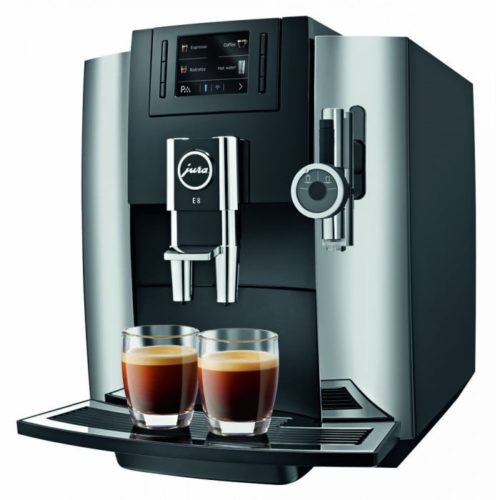
Jura E8 |
|
|
| No products found. | Delonghi Nespresso Lattissima |
|


Remember, while these are generally espresso machines, this is not a review of the best home espresso machines. In this list of the best latte machines, I will focus on the details that make them great for lattes in particular.
1. Breville the Barista Pro
Style of machine: Automatic
- Milk system: Manual steam wand
- Heat-up time: 3 seconds
- Capacity:

I’ve been recommending the Breville Barista Express for years, but the recent release of the Barista Pro has forced me to change my tune. It’s a better espresso machine overall and a better espresso machine for latte lovers in particular. In fact, I think it’s the best latte machine of the year.
The Barista Pro has a built-in grinder with 30 grind size settings, nearly double the 16 of the Barista Express. It’s much easier to dial in the perfect size to optimize extraction.


The Barista Pro has an LCD display, a clear upgrade from the analog Barista Express, although I’m disappointed Breville opted to do away with the pressure gauge. Using the display, you can program water temperature, shot volume, and (my favorite) pre-infusion time (1).
With adjustable pre-infusion, more grind sizes, and temperature control, the Barista Pro can pull delicious shots at every roast level.
Great espresso is only one-third of a latte, so let’s talk milk. The Barista Pro features Breville’s new-and-improved ThermoJet heating system, which heats in just 3 seconds! Not only is your coffee ready fast, but there’s less waiting time between brewing and steaming – a big win for latte flavor.
Breville takes advantage of the powerful ThermoJet heater by pairing it with a four-hole steam wand tip. I frothed milk for a latte in about 40 seconds, more than twice as fast as the Barista Express.
Pros:
- Fast and powerful ThermoJet heater
- Built-in coffee grinder with 30 settings
- Easy-to-use LCD display
Cons:
- No pressure gauge
- Takes some skill to use
2. Philips 3200 With LatteGo
Style of machine: Super automatic
- Milk system: Automatic LatteGo frothing carafe
- Heat-up time: 1 minute
- Capacity: 60.9 oz
The Philips 3200 series fully automatic espresso machine gets my vote as the best latte machine for beginners. It’s easy to use and maintain and comes at a price point that won’t shock a coffee novice.
This is a super-automatic espresso and cappuccino machine, so preparing a latte is as easy as pushing a button. The built-in ceramic burr grinder means you’re always brewing with freshly ground coffee for the best flavor. Our taste testers unanimously preferred it to a Nespresso capsule – to no one’s surprise.


The LatteGo frothing carafe uses a patented design to whip milk with air. It delivers silky smooth froth but can’t quite match the microfoam prepared by a professional-style steam wand. On the other hand, unlike a manual steam wand, it’s always consistent regardless of user skill.
The touchscreen display on this machine makes it easy to select and customize one of 5 pre-programmed drinks, including a latte. I especially love that you can change the brew temperature, which makes it possible to achieve sweet and nuance shots with different coffee roast levels.
I usually find maintaining a fully automatic espresso machine with milk frother to be a headache. And that feels like a slap in the face because it’s supposed to simplify my morning, not add chores. Luckily, Philips 3200 bucks that trend. Most impressively, the patented LatteGo frother contains no tubes or piping to collect stale milk; it simply snaps into two dishwasher-safe parts. This model also includes a removable brew group and AquaClean filtration system.
Pros:
- Easy-to-use one-touch operation
- LatteGo frother is easy to clean
- Can adjust drink strength and temperature
Cons:
- Plastic build
- Loud
3. Lelit Bianca V3
Style of machine: Semi automatic
- Milk system: Professional no-burn steam wand
- Heat-up time: 20 – 25 minutes
- Capacity: 84.5 oz

I’ll be honest here, any prosumer espresso machine will make a great latte. If you drop several thousand dollars on a machine of this quality and commit to a few weeks mastering its ways, cafe-quality lattes await. But here’s why I suggest the Lelit Bianca V3.
With the Bianca, Lelit was among the first brands to take pressure profiling mainstream. The paddle atop the group lets you adjust the water flow as you pull a shot – an extra layer of control to optimize extraction and tease new flavors from your favorite beans.
Of course, the Lelit Bianca V3 has all the other features you expect from a premium double-boiler espresso machine, including a PID, E61 group, and commercial 58 mm portafilter (2). The result is amazing espresso that stood out by a wide margin in our taste tests.
But a latte is more than just espresso, so how’s the milk system? The Bianca’s 1.5-liter steam boiler and professional-grade steam wand are more than up to the task of creating perfect silky microfoam. It’s far more powerful than any other model on this list; it took me under 30 seconds to steam milk for a latte.
Lastly, I have to mention this machine’s cool style, including warm wooden accents and a bottomless portafilter, options most brands would charge a premium for. Plus, there’s the innovative moveable water tank, which fits on either side or the back to suit you countertop needs.
The catch is that along with being expensive, a prosumer machine like this takes practice to master. You can’t just plug it in and press a button. This incredible machine is for the coffee geek who wants to learn the craft of preparing the perfect latte.
Pros:
- Manual flow control paddle
- Cafe-quality espresso
- Incredible build quality and great style
Cons:
- Expensive
- Takes practice to use
4. Gevi Espresso Machine
Style of machine: Semi automatic
- Milk system: Manual steam wand
- Heat-up time: 30 seconds
- Capacity: 50.7 oz
Gevi is a relative newcomer to the home coffee market, but I’m already impressed with this budget offering. It outperformed other popular low-cost machines we tested, like the Delonghi EC155, Dedica, and Breville Cafe Roma, delivering more steam pressure and better brew temperature stability.
The first thing I noticed when unboxing this latte and cappuccino machine was the large temperature gauge on the front of the machine. It caught me off guard because I expected a pressure gauge. A thermometer is a cool idea for beginners to monitor the change in temperature between brewing and steaming, but I’d still love to see a pressure gauge.
The quality of espresso was good, not amazing. A pressurized portafilter is excellent for newbies but limits how great an espresso can be. However, I love that Gevi includes an automatic pre-infusion stage to improve extraction and flavor.


I prefer the Gevi’s steam wand to most similar machines I’ve tried. Many machines add a frothing aid to make it easier to add air to the milk, but it becomes hard to avoid adding too much air, turning your creamy latte into a foamy cappuccino. Gevi keeps it simple and classic with a 360-degree swivel wand and a knob to control steam pressure. It took me about a minute to steam the milk for a latte – not overly fast, but top-notch for a machine at this price.
The question mark with this new machine is its longevity. Most machines in this price range aren’t built to last. I wouldn’t count on more than 3 years for this or any espresso machine under $200.
Pros:
- Automatic pre-infusion stage
- Above-average steam pressure
- Low price
Cons:
- Lots of plastic parts
- Pressurized filter limits espresso quality
5. Gaggia Classic Pro
Style of machine: Semi automatic
- Milk system: Professional steam wand
- Heat-up time: 10 minutes
- Capacity: 72 oz
The Gaggia Classic Pro is, for lack of a better word, a classic (3). I always recommend this entry-level prosumer machine to friends who want to get into serious espresso without dropping thousands of dollars. Despite features like a commercial-style 58 mm group, stainless steel build, and proper boiler, it’s actually one of the more affordable options on this list. And the value only increases when you factor in its longevity.
The Classic Pro and the Profitec Pro 700 are the only machines on this list to use a boiler rather than a thermoblock heater. A boiler takes a bit longer to heat up, but if you’re a latte nerd, you know it delivers better pressure and drier steam, which means superior microfoam. Get your inner latte artist ready!


I’ve always said the Gaggia Classic Pro was a fantastic espresso maker, but I’ve only recently considered it a great latte machine. Why? They finally upgraded to a professional steam wand! The older models used a Pannarello wand, which is sort of the wand equivalent of a pressurized filter basket. It’s easier to make something that looks good, but the flavor just isn’t there.
This is a semi-automatic espresso machine without a lot of bells and whistles. Don’t expect a touch screen or programmable anything. You’ll need to develop some home barista skills to get the best out of it, but the trade-off is incredible lattes at a great price. And if you’re not quite ready to go full barista, it’s compatible with ESE pods.
Pros:
- Commercial-quality build
- Uses a true brew/steam boiler
- Upgraded professional steam wand
Cons:
- Slower heat-up time
- Takes practice to master
6. Breville Bambino Plus
Style of machine: Automatic
- Milk system: Automatic steam wand
- Heat-up time: 3 seconds
- Capacity: 64.2 oz
The Breville Bambino Plus is the rare espresso machine that appeals to experts and novices alike. It has features like PID temperature control and programmable pre-infusion to please the pros, but the easy-to-use design means anyone can prepare a great latte. It’s the only machine with a permanent spot on my home counter, even as various test models come and go.
The Bambino Plus is a programmable automatic espresso machine that relies on volumetric dosing. After programming the shot volume, preparing an espresso with this machine is as simple as pressing a button (4).
We want to do things that are better, faster, simpler, and more engaging. Simplicity is one of the core values.
The automatic steam wand is the feature that won me over. Just set your preferred milk temperature and texture, put the wand in the included frothing pitcher, and let it work its magic. Automatic frothing isn’t uncommon, but the froth quality in this case is stunning. I expected I’d prefer to steam manually, but I’ve been hard-pressed to outperform the auto froth.

The Bambino Plus is the best automatic latte machine for home use – a compact latte machine with an attractive design. Its exterior is mostly plastic, which is not as durable as metal but does keep costs reasonable. I’ve had mine for two and a half years, and it’s still going strong. My only real disappointment was that it didn’t come with a non-pressurized basket, but that was easily remedied with a $10 Amazon purchase.
Pros:
- High-quality auto-frothing steam wand
- Programmable volumetric dosing
- Great value for money
Cons:
- Non-pressurized basket not included
- Plastic build
7. Jura E8
Style of machine: Super automatic
- Milk system: Automatic frother
- Heat-up time: < 1 minute
- Capacity: 64 oz

You can’t beat a Jura super-automatic espresso machine if you want a custom latte at the touch of a single button. I love the E8 in particular because it includes Jura’s best technological advances without reaching the stratospheric prices of the higher-end models. This is not a cheap coffee maker, but the value is incredible.
Jura machines stand out for the quality of their espresso, a result of their patented pre-infusion and extraction technologies. In my opinion, fully automatic machines will never match a skilled barista. But Jura gets as close as any I’ve tried, definitely outperforming the Philips 3200 in our taste tests.


The E8 has an automatic frother that is excellent but not as impressive as the espresso. The milk is properly warm and frothy but doesn’t have the texture of real microfoam. I was a little disappointed that the position of the frother off to the side keeps this from being an entirely one-touch operation; you need to move your mug to add milk.
The main reason this model is my top pick among fully automatic latte machines is the amount of customization it allows. There are 15 pre-programmed specialty drinks for which you can adjust the coffee strength, brew temperature, milk temperature, shot volume, and amount of milk – all easily done using the full-color display.
Pros:
- Excellent espresso flavor
- Tons of customization options
- Easy-to-use full-color display
Cons:
- Expensive
- Limited grind size options
8. Delonghi Nespresso Lattissima
Style of machine: Super automatic with pods
- Milk system: Automatic frothing carafe
- Heat-up time: 40 seconds
- Capacity: 33.8 oz
Let me say right off the bat that I know a Nespresso machine doesn’t make true espresso and that freshly ground coffee always delivers a more flavorful brew. But a capsule machine provides the convenience of a super-auto at a more approachable price point with less maintenance, so I certainly understand the appeal.
The Lattissima Pro, made by De’Longhi, pulls the same crema-topped shot of espresso you’d expect from any Nespresso machine. But for latte fans, its milk frother is a huge step up from the basic Aeroccino. It uses the popular De’Longhi Automatic Cappuccino System with an integrated milk carafe to prepare milky drinks at the touch of a button.


The milk is nicely creamy, though more of an airy froth than silky real-deal steamed milk. But it absolutely nails the temperature. I recorded an average of 142 F, just right to enhance milk’s wonderful natural sweetness. Milk is at its sweetest from 135-150°F (that’s 57-66°C) As you go hotter, you lose the sweetness. If you go too hot, you’ll scald the milk.
My main complaint with this machine – and, indeed, all Nespresso machines – is the dose size. A Nespresso capsule barely holds enough coffee for a single shot, whereas a standard latte uses a double shot. I usually solve this by brewing two capsules in a row, but this is hardly a cost-effective solution.
We’re all worried about the environmental consequences of pod brewers, but I take some comfort in Nespresso’s extensive recycling program (6). This machine also has a programmable energy-saving mode, which shuts it down after a period of inactivity.
Pros:
- Fast and convenient to use and clean
- Good-quality frothed milk
- Durable aluminum casing
Cons:
- Small dose in coffee capsules
- No control over brew temperature
What’s The Difference Between An Espresso And Latte Machine?
Good question! A latte machine is any espresso machine that can also froth milk for a latte. So it needs to have a steam wand or automatic frothing system.
Some coffee lovers go as far as to say that you don’t need to worry much about the espresso side of things, as it’s such a small part of the overall milky taste of a latte. I beg to differ – the best latte starts with the best coffee – but the point is well taken. The goal here is to find a machine that handles the milk well.
The Difference Between Cappuccinos, Lattes, And Other Espresso-Based Drinks
You probably already know this if you love lattes enough to be shopping for a latte maker, so I’ll keep it short. But it’s worth clarifying what a latte is (and isn’t) before you buy a coffee machine specifically for lattes.
A traditional latte is a sweet espresso-based drink made with one-third espresso, two-thirds steamed milk, and a thin top layer of micro-foam. It differs from the cafe au lait, flat white, latte macchiato, and other milky espresso-based drinks only in the milk texture and milk-to-espresso ratio.
A classic comparison would be the cappuccino, which is traditionally one-third each espresso, steamed milk, and milk foam. Any espresso machine with a steam wand can prepare a latte or cappuccino.
If you’re into flat whites, here’s where you can learn more about the differences between the drink and other popular espresso-based drinks:
- Flat White vs Cappuccino: What’s the Difference?
- What is the Difference between the Flat White and the Latte?
How We Tested These Machines
To find the best machines available, I tested the espresso and milk quality of every model. After all, you can’t make a great latte with only one or the other.
Espresso Tests
To evaluate espresso quality, I first measured brew water temperature and stability. I evaluated additional factors impacting espresso more qualitatively – like whether it had pre-infusion and the number of grind size settings on the built-in burr grinder.
Blind taste tests were conducted with several team members to account for different coffee tastes. For super-automatic or pod espresso machines, I brewed espresso following machine directions. For hands-on models, I properly dialed in a shot before involving tasters. The same coffee beans were used in all cases.
Milk Tests With Whole Milk
Automatic milk systems were rated on steaming time, milk temperature, and milk texture. Machines with steam wands were evaluated on time and steam pressure only, as proper temperature and texture are in the hands of the user. Taste tests were performed at this stage by making lattes rather than tasting just the milk.
Overall User Experience
User experience includes things like how easy it is to use, cleaning and maintenance needs, durability and build quality, noise level, steam wand maneuverability, etc. In these areas, I also factored in feedback from our home testers, who had more familiarity with day-to-day use.
How To Choose The Best Latte Machine For Home
Before you dive into making such a big purchase, here are a few things to consider when buying a latte machine.
What Are The Types Of Espresso Machines?
There are three types of espresso machines on this list: semi-automatic, automatic, and super-automatic. We didn’t include a manual espresso machine because those machines don’t usually have a milk frother. The type of cappuccino and latte machine that’s right for you depends on how hands-on you want to be.
Semi-automatic machines give you the most control over the latte-making process. They take a bit more practice to master because you’ll need to learn to tamp and dose the ground coffee, time an espresso shot, and use a steam wand. But the results are worthwhile, and for many people, developing barista skills is part of the fun!
Automatic machines are similar to semi-autos, but they take a few steps out of your hands. You’ll likely still need to tamp and dose, but shot timing is pre-programmed. Some of these machines have automatic steam wands or frothers, while others require manual attention.
Super automatic machines take over the entire process, from bean to cup. It’s like having a barista in your kitchen. Super-automatic machines are more consistent, delivering the same quality latte every time because there is little to no human intervention. But they are usually more expensive and can’t match the quality of a drink prepared by a skilled hand.
Does It Froth Milk For You?
It doesn’t take rocket science to make a latte, but there will likely be a learning curve. How much of a learning curve depends on the machine.
Choose a latte machine that froths milk for you if you’d rather not invest time learning how to use a steam wand. Auto-frothing is easy and consistent, but the downside is they never achieve the silky-smooth milk you get at the coffee shop. For that, you need a steam wand.
Learning to use a steam wand is only slightly harder than pushing a button. You’ll pick it up in a week or two, and then you’ll enjoy lovely creamy lattes for a lifetime. Frothing milk with a wand in a pitcher also provides the opportunity to learn latte art – a fun challenge that might take more than a week, if you’re anything like me.
Are Steamed Milk And Frothed Milk Different?
Yes, they are technically different, though we often use the terms interchangeably. Steamed milk is prepared by blowing high-pressure hot steam into milk, which simultaneously aerates and heats it. Frothed milk is made by whipping milk with air to aerate it while heating it using a separate element.
The two results can be similar. But steamed milk is usually smoother and creamier, and milk froth is lighter and airier.
The Verdict
There you have it – the best latte machines for home use. All things considered, the winner is Breville Barista Pro. Quality manufacturing, excellent coffee and frothed milk, ease of use, and a great price all set this machine above the rest when it comes to making lattes, espressos, and a host of other drinks.
FAQs
A latte machine with a steam wand works with any kind of milk, including non-dairy milks. Just be prepared to experiment with different steaming times and temperatures to achieve the same consistency you would with dairy milk. Most professional baristas will tell you oat milk is the best substitute for dairy milk.
Latte machines with automatic frothing carafes are designed and calibrated for use with dairy milk. But if they have adjustable temperature and texture settings, you can likely find the right options for alternative milks.
There are a few different ways to make a latte with coffee gear other than an espresso machine. You just need a means of frothing milk and a way to brew a small, extra-strong cup of coffee. That said, you can’t achieve latte perfection without the machine designed to do the job.
If you’ve already mastered how to make a latte, you might want to step it up by learning latte art. The only way to learn is with practice. Luckily, if you don’t want to spend all your money on milk and coffee beans, a mixture of dish soap and water nicely mimics the consistency of steamed milk, so you can cheaply work on your wiggles and pull-throughs. Having a good milk frother jug is also helpful.
References
- Aloe, R.M. (2021, September 14). Pre-Infusion for Espresso. Retrieved from https://towardsdatascience.com/pre-infusion-for-espresso-dab5185b8094
- Burton, G. (2011, January 11). The E61 Grouphead: An Oldie but a Goodie. Retrieved from https://fivesenses.com.au/blogs/news/the-e61-group-head-an-oldie-but-a-goodie
- Stamp, J. (2012, June 19). The Long History of the Espresso Machine. Retrieved from https://www.smithsonianmag.com/arts-culture/the-long-history-of-the-espresso-machine-126012814/
