
GAGGIA CLASSIC PRO REVIEW: IS THE EVO MODEL A GAME CHANGER?
The Gaggia Classic Pro and its predecessor, the Gaggia Classic, have been beloved by budding baristas for decades. So I was excited when Gaggia released the new Evo Pro in 2023. Did Gaggia manage to make a good thing even better? Or did they make the mistake of fixing something that wasn’t broken?
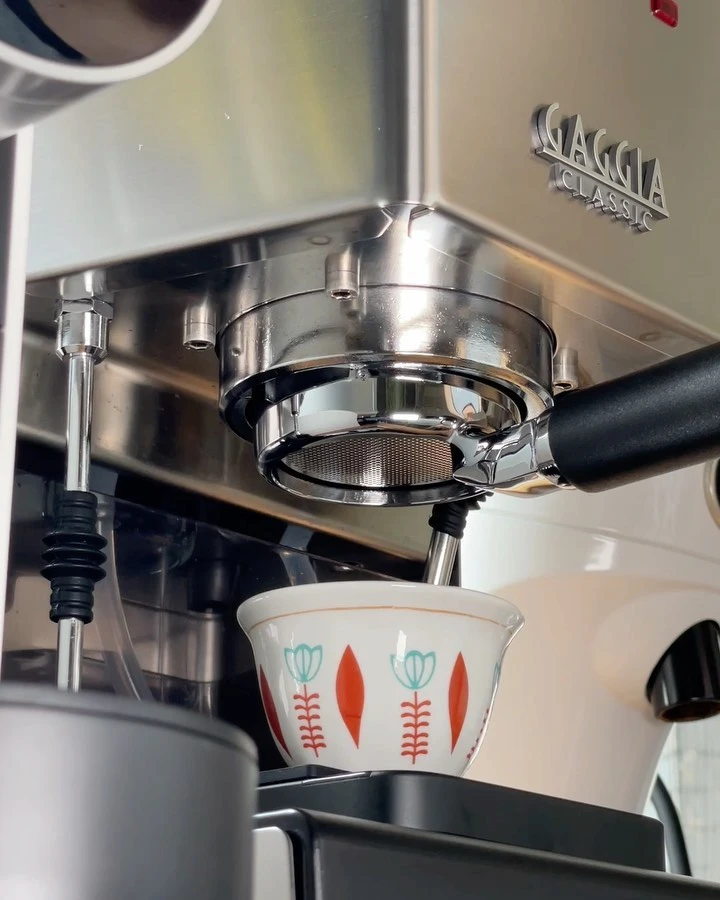
In this review of the Gaggia Classic Evo Pro, I’ll explore the new model in detail to answer those questions. I’ll walk you through what’s new, what stays the same, and what that means for your brewing experience.
What I Liked:
- New 9-bar OPV for better flavor
- Commercial-standard 58-mm portafilter
- Professional-style steam wand
- Prosumer-grade stainless steel build quality
What I Didn’t Like:
- No pressure gauge
- Small boiler
The Full Gaggia Classic Pro Espresso Machine Review
The Gaggia Classic Pro is an entry-level prosumer espresso machine, which should not be confused with an entry-level espresso machine. It’s a huge step up from cheap espresso appliances from the likes of Cuisinart and Black + Decker. Think of it as a beginner version of a commercial espresso machine; it teaches you to be a real barista.
How We Rated It
-
Brewing Capacity
-
Ease Of Use
-
Milk Frothing
-
Build Quality
-
Value For Money
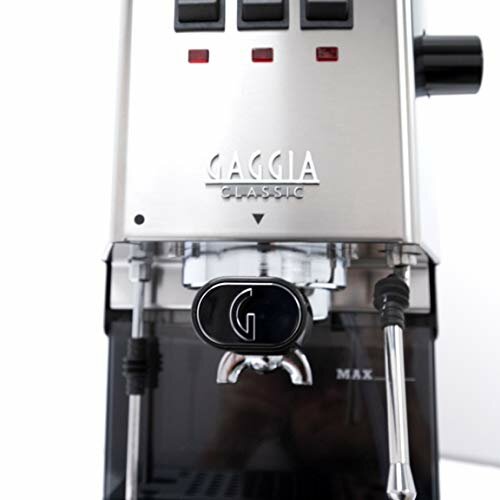
The Gaggia Classic Pro Vs The New Classic Evo Pro
The original Gaggia Classic was released in 1991 and remained largely unchanged for decades due to its steady popularity. A new Gaggia Classic Pro was released in 2019 and offered substantial upgrades over the original to keep pace with growing competition in the prosumer market segment.
In 2023, Gaggia released the latest edition, the Gaggia Classic Evo Pro, which to be honest, isn’t substantially different from the 2019 model. As its name indicates, it’s more of an evolution than a full overhaul.
The biggest update is the new 9 bar OPV, but you’ll also find build quality and design improvements and some internal upgrades that improve longevity and make it easier to service. I’ll cover the details as they arise in the review below.
Prosumer-Grade Features
The Gaggia Classic Pro is a single-boiler semi-automatic espresso machine. Let me break down what that means.
A single boiler espresso machine uses the same boiler to heat water for brewing espresso and steaming milk. Because those two processes occur at different temperatures, a single-boiler machine can’t do both at the same time. There is a lag as you wait for the water temperature to adjust.
The Gaggia has a very small boiler—just 100 mL (3.4 ounces)—one of the smallest I’ve encountered. This has the advantages of being quick to heat up and switch between brewing and steaming. The downside is you can only prepare about two coffee drinks before it needs a waiting period to come back to temperature. So this machine is best for one or two people.
A semi-automatic machine leaves you in charge of every aspect of drink preparation. The only “automatic” parts are the electronic pump and water heater. You need to fill the portafilter, tamp the coffee, and start and stop the shot. If you’re making a milk drink, you control the steam wand.
This kind of machine has a bit more of a learning curve, but the level of control allows for truly fantastic espresso as your skills develop. Plus, it’s much cheaper than a fully automatic model.
Commercial-Size Portafilter
The 58-mm portafilter is one of the Gaggia Classic Pro’s best features, distinguishing it from cheaper domestic machines. It can hold up to 22 grams of ground coffee, so you can pull a true cafe-style double espresso. In comparison, my Breville machine has a 54-mm basket, and I’m hard-pressed to get more than 16 grams in there.
The commercial-standard 58-mm portafilter is also compatible with more professional-grade accessories, like precision filter baskets and high-end tampers.
The Classic Pro comes with pressurized and non-pressurized filter baskets, which is a thoughtful touch. If you’re a beginner or you don’t have access to a good grinder, you can hone your technique using the pressurized basket. As you advance, you can upgrade to the non-pressurized basket for even more delicious espresso. This machine grows with you.
The baskets are also compatible with ESE pods if you really value convenience, though in my experience, they can’t compete in terms of coffee quality.
Three-Way Solenoid Valve
The Gaggia has a 3-way solenoid valve, another piece of technology generally missing from cheaper machines. Once you stop a shot, an electronic valve automatically diverts pressure and excess water from the grouphead into the drip tray (1). As a result, when you remove the portafilter, your coffee grounds will be a tidy dry puck instead of a soupy mess.
9-Bar OPV
The new 9-bar OPV is the most exciting upgrade to the Evo model and one that home baristas have been begging for. In fact, if you look online, you’ll find dozens of instructions on how to modify the older Classic Pro to achieve this result. With the new Evo, you get it right out of the box without having to void your warranty (2).
Our experiments indicate that the forces between the pressure of water and the resistance of the puck were balanced at 9 bars.
The older Classic Pro came from the factory with a higher 11 or 12-bar extraction pressure, which apparently made for a nicer-looking extraction with a pressurized basket. But we all know that 9 bars is the industry standard for extracting the most flavorful espresso.
What’s Missing?
I’ve seen a number of reviews complain that the Gaggia Classic Evo Pro still doesn’t use a PID temperature controller, but this honestly isn’t a major downside for me. Yes, a PID offers better temperature accuracy and fewer fluctuations, but it’s also expensive. I’m not sure I’d want to see the price of an entry-level coffee machine go up by a few hundred dollars to accommodate a relatively advanced feature.
You didn’t hear it from me, but it’s easy to find instructions online to mod your Classic Pro with an aftermarket PID if you’re so inclined. Just be wary that it will likely void your warranty.
What disappoints me more is the lack of a pressure gauge. This is a relatively basic feature that even cheaper machines often include. Not only does a pressure gauge help with consistency, but monitoring the pressure during extraction provides useful feedback about the quality of your puck prep. It’s a great learning tool, which I think is especially valuable for this machine’s target audience.
Professional-Style Steam Wand
I actually owned an original Gaggia Classic as my first “serious” espresso machine, and its Pannarello steam wand was undoubtedly one of its worst features. It was easy to make frothy milk, but it offered very little fine control. I found it nearly impossible to make proper silky microfoam for a latte (3).
So I was thrilled when the Classic Pro (and now the Classic Evo Pro) upgraded to a professional-style steam wand. It might take you a few extra attempts to master, but the quality and control are more than worth the effort.
I was able to produce smooth microfoam for pouring latte art as easily as airy froth to pile high on a cappuccino. The extra control also makes it easier to adjust your technique when working with plant-based milk.

Using The Gaggia Classic Pro
Now that I’ve told you what this machine can do, let’s talk about how to do it. The operation of the Gaggia Classic Pro is very simple. There are three rocker switches on the front of the machine – power, brew, and steam – each with an indicator light. Additionally, a knob on the side of the machine controls steam pressure.
The stainless steel top of the machine acts as a passive cup warmer, so it’s a perfect place to store your mugs while the boiler heats.
Here are the steps I follow to pull a double shot:
- Turn the machine on, slot in the empty portafilter, and wait for everything to preheat. I suggest giving it at least 5 minutes, but 10 minutes is even better.
- Grind 20 grams of coffee to a fine grind.
- Add the ground coffee to the now-warm portafilter, make sure it is evenly distributed, and tamp firmly.
- Slot the portafilter back into the machine and place a pre-warmed espresso cup under the spouts.
- Press the Brew switch and start timing.
- If your puck prep is correct, it should take about 30 seconds to pull a 3-ounce double shot.
- Rock the Brew switch back to stop the extraction.
If you want to make a milk-based drink, carry on with the following steps:
- Press the Steam switch, which tells the boiler to heat up to steaming temperature. In my experience, this takes under a minute.
- While you wait, add your milk to a frothing pitcher.
- Insert the tip of the steam wand into the milk, and use the knob on the side to gradually increase steam pressure.
- When you’ve reached the milk texture and temperature you desire, turn the knob back to stop steaming (4).
With any single boiler machine, you need to decide if you prefer to pull a shot or steam milk first. Personally, I like to make espresso first. Any losses to its flavor or body that occur as it sits for a minute tend to be masked by the addition of frothed milk. Whereas when I let the milk sit for a minute or two, it loses a noticeable amount of aeration. But you should experiment for yourself.
Does The Gaggia Classic Evo Pro Make Great Espresso?
The Gaggia Classic Pro has all the components required to make amazing espresso, so I wasn’t surprised by the consistently great coffee I made once I had it dialed in. Remember, this is a commercial-style semi automatic espresso machine, so don’t be surprised if your first shot isn’t perfect.
I tested it using light, medium, and dark roasts, and I was overall impressed by the sweet flavors, rich body, and dense crema layer.
Perhaps it was just the power of suggestion, but I swear the lower 9-bar pressure yielded shots with greater complexity than I remember from the older Pro models.
It definitely performed better with the medium and darker roasts. If you want to pull light-roast shots, try using a finer grind size and heavier coffee dose. That’s how I had the most success, but they still tasted just slightly thinner than I’d prefer.
I also gave it a few test runs using the pressurized baskets with pre-ground coffee and enjoyed surprisingly decent espresso. It certainly wasn’t as good as the shots using freshly ground coffee beans, but it was much better than a cheaper machine.
Build Quality And Design
The made-in-Italy Gaggia Classic has always boasted exceptional build quality, including largely professional-grade stainless steel components. And this is the category where the Evo has been most substantially upgraded.
It keeps the stainless steel casing and one-piece steel frame of the older models but adds a more durable and classy-looking stainless steel housing around the group head. The portafilter itself has been upgraded from chrome-plated brass to stainless steel.
If you look closely, you’ll also notice that the painted finish of the colored versions has a more premium look. Finally, the body shape has been redesigned so it’s easier to see the level in the water tank at the back of the machine.
Even bigger changes have been made inside the machine. The mounting plate that holds the pump and boiler has been re-engineered to reduce vibrations. This extends the lifetime of these components and makes this model noticeably quieter than the older editions.
A new coating has been added to the interior of the aluminum boiler, which makes it less prone to scale build-up. Descaling this machine is a pain, so this is handy both from a durability and user-experience standpoint (5).
The Gaggia Classic Evo Pro comes with a 2-year warranty.
Aesthetics And Design
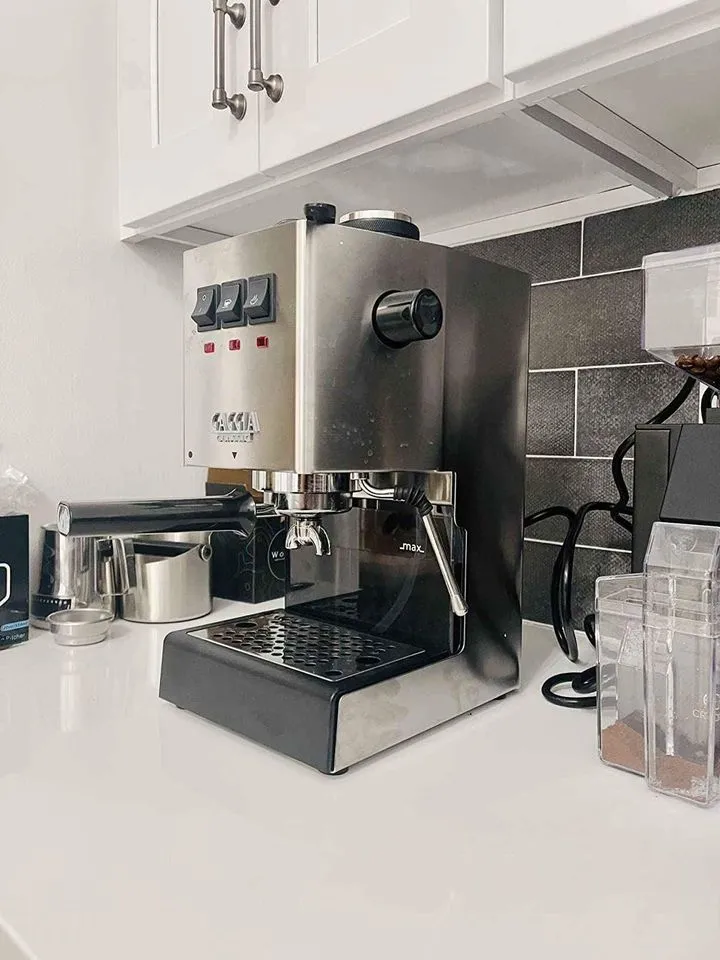
The Gaggia Classic Pro has a basic but not unappealing look. It’s a bit boxy and industrial-looking, especially with those beefy rocker switches, but I kind of like it. It’s more professional than the average home appliance, and it looks the part. It’s available in five sleek colors (Classic Blue, Industrial Grey, Polar White, Cherry Red, Thunder Black) and a classic brushed stainless.
It’s impressively compact, measuring 8 inches wide by 14.2 inches tall by 9.5 inches deep, and weighs just 20 pounds – certainly one of the smallest prosumer machines I’ve tested. Despite that, it houses a relatively large 72-ounce removable water reservoir.
The machine is sold with a coffee scoop and a crappy plastic tamper, which you should discard and replace with a metal tamper at your earliest convenience.
Is The Gaggia Classic Pro Good Value For Money?
The Gaggia Classic Evo Pro retails for around $450 to $500, which is an astounding value. It honestly perplexes me how they manage to get this level of quality into such an affordable espresso machine.
Even more surprising is that the price didn’t substantially increase with the release of the new Evo model. That said, if you can find the older Classic Pro now, you’ll likely net a tidy discount.
Other entry-level prosumer models tend to cost between $800 and $1000, and they don’t necessarily last longer or make better espresso. The Gaggia Classic’s bargain price can be attributed mainly to its small aluminum boiler, basic design, and missing pressure gauge. So weigh those factors when deciding if this machine is worth your money.
Don’t Buy The Gaggia Classic Evo Pro If…
- You want something more hands-off: If you just want reliable espresso without the learning curve, I’d steer you away from the prosumer models towards higher-end domestic options, although they won’t match a Gaggia espresso machine in build quality or longevity.
The automatic Breville Bambino Plus is a great machine at a similar price. Or check out the slightly more expensive Breville Barista Pro for an all-in-one option with a built-in grinder.
- You want a bigger boiler: The Gaggia Classic Pro has a notoriously small boiler that limits its use to small (or very patient) groups. If you want to pull more than a few espresso shots in a row, consider the Rancilio Silvia instead. It’s a bit more expensive than the Gaggia, but its 300-mL boiler is triple the size. Also of note, the newer Rancilio Silvia Pro is a double-boiler version of the machine, allowing you to brew and steam simultaneously.
- You want something less expensive: You won’t find a prosumer-grade espresso machine any cheaper than the Gaggia Classic, but there are plenty of acceptable espresso makers under $500. If you opt for a manual espresso maker like the Flair Pro 2, you can even enjoy cafe-quality espresso at a bargain price.
The Verdict
The Gaggia Classic Evo Pro straddles the line between a professional and home espresso machine in the best possible way. It pairs the durability and espresso quality of a commercial machine with the compact footprint, user-friendly appeal, and approachable price point of a domestic model.
I have been happily recommending the Classic Pro to enthusiastic home baristas for years, and I’m pleased to say that the new Evo model is even better. If you want to take your barista skills to the next level, this machine will get you there.
References
- Brady. (2010, December 26). More than you ever wanted to know about three-way solenoids Retrieved from https://www.baristaexchange.com/profiles/blogs/more-than-you-ever-wanted-to
- Seven Miles Coffee Roasters. (2021, November 23). What is the ideal pressure for espresso? Retrieved from https://www.sevenmiles.com.au/blogs/editorial/espresso-pressure
- Espresso: Preparing Milk Drinks with Espresso, Steaming Milk. (n.d.). Retrieved from https://legacy.sweetmarias.com/library/espresso-preparing-milk-drinks-with-espresso-steaming-milk/
- Klimanova, Y. (2019, February 9). What Temperature Should Your Cappuccino Milk Be? Retrieved from https://perfectdailygrind.com/2019/02/what-temperature-should-your-cappuccino-milk-be/
- Semi Automatic Maintenance. (n.d.). Retrieved from https://www.gaggia-na.com/pages/semi-automatic-maintenance
