
ESPRESSO MACHINE FEATURES: WHAT TO KNOW WHEN BUYING A HOME ESPRESSO MACHINE
A new espresso machine is an expensive investment. Let me help you understand exactly what you’re paying for.
Are you shopping for a good home espresso machine? With so many options available, it’s easy to be distracted by the bells and whistles – and pushy marketers certainly don’t help.
I’m here to walk you through the different espresso machine features and their benefits. Which ones really make a difference to the quality of your brew, and what can you do without? Let’s find the best espresso machine to meet your needs.
What Are The Main Types Of Espresso Machines?
Home espresso machines are divided into four categories based on their amount of automation. Understanding these machine types is the first step to choosing an espresso machine.
- Manual espresso machines require the barista to operate a piston or lever to generate extraction pressure; they don’t have a pump. Because they are entirely hands-on, the results are a true showcase of the barista’s skills.
- Semi-automatic machines use a pump to generate pressure, but everything else remains under the barista’s control. You’ll need to grind, dose, tamp, and monitor extraction timing.
- Automatic espresso machines take timing out of the equation by allowing you to pre-program the shot volume or time. They offer a nice balance between convenience and control, as you still need to grind, dose, and tamp.
- A super-automatic espresso machine does it all, often with just the press of a button. These machines have integrated grinders and will dose, tamp, and pull a shot of espresso. Many also froth milk automatically.
All other things being equal, the price of the machines scales with the degree of automation.
Espresso Machine Basics: The Bare Minimum
The espresso machine we know today differs substantially from the original invented by Angelo Moriondo. Most modern espresso machines have convenience features to simplify your life or improve your shots of espresso (1).
Some features are optional add-ons, but there are a few mandatory basics. When it comes time to choose a new machine for your home, these are the first things to consider.
Pump Vs Lever Espresso Machines
Most super, automatic, and semi-automatic espresso machines today use electronic pumps to generate the extraction pressure, which is certainly the easiest way. You only need to press a button or pull a lever to kickstart the pressure.

However, there is a case to be made for old-school lever manual machines, which allow the barista to have much more intimate control over extraction pressure.
Look for a machine with a lever if you enjoy the craft of espresso as much as the drink – and if you have the time and desire to hone your barista skills. Otherwise, a pump machine is a more practical choice.
You may also find some very inexpensive espresso machines that rely on steam pressure, similar to a Moka pot. These are great for making extra strong shots of coffee, but they don’t achieve enough pressure to produce true espresso.
Related: How to make an espresso without a machine.
Boilers, Thermoblocks, And Thermocoils
Most standard home espresso machines rely on a Thermoblock or Themocoil system to heat water. These systems are small, fast, and affordable, but they can’t match the temperature stability or consistency of a boiler. That’s why commercial and prosumer espresso machines use boilers instead.
There are three types of boiler designs:
- A single boiler machine has one boiler for brewing coffee and steaming milk. Because these two processes occur at different temperatures, you can’t do both simultaneously.
- A double boiler machine has two boilers, each with its own heater set at the correct temperature for its purpose – one for brewing, one for steaming. So you can pull a shot and steam milk at the same time without either process affecting the other.
- A heat exchanger is a single large steam boiler with a separate chamber for cooler brew water. Like the double boiler, it allows you to brew and steam simultaneously, but the temperate control is not quite as precise as having a separate heater for both.
If you’re having trouble with where to start your espresso journey, knowing how an espresso machine works can help you decide what’s right for you. We also discussed the difference between heat exchange vs dual boiler machines.
More Advanced Espresso Machine Features
As long as you can heat water and generate high pressure, you can make great espresso. But additional features help make the experience more enjoyable and reliable.
Here are a few extras to consider:
- Pressure Gauges: Many higher-end espresso machines have a brew pressure gauge, a steam pressure gauge, or both. Having both is preferable, but if there is only one, I find a brew pressure gauge more useful. It provides important feedback about the quality of your coffee puck. Note that the pressure gauges on very cheap espresso machines tend to be quite unreliable.
- Pre-Infusion: Pre-infusion is a low-pressure pre-wetting of the bed of coffee, which settles the grounds, avoids channeling, and ensures more consistent espresso. I always recommend a machine with an automatic pre-infusion stage, even for beginners. Even better is a model that allows you to adjust the pre-infusion timing.
- PID Temperature Control: PID controllers are increasingly popular in modern premium espresso machines as they provide a more accurate and consistent brew temperature than old-school pressure stats. A beginner probably won’t benefit as much from a PID, but it’s a feature worth looking for as your espresso skills and palate develop. It’s also possible to mod some espresso machines with an aftermarket PID if you’re ready for an upgrade.
- Water Reservoir or Direct Plumbing: Most home machines have a water reservoir, but some offer the option of plumbing the machine directly to your water line. This spares you the task of refilling the tank, and it’s a feature I’d recommend to heavy or commercial users.
- Digital Displays and Programmability: Many modern machines have digital displays, including some with fancy color touchscreens. Others forgo a screen but have a Wifi connection and associated app to make programming easier. These are nice options for tech lovers, though they tend to come with a higher price tag. Traditionalists will probably prefer the tactile experience of pulling levers and pressing buttons.
- Adjustable OPV: An adjustable OPV allows you to control the brew pressure, so you can pull shots outside the typical 8 to 10-bar pressure window. This is an exciting feature for more advanced users, particularly those who like to sample unique specialty coffee beans at various roast levels.
- Flow Control: Flow control takes an adjustable OPV to the next level, allowing you to adjust the pump pressure during extraction. It’s not a feature I necessarily recommend for beginners, but a skilled barista can develop precise pressure profiles to optimize extraction for different coffees and flavor profiles. It’s a new and exciting development for making great coffee at home!
Let’s Talk Milk: Frothers And Steam Wands
Most (though not all) espresso machines include a method to froth milk. If you’re not interested in milk-based drinks like lattes and cappuccinos, you can save money by skipping a milk system.
A manual professional steam wand takes some practice to use, but it is the best way to make proper silky steamed milk like you’d get from a cafe. Professional steam wands can be single-wall or double-wall. Single-wall designs tend to produce dryer steam (a good thing), but double-wall wands stay cool to the touch, sparing you the risk of a nasty burn. Ultimately, both are great and are found on high-end home and commercial machines alike.

Beginner machines are more likely to have a froth-assist wand, like a Pannarello wand, for example. These add an extra component that makes it easier to create an airy froth, even if you lack barista experience. They’re perfect for novice users, but they make it harder to create the true microfoam you need for latte art.
Super-automatic machines often have automatic frothing systems, either an automatic wand or a milk frothing carafe. These offer little control over milk texture or temperature, but they create nice airy milk froth at the press of a button.
Many espresso makers, especially larger or more expensive models, also have a spout for hot water – either built into the steam wand or as a separate outlet. This feature is definitely worthwhile if you make a lot of Americanos or tea as it will spare you heating water in a separate kettle.
A Few Worthwhile Accessories
There are plenty of espresso accessories you can sink money into, but only a few are crucial, in my opinion.
First and foremost is a good-quality metal tamper with some weight to it, either calibrated or not. Some espresso machines – notably Breville and Rocket Espresso Machines, are sold with decent metal tampers – but most simply include disposable plastic versions.
The second thing you definitely need, if you plan to make milk-based drinks, is a good stainless steel frothing pitcher. They come in various sizes and with different spout designs to meet your needs.
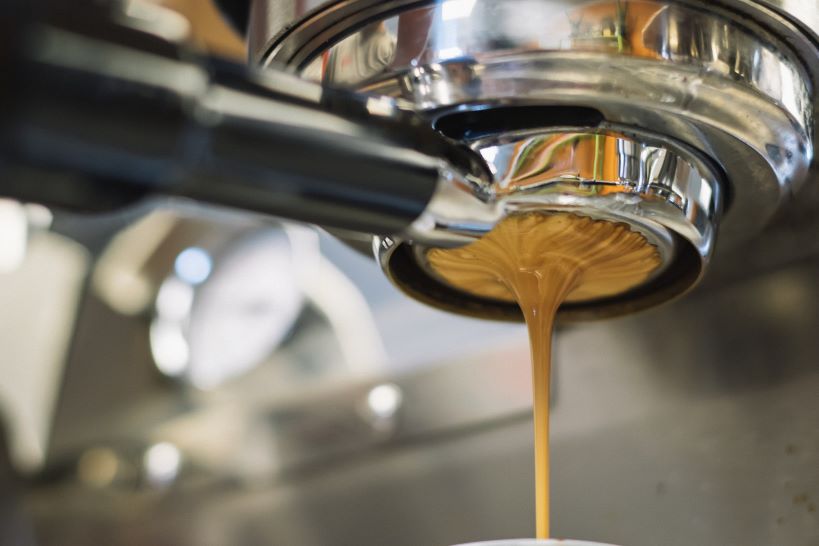
A final fun accessory for more advanced users is a naked portafilter, aka a bottomless portafilter. Not only do they afford a beautiful view of your espresso shot in action, but they also provide important feedback about the quality of your puck prep.
Final Thoughts
I understand how buying an espresso machine can be overwhelming. There are so many machines on the market, each with unique selling points. But if you drink a lot of espresso, it’s well worth doing some research to find which machine is best for you!
I hope this article has provided some useful guidance around features to look for in an espresso machine, whether you’re a seasoned pro ready for an upgrade or buying your first espresso machine.
Is there anything else you want to know about choosing a machine or making espresso at home? Leave your questions in the comments below.
FAQs
As a home user, you should backflush your espresso machine roughly once a week with water and then with a chemical cleaner after every 200 shots of coffee (2). Machines in a commercial setting should be backflushed daily.
A prosumer espresso machine is intended for home use but has the features and quality that make it suitable for low-volume commercial use. The name “prosumer” is a portmanteau of “professional” and “consumer.”
The four Ms of espresso are miscela, macinadosatore, macchina espresso, and mano dell’operatore. They’re in Italian, of course. Translated, they are the espresso blend, the grinder, the espresso machine, and the skill or the operator – the four components that must be optimized to pull a perfect shot. Sometimes a fifth M, manutenzione (maintenance), is also included.
References
- Stamp, J. (2012, June 19). The Long History of the Espresso Machine. Retrieved from https://www.smithsonianmag.com/arts-culture/the-long-history-of-the-espresso-machine-126012814/
- Nielsen, L. (2015, June 03). How to Backflush an espresso machine. Retrieved from https://www.guide2coffee.com/guide-2-coffee-1/2015/5/13/how-to-backflush-an-espresso-machine
