
13 BEST ESPRESSO ACCESSORIES FOR THE ULTIMATE HOME COFFEE BAR
What are the best espresso machine accessories for your home barista journey?

So, you want to make amazing espresso at home. Buying an espresso machine is a great start, but what about all those extra espresso gadgets you see at specialty coffee shops? How do they work? What are they used for? Do you really need to make room for those tools and accessories in your budget?
This article has all the answers. Keep reading to learn about the mandatory espresso accessories, the not-so-mandatory fun extras, and how they’ll make your morning brew much tastier.
Essential Espresso Accessories
Choosing a home espresso machine with the right features (or, if you feel like your machine is lacking, the right espresso machine mods) is the first step to making great espresso. What’s next?
1. An espresso-specific grinder
Good all-around coffee grinders exist, but if you’re serious about espresso, I’d recommend a dedicated espresso grinder.
That means a grinder that can grind finely and uniformly. The whole point of the espresso is that it extracts quickly, and to facilitate that, you need very finely ground coffee that packs perfectly into a puck (1).
Ideally, you also want a stepless grind adjustment – or at least very small steps between settings. Having infinite grind settings is crucial for dialing in a perfect espresso shot.
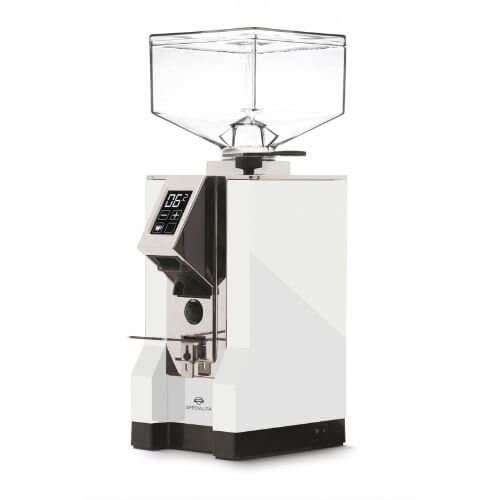
To meet these criteria, espresso grinders are generally more expensive. My top pick is the Eureka Mignon Specialita, but it’s definitely pricey. If you’d like to save some cash, opt for a manual grinder like the 1Zpresso JX Pro.

2. Coffee Beans
Don’t forget to pair your machine and grinder with a good bag of espresso beans. Contrary to popular belief, you need not buy beans labeled “espresso.” You can use your favorite coffee for espresso. In general, espresso beans tend to yield more reliable results and a more traditional flavor profile (2).
I like the Lifeboost Espresso, a tasty dark roast with classic chocolate flavors.

Preparing the Puck
Once you’ve got your beans and grinder, it’s time to prepare the espresso puck. This is when you pack the coffee grounds uniformly into the portafilter in preparation for espresso extraction. It’s not quite as simple as it sounds, but the right coffee gear makes it much easier.
You can watch Steven from Home Brews Coffee describe and use the key espresso tools in this video:
3. Coffee Scale
A good scale is one of the easiest ways to upgrade your home coffee setup. You can weigh the amount of coffee you use and the amount of espresso it yields – vital figures when dialing in the perfect shot. And it allows you to stay consistent from one shot of espresso to the next.
The most important feature of a scale is its precision. You want one that’s precise to at least 0.1 grams.
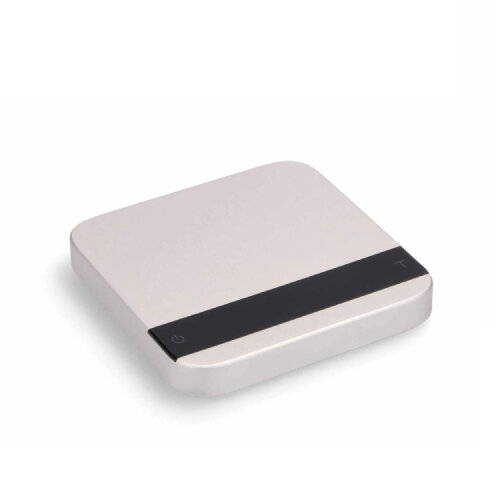
The Acaia Lunar is a popular choice for serious espresso geeks, though it is undeniably expensive. I’m a big fan of the more budget-friendly Timemore Black Mirror Scale.

4. Coffee Tamper (and Tamping Station)
Tamping ground coffee for espresso compresses it into a uniform, dense puck. So when the high pressure of water hits it, the water doesn’t just shoot straight through. A general guideline is to aim for about 30 pounds of pressure when tamping (3).
Many tampers are simple designs with a round metal base sized for your filter basket and a knob on top so you can hold it comfortably (4). Personally, I prefer a calibrated tamper, which ensures you apply a precise amount of pressure each time. This removes a source of error in your espresso preparation and is great for consistency.
My two top espresso tamper picks are the Espro Calibrated Tamper and the Normcore Spring-Loaded Tamper.
Along with the tamper, it’s nice to have an espresso tamping mat or station. These make tamping easier, avoid mess, and protect your countertop. If your portafilter has an angled handle such that it lies flat on a surface, you’ll only need a basic silicone mat. If your portafilter isn’t flat, it’s worth spending a bit more money for a tamper station to hold the portafilter.


5. Levelers and Distributors
If you’re newer to home espresso, you may not have heard about levelers or distributors. These barista accessories can be just as crucial as the tamper or can serve to replace the tamper altogether.
Levels and coffee distributors are designed to prepare a flat surface of ground coffee that is ready for an even tamp. However, some have adjustable depths, so they function as tampers as well. For example, I love the popular Normcore Leveler Tool.
6. Espresso Distribution Tool
The Weiss Distribution Technique (WDT) is one of very few easy and cheap ways to improve your espresso. It’s as simple as stirring your coffee in the portafilter before you level and tamp. This barista tool breaks up any clumps and leaves a more uniform grounds distribution.
Stirring creates a uniform distribution of grounds throughout the filter basket, which is impossible to achieve by pushing the grounds around the surface of the puck.
You can buy WDT tools online, but it’s easy to make your own. The most common method is to poke a few fine needles into a wine cork, but even something as simple as a single needle or safety pin does the trick.
7. Funnel
A funnel isn’t necessarily mandatory, but it can be useful depending on your grinder. If you can’t grind directly into your portafilter, a funnel makes it much easier to transfer your ground beans to the filter basket without spilling. This keeps your counter clean and, more importantly, ensures you’re getting precisely the dose you weighed out.
Using a funnel is especially important if you plan to use the WDT discussed above. Otherwise, it’s nearly impossible to stir the grounds in the portafilter without spilling.
8. Portafilters And Filter Baskets
Every espresso machine comes with at least one portafilter and filter basket, but these are accessories you may eventually consider updating.
Entry-level espresso machines typically include pressurized filter baskets, which help you pull nice-looking shots but put a cap on espresso quality. As your skills and equipment improve, you’ll want to upgrade to a non-pressurized basket or even a precision VST or IMS basket.
You might also consider adding an espresso puck screen, which is placed on the surface of the tamped coffee to evenly distribute the water during extraction.
The bottomless portafilter, aka the naked portafilter, is another fun accessory. Not only does it provide Instagram-worthy visuals, but it makes it easy to spot any errors in your puck preparation. Channeling is immediately indicated by a spray of coffee.
It’s important to size these accessories to the group head of your machine. Commercial standard groups measure 58mm, but many home machines have 51mm, 53mm, or 54mm groups.
Making the Perfect Espresso
Your coffee puck is prepared, and you’ve slotted your portafilter into the espresso machine. It’s time to make an espresso drink. Let’s look at what accessories make your life easier at this stage.
9. Espresso Glasses
It may surprise you to learn that the shape, material, color, and pattern of your mug influence how you experience your coffee, so the perfect espresso cup is a must-have (5).
The first thing is to use the right size for your favorite drink. Here’s a handy chart:
| Drink | Approximate size |
| Demitasse | 3 ounces |
| Cortado | 4.5 ounces |
| Cappuccino | 6.5 ounces |
| Latte | 11 ounces |
The material also matters. Ceramic or porcelain has a nice combination of mouthfeel and heat retention. Double-wall options, either glass or stainless steel, have excellent heat retention, but some people don’t like the feel of the thicker rim when drinking.
If you’re an aspiring latte artist, the shape of your mug is important too. A rounded bottom makes pouring art easier. My favorite espresso mug is the Fellow Monty, designed specifically to facilitate latte art.
10. Milk Frother
Most espresso machines have a steam wand for frothing milk. But if your machine lacks a wand, you’ll need a separate frother to make a creamy latte or cappuccino.
There are two categories of milk frothers: wands and fully automatic vessels.
A frothing wand is like a small battery-powered whisk that incorporates air into your milk. It doesn’t heat the milk, so prepare to do this separately for a hot drink.
With a fully automatic frother, you add milk, and it does the rest. Many even allow you to set a temperature, including my favorite, the Breville Milk Cafe milk frother. Automatic frothers are more practical but also more expensive.
11. Milk Frothing Pitcher
A frothing pitcher is a stainless-steel pitcher that holds the milk as you froth it with a steam wand. Most milk pitchers are very similar, differing only in size. Remember that frothing milk increases its volume, so if you plan to make large lattes or cappuccinos, size your pitcher accordingly.
Related: How to make a macchiato.
You can also find variations in color and the shape of the spout, but that largely comes down to personal choice. I love the JoeFrex Steaming Pitcher, which comes in two sizes and various colors.

Experienced baristas can gauge the correct milk temperature by feel. But if you’re still learning, you might want a pitcher that includes an integrated thermometer to ensure you don’t underheat or (worse) scald your milk. Ideally, the milk should be between 130 and 145 ℉ (6).
Cleaning Up
Keeping an espresso machine clean might seem like a lot of work, but the return on your investment is fantastic. Your machine will last longer, and you’ll spend less money on repairs along the way. Let’s look at what tools you need for the job.
12. Knock Boxes
An espresso knock box is a simple but valuable addition to your espresso bar, and it can be very cheap. It’s essentially an empty bin with a bar across the top. After each shot, use the bar to knock the used espresso grounds out of the portafilter into the bin.
It makes it easy to clean your portafilter immediately, sparing it from the build-up of coffee oil gunk – and saves you dripping your way over to the nearest garbage can.
There are plenty of choices when it comes to buying a knock box. You can pick up a cheap plastic version for under $20, but for serious home baristas, I’d suggest something a bit sturdier, like the Breville BCB100.
13. Other Cleaning Supplies
A good set of microfibre cloths is a must to keep the surfaces of the espresso machine clean, as well as your counter. Always wipe the milk off your steam wand immediately after frothing to avoid the build-up of very unappetizing milk scum.
To keep the machine’s interior clean, you should occasionally backflush using a coffee-specific cleaning solution. My pick is the Urnex Coffee Equipment Cleaning Powder.

Your grinder also requires regular cleaning. A soft brush, like a paintbrush, is useful for sweeping grounds, and you can use a stiffer brush for cleaning the burrs. Use a dedicated cleaning solution for your grinder occasionally, like the Urnex Biocaf Grinder Cleaner.

Final Thoughts
Adding the right mix of accessories to your at-home espresso setup is crucial. It will improve your efficiency, make your workflow more pleasant, and keep your espresso machine running longer. Best of all, it will yield better-tasting espresso and cafe-style drinks.
References
- Stamp, J. (2012, June 19). The Long History of the Espresso Machine. Retrieved from https://www.smithsonianmag.com/arts-culture/the-long-history-of-the-espresso-machine-126012814/
- Woodley, G. (2017, November 30). Roasting For Espresso. Retrieved from https://www.ikawacoffee.com/blog/roasting-for-espresso/
- Chicoteau, D. (2017, October 3). Tamping Technique Demystified. Retrieved from https://www.sevenmiles.com.au/blogs/editorial/tamping-technique-demystified/
- Johnson, M. (2019, May 16). Tamp That! The History & Importance of Tamping and Distribution. Retrieved from https://www.coffeemagazine.co.za/blog/9/5637/tamp-that
- Ferdman, R. A. (2014, December 9). The color of your coffee mug can change the way your coffee tastes. Retrieved From https://www.washingtonpost.com/news/wonk/wp/2014/12/09/how-the-color-of-your-coffee-mug-can-change-the-way-your-coffee-tastes/
- Korhonen, J. (2017, October 3). 5 Easy Tips That Will Make Your Latte Art Flourish. Retrieved From https://www.baristainstitute.com/blog/jori-korhonen/june-2022/5-easy-tips-will-make-your-latte-art-flourish
