
HOW TO MAKE COLD BREW IN A MASON JAR
This cold brew recipe really couldn’t be simpler.
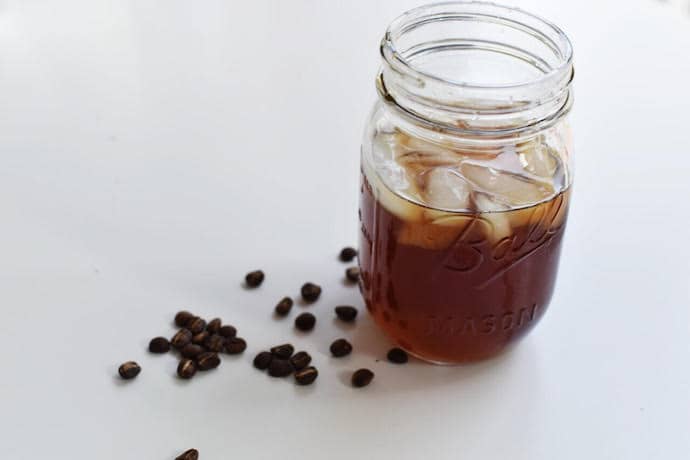
Do you love the refreshing kick of a cold coffee on a hot summer’s day? Would you like to make it at home without spending extra money on special equipment?
Well, good news! It’s easier than you think, and you probably already have everything you need. Today, I’ll teach you how to make cold brew coffee in a Mason jar. Just follow the step-by-step instructions below.
Can I Brew Coffee With A Mason Jar?
I honestly think cold brew is the easiest way to brew coffee; all you need are a few kitchen basics and some patience (1).
You can easily make your own homemade cold brew in a Mason jar. It’s not quite as convenient as a dedicated cold brew maker, but the price is right – especially if you only occasionally crave cold brew. You can also try French Press cold brew or making cold brew in an Aeropress.
Ingredients and Equipment
- 57 grams whole bean coffee
- 22 oz room temperature water
- 34 oz Mason jar
- Burr coffee grinder
- Scale
- Mesh strainer
- Cheesecloth, nut milk bag, or another type of cloth filter
- Paper coffee filter (optional)
At a Glance
Brew Time:
12 – 24 h
Yield:
2 cups cold brew concentrate
How Do You Make Cold Brewed Coffee In A Mason Jar?
This cold brew recipe is so simple, it’s almost silly to write a whole article. One of the many wonderful things about cold brew is you don’t need to be as meticulous as other coffee-making methods, but it still pays to know the tips and tricks.
The size of the jar dictates how much cold brew you make. This recipe yields about 2 cups of coffee concentrate using a 34-oz wide mouth Mason jar, but it can easily be doubled or halved.
1. Weigh The Coffee Beans
Set a cup on your scale and tare it. Weight 57 grams of whole bean coffee.
PRO TIP: Cold brew is extremely forgiving. You don’t necessarily have to use the freshest beans. Even coffee that’s 3 or 4 weeks old will still taste great
2. Grind The Coffee Very Coarsely
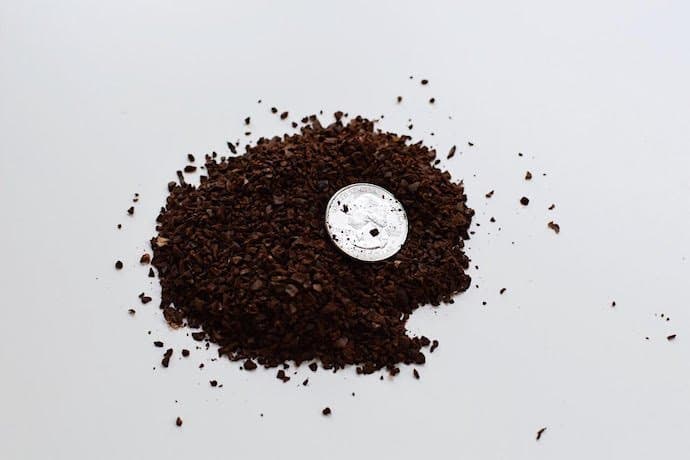
Grind your coffee beans to about the size of bread crumbs – larger than you would use for French press coffee. Check out our coffee grind size chart for guidance.
Add the coarsely ground coffee beans to the mason jar.
PRO TIP: Most pre-ground coffee at the store is too fine. The coffee will be over-extracted and bitter, and it will be harder to filter out the grounds at the end.
3. Add Water And Stir
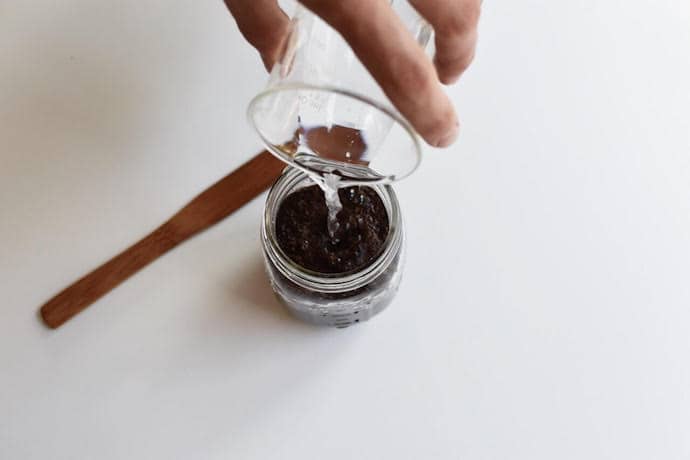
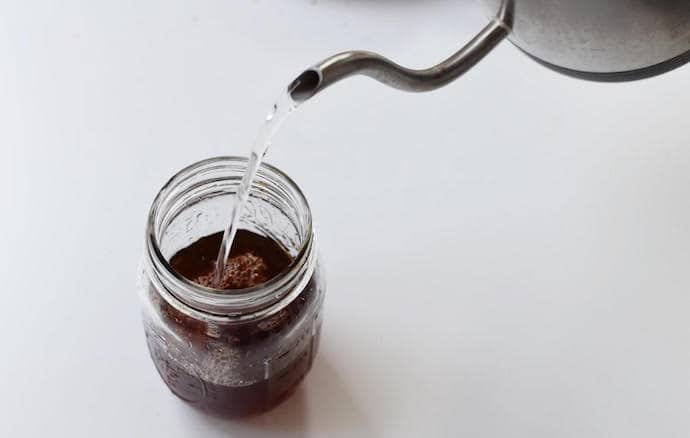
Pour your room-temperature water over the coffee in the jar. Using a paddle or spoon, gently stir the coffee and water, ensuring all the grounds are wet.
PRO TIP: Good coffee requires good water! If your tap water isn’t high-quality, opt for filtered water for the best extraction.
4. Let The Coffee Steep For 12 – 24 Hours
The longer, the stronger. The more time the water has to extract the coffee, the stronger the final cup will be (2). Personally, 20 hours is the sweet spot for my tastebuds, but it will vary depending on the beans you choose and whether you let them steep on the counter or in the fridge.
The beauty of this process is that you can easily adjust the flavor. Try 16 hours the first time, then adjust the next batch plus or minus 2 hours based on taste.
PRO TIP: You can make your cold brew in the fridge, which slows extraction, or at room temperature. Just be sure to brew it away from light – like in a cupboard.
5. Strain The Coffee
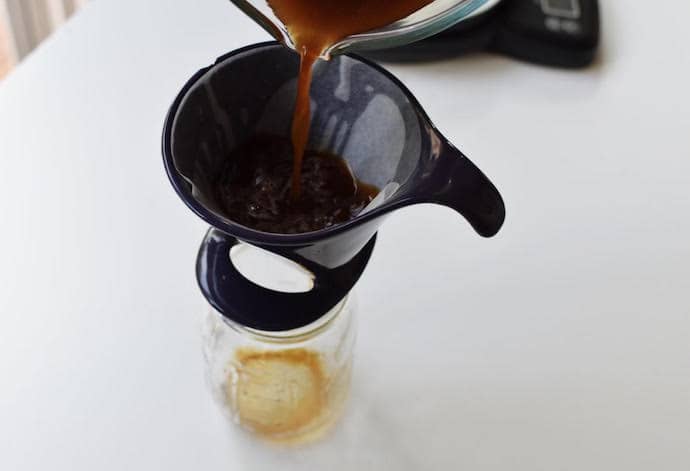
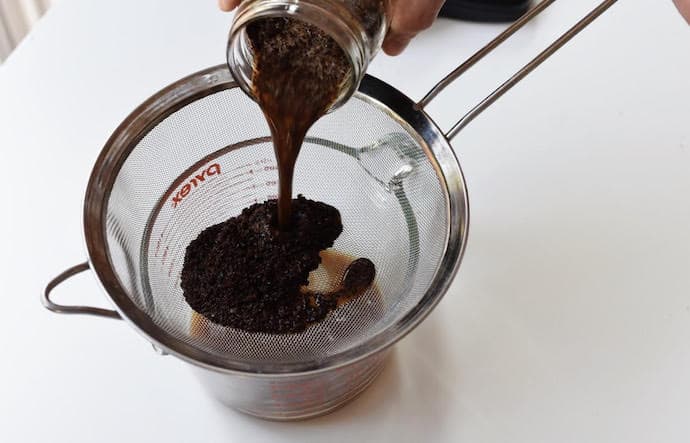
Set a mesh strainer lined with cheesecloth on top of an empty container. Once the coffee has finished steeping, remove the jar lid, and pour it into the strainer to separate the coffee from the grounds. Discard the coffee grounds in the compost.
PRO TIP: If you don’t have a mesh strainer, use elastic bands to secure a few layers of cheesecloth to the top of your Mason jar. Pour through the cheesecloth into a waiting container.
6. Strain It Again Using A Paper (Optional)
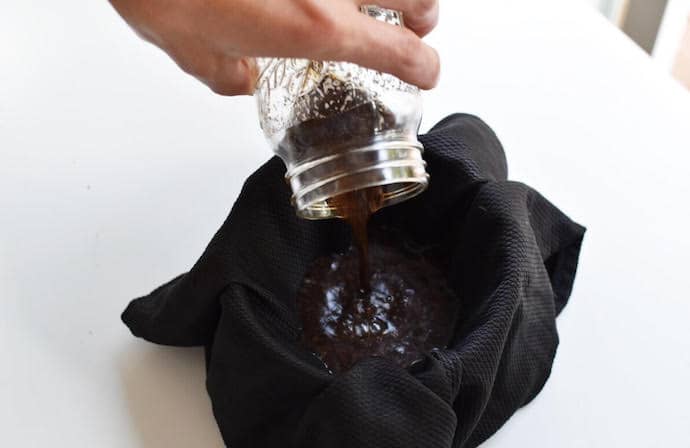
You can strain the cold brew a second time through a paper coffee filter for a really clean cup.
Pour the cold brewed coffee back into the jar through a paper filter. It may take a while to fully drip through.
PRO TIP: I like using my Aeropress for this because you can force the coffee through the filter much faster.
7. Dilute The Concentrate And Enjoy!
When you’re ready to enjoy your coffee, add cold water to dilute the concentrate. I recommend starting with a 1:2 ratio of coffee to water. So for 2 ounces of coffee concentrate, add 4 ounces of water. You can adjust your cup to your preferred taste by adding more or less water.
PRO TIP: If you want to serve your cold brew ice cold without diluting your perfectly concentrated brew, try making coffee ice cubes! Simply pour brewed coffee into an ice cube tray and freeze it into ice cubes.
Final Thoughts
A cup of cold brew is perfect on a steamy summer day. And now you know how to make cold brew coffee at home using a Mason jar and a few other kitchen essentials! Whether you opt for a rich, chocolatey dark roast or a bright, fruity light roast, a refreshing and delicious cold beverage is just 24 hours away.
Did you appreciate this coffee recipe? Now it’s your turn. Make some mason jar cold brew coffee and let me know how it tastes. I’d love to hear from you in the comments below.
FAQs
The ratio of coffee to water for brewing good cold brew concentrate is around 1:4, but it can vary between 1:2 and 1:6 depending on who you ask. Once you have a concentrate, dilute it with a water to coffee ratio of about 2:1 for serving.
Cold brew concentrate lasts for up to two weeks stored in a Mason jar in the fridge. So if you make a big batch, you’ll always be ready with a treat on a hot day. Once diluted, it’s only good for about 24 hours.
The best coffee for cold brew is a matter of personal taste. You can make delicious cold brew with your favorite coffee; no particular roast works best. For some suggestions, check out my guide to choosing beans for cold brew.
The difference between cold brew and iced coffee is the temperature used for brewing the coffee. Iced coffee is made from regular hot coffee that has been poured over ice to chill it. Cold brew is coffee brewed cold. The different extraction temperatures yield different flavors in the cup.
References
- Miller, K. Is Cold Brew Coffee Better for You Than Regular Coffee? (2016, December) Retrieved from https://www.huffpost.com/entry/is-cold-brew-coffee-bette_b_8964244
- Wolczynski, B. Cold Brew FAQs (2017, June) Retrieved from https://www.stumptowncoffee.com/blogs/news/cold-brewing-faqs
