
BEZZERA STREGA REVIEW: IS A LEVER MACHINE RIGHT FOR YOU?
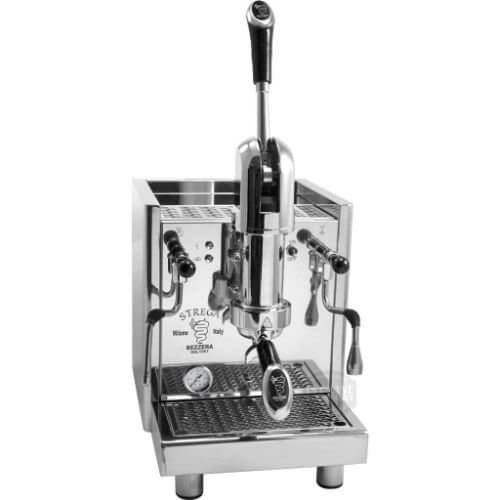
The Bezzera Strega combines lever and pump for an unusual – and unusually impressive – manual espresso machine.
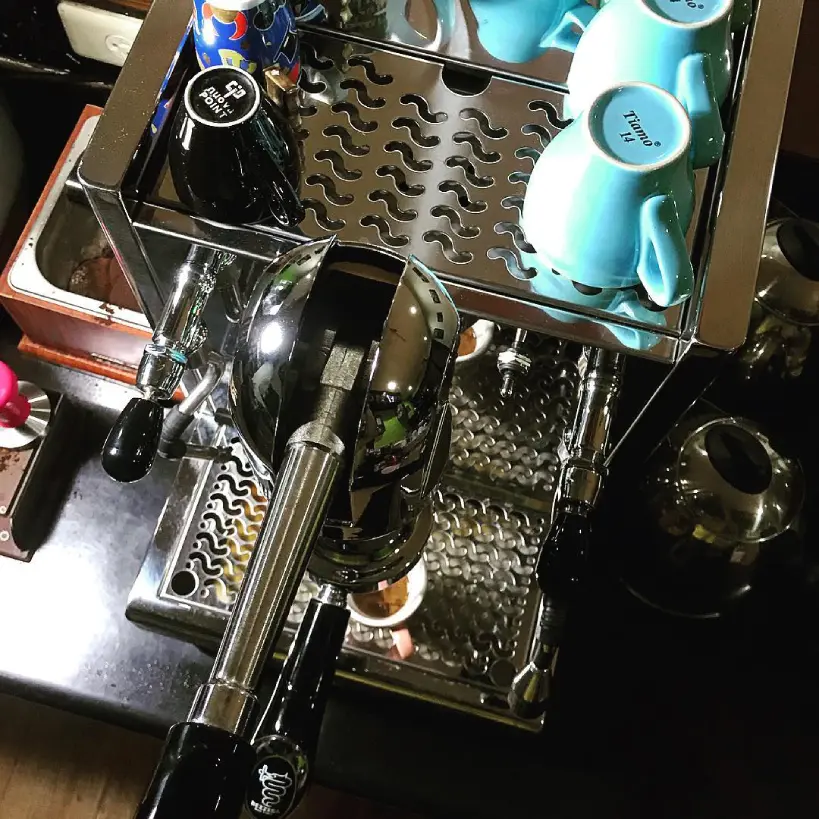
I love the soft flavor of a manually pulled espresso shot, but I’ve always been intimidated by the steep learning curve of a traditional lever machine. If you feel the same way, you’ll be as excited as I am about the Bezzera Strega – a unique pump-lever hybrid espresso maker.
Strega is the Italian word for witch or sorceress, and it’s totally appropriate because I promise you will be bewitched by this ingenious design. Read on for the details.
Things I liked:
- Electronically heated group
- Combines manual lever control with a vibration pump
- Impressive steam power with 4-hole steam wand
- Bezzera is known for build quality
Things I didn’t like:
- Huge machine won’t fit in all kitchens
- Slow for making back-to-back shots
- Lever can snap up quickly
The Full Bezzera Strega Review
The Bezzera Strega occupies an interesting niche. Manual lever purists will probably scoff at its noisy pump and electronically heated lever group, while automation lovers will be wary of the manual lever (1). But for the right audience, there is no other machine like it.
Think you might be in the target market? This Bezzera Strega overview has everything you need to know to help you decide.
How I Rated It
-
Brewing Capacity
-
User Friendliness
-
Milk Frothing
-
Build Quality
-
Value For Money

Understanding Lever Espresso
There is something special about a classic lever espresso machine (2). It’s a nostalgic blast from the past, but it’s not just a romantic throwback. A properly pulled shot from a lever machine yields a flavor and clarity that’s difficult to mimic on an automatic machine. The trade-off is that proper shots can be more challenging to master, which is where the Strega comes in.
This unique Bezzera espresso machine combines the barista control of a lever with modern technology that makes it more accessible. Even beginners can produce some spectacular shots with just a bit of practice.
Some have suggested that this machine is too expensive for a heat exchanger, but I think they’re missing the point. The Strega’s manual-style flow profiling capabilities put it in a class all its own, not to be compared with the average heat exchanger machine.
The Basics
On the front, you’ll find a chrome-plated brass group topped with the unmistakable large lever. It’s a particular Bezzera group, designed in-house rather than a typical E61, but it retains the industry standard 58 mm size, so it’s easy to accessorize. This is linked to a 2-liter copper heat exchange boiler heated by a powerful 1450 W heating element.
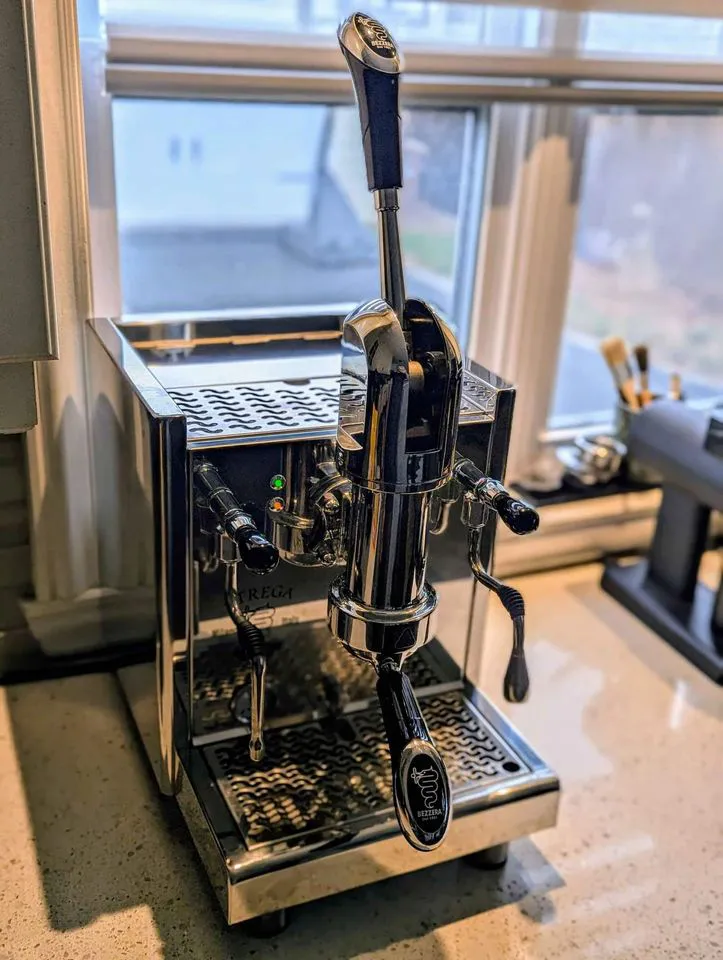
My only complaint is that, despite the standard 58-mm diameter, I found the double shot basket rather small, perhaps in keeping with the old-school nature of the machine. I couldn’t pack in more than 15 grams of ground coffee. So don’t expect to mimic those modern cafe double shots with upwards of 20 grams.
The Surprise!
The Strega also has a vibratory pump – not something you’d expect in a lever machine. A typical manual machine uses a lever arm to generate pressure, and a typical automatic espresso machine uses a pump.
The Strega uses both a pump and a lever. Two forms of pressure.
In most pump machines, the pump applies a relatively constant pressure of about 9 bars throughout the shot. With the Strega, the pump starts the shot off at a pressure closer to 11 bars. Then as you hold and release the lever, the pressure tapers from about 9.5 bars to 5.5 bars.
This sort of pressure profiling is what makes lever shots so delicious. Indeed, expensive automatic machines often add flow control modifications to mimic this very process (3).
A lot of this desire comes from the profile of espresso produced by lever machines, which have a very different pressure profile compared to a pump driven machine.
But that’s not all! Because you control the lever, you can exert more influence over the flow rate through the shot. With practice (and drinking plenty of espresso), you can use this machine to tease the best flavors from different specialty coffee beans.
During testing, I found it particularly impressive when pulling lighter roast shots, which are notoriously difficult. Once I dialed in the right extraction profile, I never experienced any sour or acrid flavors.
Another nice feature common to all lever machines is the ability to control pre-infusion, a low-pressure wetting of the coffee puck before brewing that aids extraction and avoids channeling. You can do it with the Strega by raising the lever a bit to stop the pump and holding it in place for as long as you want pre-infusion to last.
What else?
Interestingly, the heating system in the Strega is also a hybrid. A 1450 W heating element heats the copper boiler, and the group itself is electronically heated, rather than the more traditional thermosyphon heating used by E61 groups.
The Strega’s group includes two heating elements controlled by a thermostat to yield improved temperature stability. Interestingly, this produces a temperature profile that mirrors, in some ways, the pressure profile. Each shot starts hot and cools off as it progresses.
The high starting temperature means you can properly extract the rich caramel sweetness and fruit flavors typical to Arabica beans, while the cooler finishing temperature prevents over-extraction, avoiding bitter or muddy flavors. I was honestly stunned by how easy it was to pull consistently sweet and smooth shots – especially for a manual lever machine!
Start With A “Practice Makes Perfect” Mentality
Once upon a time, all espresso machines were manual machines. These days, they have become mainly the realm of keen hobbyists because they are more challenging to master than automatic coffee machines.
However, Bezzera has designed the Strega to be considerably easier to use than other lever machines by including the pump.
If you’re relatively new to espresso but still have your heart set on this style of espresso maker, I think this one is an excellent entry point to the genre. Just don’t expect to nail it on the first go. It took me a few dozen shots to start feeling confident manipulating the lever and temperature for different coffees.
Using A Lever Machine
The biggest difference between using the Strega and a standard heat exchange espresso maker is that the shot is pulled using the lever rather than a button or knob. It requires more physical effort to make a shot with this machine. You need to pull the lever down and guide it back up. It’s not exactly a workout, but you need to be involved.
One danger I noticed while using this machine is that if you forget to guide the spring lever, it can snap up pretty aggressively, giving you a nasty punch in the face if you’re not careful.
The boiler on the Strega is auto-refilling, which is nice for user-friendliness as it avoids one extra step. You will probably want to do cooling flushes in between shots, as you would with any HX machine, to ensure the lever group isn’t too hot.
In general, this type of machine is a relatively slow way of making shots. So I wouldn’t recommend it if you’re regularly serving a crowd and pulling many back-to-back shots. You’re relegated to about one espresso every two minutes.
How long does it take to heat up a Bezzera Strega?
I like to give the Strega about 30 minutes to heat up and achieve temperature stability, particularly if I plan on steaming milk. That said, the extra heating element in the group means you can get away with as little as 15 minutes if you’re in a rush and just pulling a shot – particularly for a darker roast coffee.
Cleaning and Maintenance
Looking after the Bezzera Strega lever espresso machine is no more complicated than any prosumer machine. Don’t let coffee residue build up anywhere, always brew with filtered water, and backflush regularly to keep the group clean.
You can plumb the Strega to a water line, which is a useful feature that removes the need to refill the water tank. This is not true of many machines with a vibration pump, so it’s nice that Bezzera includes the option here. If you’d prefer not to plumb it in, the water tank is one of the biggest around, measuring 4 liters. So you shouldn’t need to refill it too frequently, regardless.
The drip tray is also fairly large, at 24 ounces, but with the necessary cooling flushes, you will need to empty it regularly if you’re making a few shots in a row.
Bezzera’s machines tend to be very well laid out inside, the Strega included. This means that even a layperson with a standard toolset and a YouTube video can carry out basic maintenance at home (4).
The electronically heated lever group will likely be more challenging to fix than a more standard E61 group, but given Bezzera’s legendary build quality, this shouldn’t be a concern for many years – if ever.
Plenty Of Steam Power For Milky Drinks
With a 2-liter horizontal boiler and commercial style 4-hole tip on the steam wand, the Strega has incredible steam power and can froth milk ultra fast. If you haven’t worked with a commercial machine before, it will probably be too fast at first! It takes some practice to handle this amount of power.
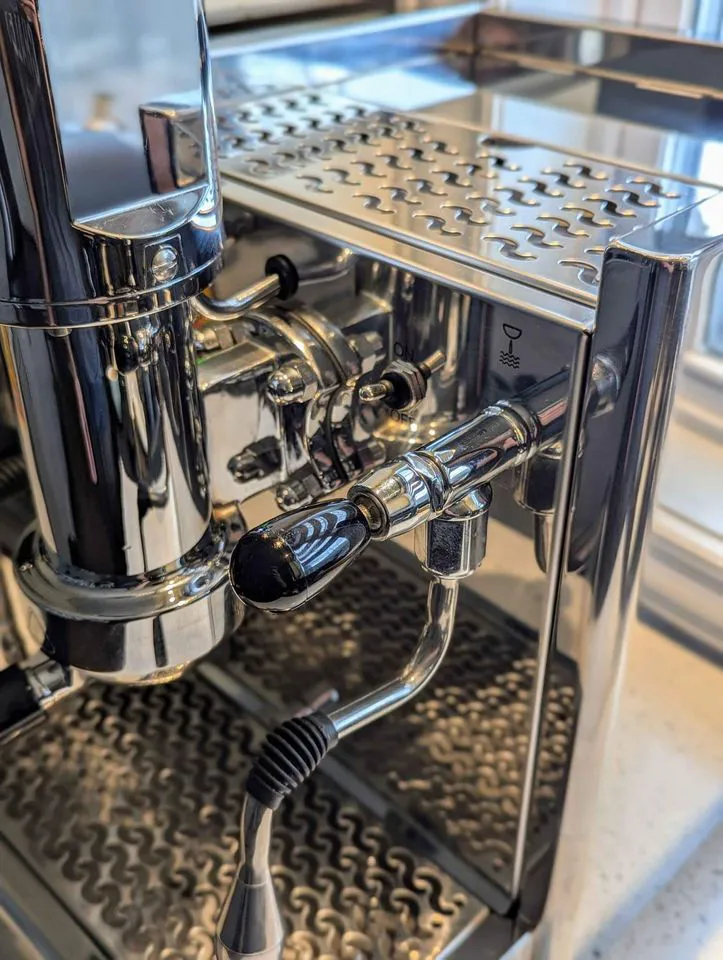
In testing, it only took me about 15 seconds to froth 6 ounces of milk for a cappuccino, and I was able to steam consistently for about 45 seconds before the boiler needed to recover, plenty for two 12-ounce lattes! A nice perk of all this power is how easily you can produce the perfect silky microfoam for latte art, a surefire way to impress your guests (5).
The downside? Once you master this level of power, you’ll find it impossible to go back to the standard home machine, where the steam will feel like a sputter in comparison.
The wand itself is a fully articulated, no-burn design. It’s operated by a joystick rather than a knob, which I prefer because it feels more responsive. You can flip the joystick in any direction for a short burst of steam or lock it in the “up” position for hands-free steaming.
On the other side of the machine is the dedicated hot water wand, which is also operated with a joystick.
This Machine Is Built To Last
Bezzera makes some of the best-quality machines on the market. This is partly due to their incredibly long history. In fact, Luigi Bezzera is credited with inventing the espresso machine, so you could say that the company has been in the business longer than anyone (6).
But that’s not the only reason these machines from Bezzera are so well made. They’re also the only company to design, manufacture, and assemble all their components in-house. Common practice is outsourcing a lot of the manufacturing, but keeping everything under one roof guarantees impeccable quality control and ensures all the parts work together as a seamless whole.
The exterior of the Strega is wrapped in a mirror-finish stainless steel case with perfect craftsmanship. I spent an hour poking around and couldn’t find a flaw. The edges are smooth, and the joints are perfectly fitted. The drip tray is also stainless steel, even including the hidden underside, a common place you’ll see rust develop in lesser quality machines.
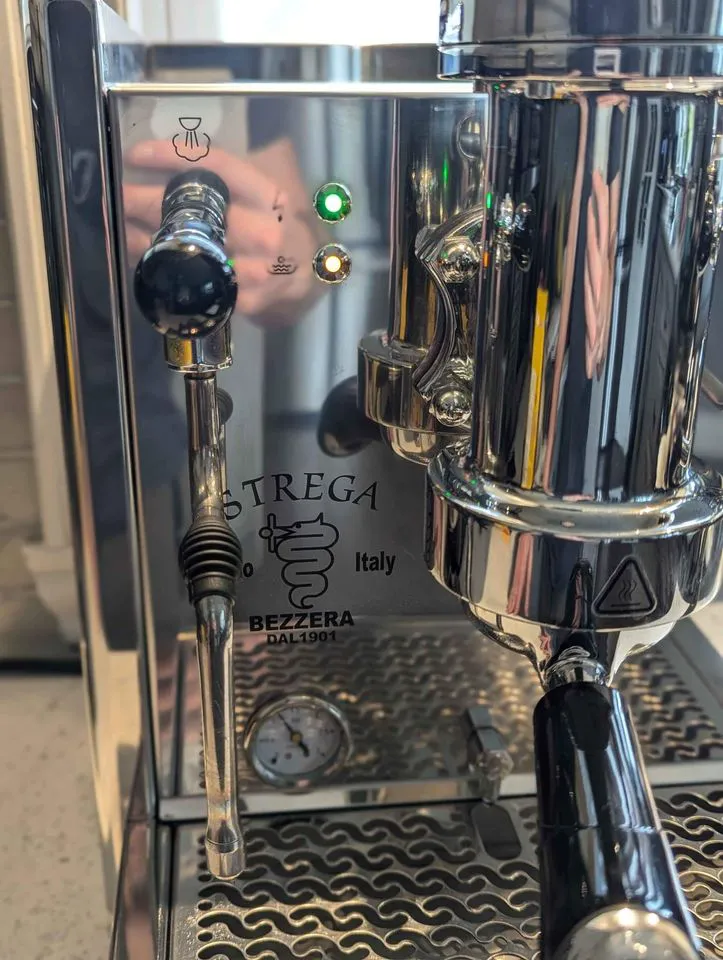
The top of the Strega acts as a passive cup warmer, which is very effective if you give it enough heat up time.
Of course, the most obvious feature of the Bezzera Strega is its size. This is a BIG machine that probably won’t be suitable for every kitchen. The footprint itself is quite large, at 13” wide by 17.7” deep, but the height is the biggest factor. Thanks to the lever, the Strega is a whopping 29” tall. You won’t be sliding this machine under your cupboards. It needs a dedicated place of honor in your kitchen.
It comes with a double spout and a single spout portafilter, both adorned with the Bezzera logo on the handle. This nice detail is mirrored in the handle of the lever for a lovely cohesive look when everything is in place.
Is The Bezzera Strega Worth The Price?
The Strega is priced between $2500 and $3000, depending on your chosen distributor, optional upgrades, and sale pricing. As I said earlier, this is quite high for a heat exchange machine. You can easily find a quality double boiler in the same price bracket.
However, as I also said earlier, this is no ordinary heat exchanger, and a high price doesn’t immediately indicate poor value. In my opinion, the quality of espresso coupled with the quality of the build – not to mention the stunning aesthetic addition to your coffee bar – make this a great buy for anyone who loves lever espresso.
Generating the same soft, sweet, and crystal clear shots you can pull with this machine will come with a price tag no matter what, and with that in mind, I think the Strega’s price is very fair, if not a downright bargain.
Don’t Buy the Bezzera Strega Lever Machine If….
- You don’t want a manual machine – This is obvious. If you don’t have any interest in the subtleties of a lever espresso maker, opt for an easier-to-master automatic.
This same brand makes some great options. For another heat exchanger, check out the Bezzera BZ10. If you’d prefer to upgrade to a double boiler, read my Bezzera Matrix review. For a more basic espresso maker, my review of the New Hobby, Bezzera’s entry-level model, might interest you.
- You’re a manual espresso purist – On the other hand, if you want the full manual espresso experience rather than a lever-pump hybrid, consider something like a new-school Flair espresso maker or a classic La Pavoni. These options allow the beautifully clear shots you expect from a manual machine, and as a bonus, they’re dead quiet.
- You want a PID – Espresso machines with PIDs are all the rage these days for a good reason. Compared with pressure stats, they allow for better temperature control and stability, which is vital if you like experimenting with different specialty beans.
For an affordable single boiler with a PID, look at the Bezzera Unica PID. Or, if you’re willing to spend a bit more cash, the Profitec Pro 800 is a great machine, combining lever operation and PID temperature control.
The Verdict
The Bezzera Strega occupies a unique niche in the realm of prosumer espresso machines. It offers the aesthetics and shot quality of a lever espresso maker, but adding a vibration pump makes it easier to use. A win-win, if you ask me! Add to that Bezzera’s incredible build quality and commercial-level steam power, and you’ve got an espresso maker that’s hard to criticize.
References
- Hoffmann, J. (2009, June 2). Using a lever machine. Retrieved from https://jimseventemp.wordpress.com/2009/06/02/using-a-lever-machine/
- Chernov, A. (2018, February 16). Lever Romance: How I Restored a 70-Year-Old Espresso Machine. Retrieved from https://perfectdailygrind.com/2018/02/lever-romance-how-i-restored-a-70-year-old-espresso-machine/
- Hoffman, J. (2010, January 17). Talking About Pressure Profiling. Retrieved from https://jimseventemp.wordpress.com/2010/01/17/talking-about-pressure-profiling/
- Lee, J. (2016, August 31). Espresso Machine Maintenance: A VIDEO Guide to Draining a Heat Exchange Boiler. Retrieved from https://perfectdailygrind.com/2016/08/espresso-machine-maintenance-a-video-guide-to-draining-a-heat-exchange-boiler/
- Brown, N. (2015, August 11). How Much Is Latte Art Really Worth? A Whole Lot, New Study Says. Retrieved from https://dailycoffeenews.com/2015/08/11/how-much-is-latte-art-really-worth-a-whole-lot-new-study-says/
- Stamp, J. (2012, June 19). The Long History of the Espresso Machine. Retrieved from https://www.smithsonianmag.com/arts-culture/the-long-history-of-the-espresso-machine-126012814/
