
BEZZERA BZ10 ESPRESSO MACHINE REVIEW: AN UNDERRATED WINNER
Luigi Bezzera patented the first espresso machine in 1901, and the latest BZ10 model demonstrates that the brand is still going strong!

The Bezzera BZ10 is a compact heat exchanger espresso machine from a longstanding and reliable brand. Originating in Italy, the land of espresso, this brewer is packed with features, makes great espresso, and comes in at a surprisingly affordable price point.
In this Bezzera BZ10 review, I’ll tell you all about my experience with this impressive home espresso machine and why I think it offers incredible value for money.
What I liked:
- Can brew and steam at the same time
- Electronically heated group head
- Dual pressure gauges
- Top-of-the-line build quality
What I didn’t like:
- No pre-infusion option
- Can’t be direct plumbed
- Group head is harder to service than E61
The Full Bezzera BZ10 Espresso Machine Review
Based in Milan, Italy, a global hotspot for premium espresso, Bezzera has been producing high-end espresso makers for well over a century. In fact, the company is credited with manufacturing the first single-serve espresso machine (1).
Bezzera espresso makers continue to impress in 2024 with their drive to innovate and exceptional stainless-steel build quality. Recently, I’ve been testing their popular mid-level model, the BZ10, and here’s what I’ve learned.
How We Rated It
-
Brewing Capacity
-
User Friendliness
-
Milk Frothing
-
Build Quality
-
Value for Money

Brewing Capacity: A Standout Group Head
The Bezzera BZ10 is a semi-automatic heat-exchanger espresso machine with a 1.5-liter nickel-plated copper boiler and a vibration pump. The heat exchanger (HX) lets you pull a shot of espresso and froth milk simultaneously – crucial for serious lovers of milk-based drinks like lattes and cappuccinos. The vibe pump is a bit noisy, but it’s far from the worst I’ve tested. It still runs quieter than my coffee grinder.
Perhaps the most impressive feature of the BZ10 is its electronically heated 58-mm group head.
I more often see variations on the E61 at this price point, with electronic groups reserved for more expensive models (1). There are two main benefits to the electronic group, which uses two internal heating elements.
- The BZ10 is ready to brew much faster than a typical E61, taking about 10 minutes to heat up.
- It offers improved temperature stability once heated, meaning more consistent espresso.
The temperature is controlled via a pressure stat rather than a PID. While I definitely prefer a PID controller in a dual boiler, I don’t find it offers the same benefits in an HX machine, so I didn’t particularly miss it in the BZ10. I actually preferred the faster response of using cooling flushes to adjust the temperature once I got the hang of it. More on that below.
There is a dual pressure gauge on the front panel – steam pressure on top and brew pressure below. In my opinion, this is a big improvement compared to many machines in this class that only display steam pressure. Monitoring both pressures while preparing a drink improves your skills and ensures consistent results.
The BZ10 is also equipped with an OPV for adjusting pump pressure but, sadly, lacks any kind of automatic or controllable pre-infusion stage. This was likely my biggest disappointment with this machine.
Using The BZ10: What To Know
If you haven’t used a heat exchange machine before, the BZ10 requires a bit of a learning curve. But that’s not to say it’s user-unfriendly; it’s just a new skill set.
You need not worry that this century-old company is stuck in the past. They have continued to evolve in the ways that count (2). Just check out their modern lever machine, the Strega.
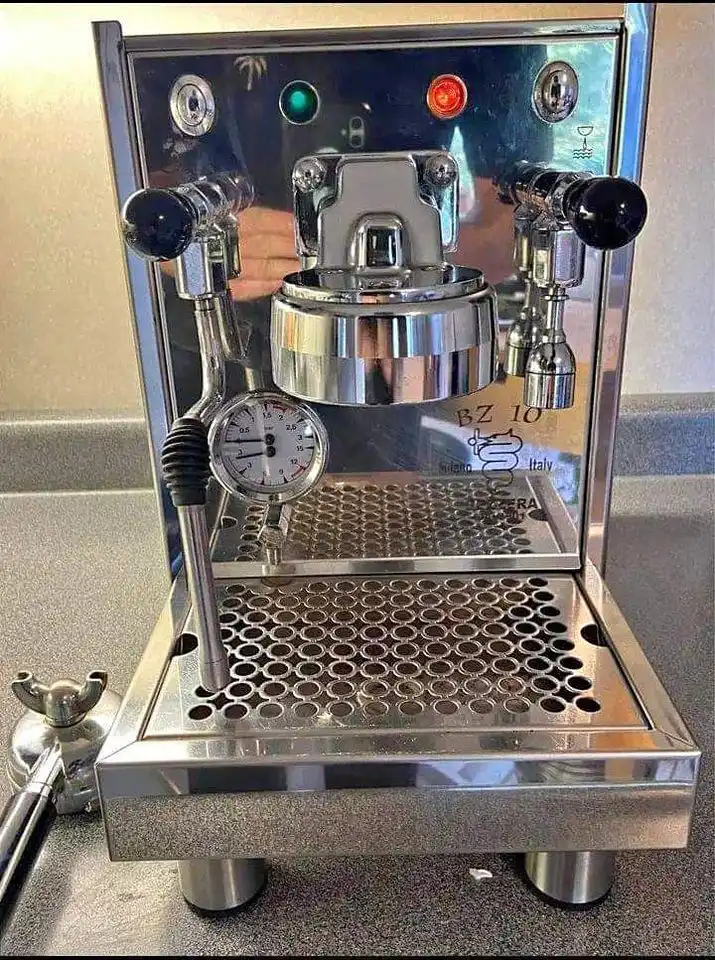
In the newest version of the BZ10, Bezzera has upgraded all the push buttons to toggle switches. It’s a small change, but I really noticed the improved workflow. The power and brew switches have been upgraded to chromed plastic for a solid and responsive feel.
As a semi-automatic machine, you’re responsible for all aspects of pulling the shot. You need to dial in the grind size, measure the coffee dose, tamp the espresso puck, and manage shot timing.
The BZ10 comes with a double-spout 58mm portafilter and two baskets for single and double shots. It has an angled handle so that it sits flat on the counter for tamping – a small detail I always appreciate.
Once the portafilter is prepped, slot it in the machine and toggle the brew switch to start the shot. Assuming everything is dialed in correctly, you’ll want to stop the shot by toggling the switch off again about 25 seconds later.
Temperature Management
As I mentioned earlier, temperature control is done using cooling flushes, which is pretty standard practice in heat-exchanger espresso machines. Flushing water through the group quickly drops the boiler temperature. While this process isn’t as precise as setting brew water temperature with a PID, it’s much more responsive. From unboxing and pulling my first shot, I found it only took me a few dozen shots to have a really good sense of how long to flush to optimize extraction for different coffees.
Straightforward Cleaning And Maintenance
I was impressed with the cleaning and maintenance features of the BZ10, particularly the combination Mater pressure stat. In general, pressure stats wear faster than PIDs, but Bezzera has installed a 3-in-1 pressure stat, vacuum relief valve, and pressure relief valve to combat this issue — three common wear areas that typically have to be replaced or repaired separately.
I recommend performing weekly backflushes with the included blind filter to keep the brew group clean. It can be removed with only 3 bolts for deeper cleaning, but given the unique electronic group, I’d probably suggest that any further maintenance be done by an expert in the brand.
The BZ10 has a 3-way solenoid valve, which helps keep things tidy by diverting excess water and pressure into the drip tray. There’s no splatter when you unlock the portafilter, and my ground coffee pucks were always dry and easy to knock out of the filter basket.
You can’t plumb the BZ10 directly to a water line, but the water tank has a 3-liter capacity – one of the biggest in its class – and includes a particle filter.
As a moderate user, I only had to refill it once a week (which served as a nice reminder to backflush at the same time). It is wired to an automatic fail-safe that will cut power to the machine if the water reservoir gets too low, avoiding the potential for running it dry and causing expensive damage.
All The Steam Power You Need
Lovers of milky drinks like lattes and cappuccinos will be more than satisfied with the steam capabilities of the Bezzera BZ10. True, the 1.5-liter boiler isn’t the biggest on the market, so you shouldn’t expect commercial-style, lighting-fast steaming. But I honestly prefer a slightly more reasonable pace for home use. Using the included 2-hole steam tip, it only took me about 20 seconds to foam 6 ounces of milk for a latte.
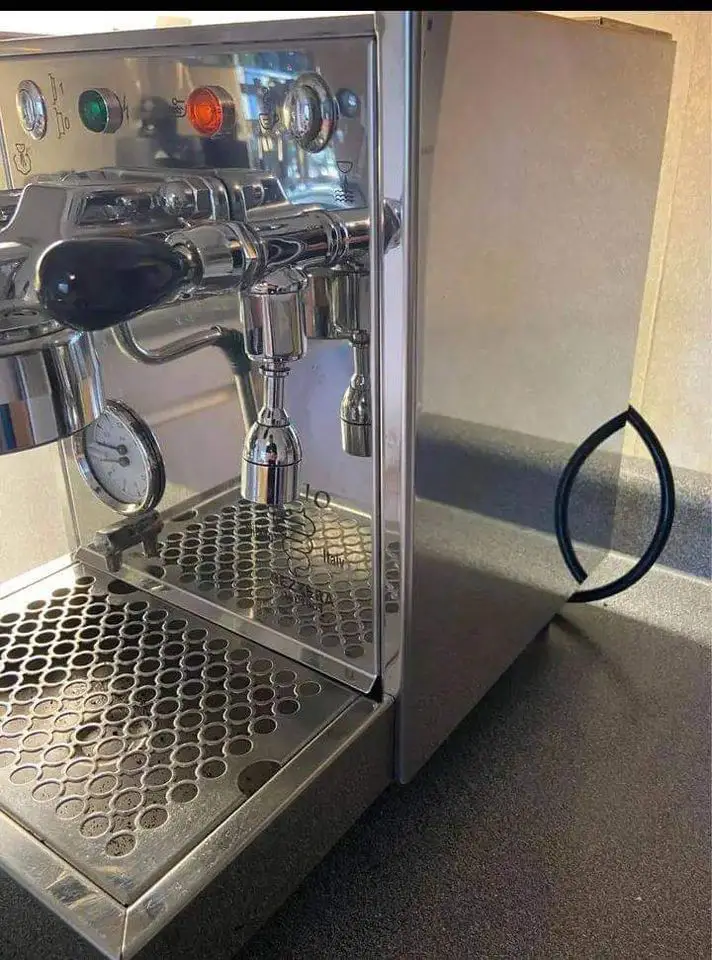
The steam wand is multidirectional and controlled via joysticks rather than knobs. Fans of joysticks, myself included, find that they’re more ergonomic than knobs and allow for quicker on and off. I like that you can flick the joystick in any direction for a burst of steam or lock it in the up position for hands-free steaming.
The Bezerra BZ10 has a dedicated hot water tap, also controlled by a joystick. It’s not a multidirectional wand, but it has plenty of motion thanks to a ball joint and a hefty 4.25 inches of clearance from the tray.
The hot water joystick doesn’t have a lock position, so you can’t operate it hands-free. This might slow your workflow a little, but I can see how it makes sense from a safety standpoint.
Build Quality Was Never In Doubt
Bezerra has a longstanding reputation for excellent build quality and ongoing innovation, a necessity to last for 100 years in the competitive Italian espresso machine market (3).
Most impressively, they’re known for manufacturing all espresso equipment components in-house. They cast all their parts, starting from the raw materials, rather than outsourcing any aspect of the process.
This commitment means Bezzera’s quality control is exceptional, as no process step is outside their scope.
The BZ10 body and frame are entirely stainless steel, with the exterior panels polished to a gleaming mirror finish. It’s a surprisingly small machine, at just 10 inches wide by 15 inches tall by 17 inches deep.
I could fit it easily under my upper cupboards. However, the top of the machine acts as an effective cup warmer, so it’s worth leaving a few extra inches of clearance on top to take advantage of that feature.
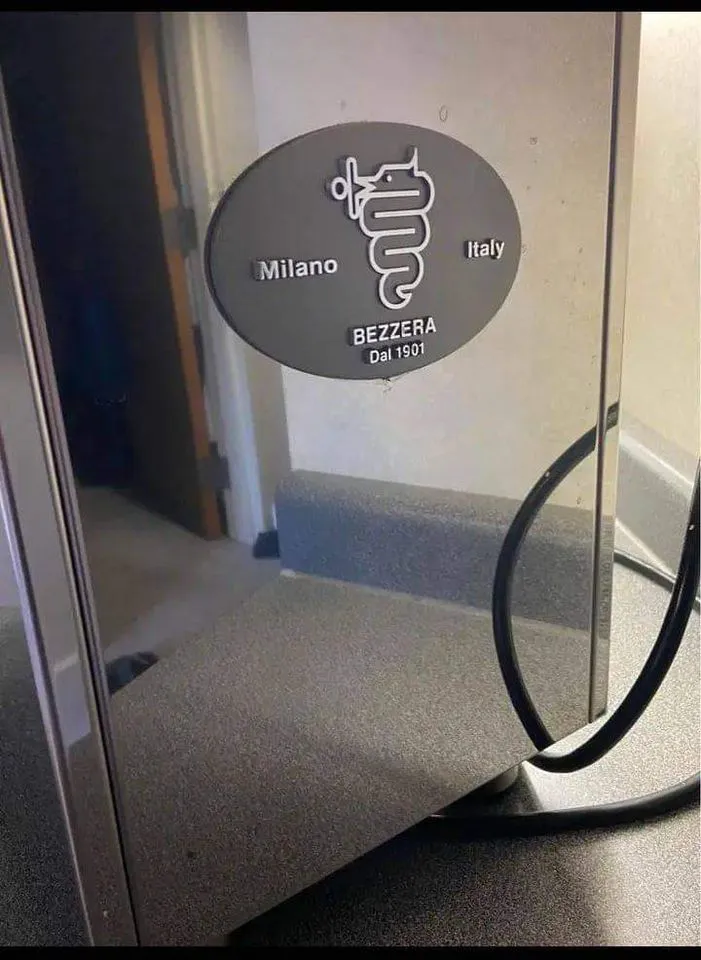
The newest version has some nice aesthetic upgrades. The signature emblem on the back has been changed from gray to gold for an extra touch of class, and the indicator lights have been upgraded from standard bulbs to LEDs. They give off a brighter glow and, more importantly, last longer before they need replacement.
Like most mid-priced espresso makers, this one comes with a throw-away plastic tamper. I highly recommend you leave room in your budget for a heftier metal model.
Is The BZ10 Worth Its Price?
My answer to this question is an unqualified yes. In my opinion, Bezzera could easily charge a few hundred dollars more for this machine, which runs less than $1500. The copper HX boiler, electronic group head, and exceptional build quality make it an incredible value.
It’s less expensive than many competitor HX models like the Rocket Appartamento, Lelit MaraX, and Profitec Pro 400 – though, of course, all have their pros and cons.
Don’t Buy The Bezzera BZ10 If…
- You’re in the market for a dual boiler: If you prefer the operation of a dual boiler to a heat exchanger, Bezzera makes an excellent model, the Matrix. It is significantly more expensive than the BZ10, but the features and performance justify the cost if it fits your budget.
- You don’t make milky drinks: There’s no reason to pay for an HX or dual boiler machine if you rarely froth milk. For an entry-level espresso coffee machine, the Bezerra New Hobby makes a great espresso for less than half the price of the BZ10. Or opt for a fancier single boiler machine like the PID-equipped Unica, which will still save you plenty of cash.
- You prefer the E61 group: If you’re looking for a similarly compact heat exchange espresso machine with the more tried-and-true E61 group, check out either the Rocket Appartamento or the Lelit MaraX, both of which receive consistently rave reviews.
The Verdict
The Bezzera BZ10 coffee machine features everything you need to take the next step on your espresso journey – at a price point I almost couldn’t believe. The electronic group head offers fantastic temperature stability for consistent and delicious espresso shots. And with the heat exchange boiler, you can pull shots and steam milk simultaneously, making it perfect for home baristas looking to showcase their latte skills.
References
- Burton, G. (2011, January 11). The E61 GroupHead: An Oldie but a Goodie. Retrieved from https://fivesenses.com.au/blogs/news/the-e61-group-head-an-oldie-but-a-goodie/
- Grant, T. (2021, April 5). Technical evolution: How have espresso machines changed in the 21st century? Retrieved from https://perfectdailygrind.com/2021/04/technical-evolution-how-have-espresso-machines-changed-in-the-21st-century/
- Stamp, J. (2012, June 12). The Long History of the Espresso Machine. Retrieved from https://www.smithsonianmag.com/arts-culture/the-long-history-of-the-espresso-machine-126012814/
