
Arabica Coffee Beans: What Makes This Variety So Special?
Arabica is the world’s most widely grown and popular coffee species. Let’s talk about why.
Most coffee lovers have probably encountered labels proudly proclaiming, “100% Arabica Coffee.” But do you know what that means? Is it a marketing gimmick, or is Arabica really the best coffee variety?
In this guide to Arabica coffee, I’ll cover everything you need to know, from how it grows to how it tastes – and why it’s more expensive than Robusta.
What Is Arabica Coffee?
Arabica coffee is coffee made from the seeds of Coffea arabica, a flowering plant of the Rubiaceae family. Coffea arabica originated in Ethiopia, where it still grows wild today.
According to the story of coffee’s discovery, an Ethiopian goat herder was the first to notice the plant’s potential. He spotted his goats frolicking with more energy than usual and traced their behavior to the seeds of the fruit they were consuming. That fruit, of course, was the coffee cherry (1).
Why Is It Called Arabica Coffee?
Ethiopia is the homeland of coffee, but it was first cultivated commercially in Yemen, on the Arabian peninsula. It is from here that it takes its name.
What Do Arabica Coffee Beans Look Like?
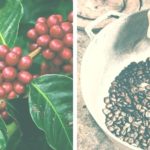
Arabica coffee plants are typically shrubs or small trees, though wild ones can grow as tall as 12 meters. They have white flowers and glossy, dark green leaves. The flowers produce a fruit called a coffee cherry, which contains two seeds. The seeds are extracted from the ripe fruit and washed, dried, and roasted to produce Arabica beans.
Roughly 5% of Arabica coffee cherries have a natural mutation that causes them to have only one seed. This is known as peaberry coffee, and it often fetches high prices due to its rarity.
Where Is Arabica Coffee Grown?
All commercial coffee is grown in the Coffee Bean Belt, which circles the globe between 25 degrees latitude north of the equator and 30 degrees south. These tropical regions offer the best conditions for growing coffee.
Arabica beans can be finicky and are often grown on the slopes of volcanoes. They thrive in temperate climates, with minimal temperature variation between day and night. They prefer distinct wet and dry seasons, high elevations, and mineral-rich and well-drained soils. These conditions slow the ripening of the beans, allowing more flavor development.
Brazil is the largest producer of Arabica coffee, followed by Colombia, Ethiopia, Honduras, and Peru. But many other nations are growing high-quality Arabica in smaller quantities. Costa Rica, Panama, and Kenya – to name just a few examples – are highly regarded among coffee experts.
How Much Arabica Coffee Is Grown?
Green Arabica coffee beans are sold in 60-kg bags, and this is the unit by which producers generally measure coffee. The global coffee production estimate for 2024-2025 is currently 97.845 million bags, a slight increase over the previous season (2).
Production of Arabica coffee is forecast to fall in many of the world’s top Arabica growing regions in the coming years. This decline is primarily due to climate change, which upsets the delicate balance of conditions needed to grow Coffea arabica plants.
Climate change is bringing higher temperatures and more severe droughts and floods and allowing the spread of coffee pests and diseases to new areas (3). Though new growing regions may emerge, the loss of the current primary growing regions will be devastating for the communities that depend on them.
What Does Arabica Coffee Taste Like?
Arabica beans can have many different flavor profiles. Just check out the coffee taster’s flavor wheel to get an idea (4).
There’s no general recipe or description in terms of the taste profile of Arabica, depending on the variables. The taste profile could be chocolatey, spicy, floral, caramelly, bright acidity, dry acidity, low acidity, juicy, fruity, etc.
Arabica coffee generally tastes sweeter and smoother than other types of coffee beans. Coffee enthusiasts praise its bright acidity, subtle and complex flavors, and balanced profile.
The flavor of a coffee is influenced by the bean variety as well as growing conditions, processing method, and roast level.
Specialty coffee has a sort of terroir, and light roast coffee, in particular, carries the flavors of its origins. For example, Ethiopian Arabica coffees are known for their fruity and floral notes, while South American coffees are famed for sweet caramel and nuts.
Dry-processed coffee has a natural sweetness and sometimes a slightly fermented flavor, whereas washed coffee tastes cleaner. The honey process lies somewhere in between. Wet-hulling or monsoon processing yields earthy-flavored coffees that have very low acidity.
The heavier a roast, the more the resulting coffee will taste of the roast rather than the origin. Lighter roast Arabica coffees are often complex and acidic, while darker roast coffees have bittersweet and smoky flavors and lower acidity.
How Much Caffeine Is In Arabica Coffee?
Arabica beans contain between 1.2 and 1.5% caffeine, with slight variations depending on the specific variety. When drinking Arabica coffee, this equates to around 100 mg of caffeine in an 8-ounce brewed cup, though that number can vary substantially depending on the brew method and recipe.
Types Of Arabica Coffee
The two original Arabica varieties to emerge from Ethiopia were Typica and Bourbon, both of which are still grown commercially. Most Arabica coffee today is either a natural mutation or an intentionally bred hybrid of one or both.
Typica
Typica remains one of the most commonly grown coffees worldwide – hence the name, Typica. It is well adapted to cold conditions and flourishes at high altitudes, producing richly flavorful brews. In particular, Central American Typica is of very high quality. However, it is also low-yielding and susceptible to common diseases like coffee leaf rust.
Bourbon
Bourbon is the other genetic parent of most coffee we know and love today. It was one of the earliest coffees taken from Ethiopia to be grown commercially. The name comes from the fact that it was first cultivated exclusively on Bourbon Island. It has excellent cup qualities when grown at high altitudes but is at high risk of disease and produces fairly low yields.
Other Types Of Arabica Coffee Include…
- Caturra is a natural mutation of the Bourbon variety that was discovered in Brazil in the early 20th century. It is higher yielding because Caturra plants can be grown more densely, but it is also more susceptible to coffee leaf rust.
- Mundo Novo is a cross between Typica and Bourbon, known for its tall stature and high productivity. The initial hybridization occurred naturally but was improved by agronomists for a decade before widespread distribution.
- Catuai is a hybrid of Caturra and Mundo Novo developed in Brazil. It is an even higher-yielding crop. While it remains at risk of major coffee diseases, its shape makes it easier to apply herbicides and pesticides.
- Pacas is a higher-yielding natural mutation of Bourbon. It was discovered in El Salvador in 1949 and still makes up a large percentage of that country’s coffee production.
- Maragogipe is a natural mutation of Typica. It is known for low yields, notably large coffee beans, and high cup quality.
- Pacamara is a hybrid of Pacas and Maragogipe. It is challenging to grow but delivers exceptionally high cup quality when cultivated successfully.
- Ethiopia Heirloom (aka Ethiopian Landrace) is the collective term for the thousands of (often unnamed) Arabica species growing in Ethiopia – either cultivated or wild.
- SL28 is one of the most famous African varieties of Arabica. Developed in Kenya by Scott Labs (SL), it is renowned for its unique flavor profile and drought resistance.
- Geisha coffee (aka Gesha) is famous for its exceptionally high cup quality – and equally astounding prices. It is known for delicate floral, jasmine, and peach-like aromas when grown at high altitudes.

DOWNLOAD ARABICA FAMILY TREE POSTER
Arabica/Robusta Hybrids
Arabica/Robusta hybrids were bred to take advantage of the best qualities of each – the flavor of Arabica with the hardiness of Robusta. They are officially designated as Arabica beans, though they generally have lower cup quality than pure Arabica.
Timor was the first such hybrid, which occurred naturally on the island of Timor. Other common varietals include Catimor and Sarchimor
We have done extensive research into common and not-so-common Arabica coffee cultivars, so check out the links below for a more detailed look at the various subtypes.




What Is The Difference Between Arabica And Robusta Coffee Beans?
Arabica coffee accounts for around 60 to 70% of the world’s coffee production. The remainder is Coffea canephora, more commonly known as Robusta coffee because it is more robust.
Robusta coffee is easier to grow than Arabica coffee. It is often higher-yielding, doesn’t require the same stringent climate conditions, and is more resistant to pests and disease. The trade-off is that it tends to have harsher flavors than Arabica, with less sweetness and acidity.
However, Robusta maintains an essential place among the different coffee types. It provides a more reliable source of income for farmers and is more affordable for consumers. It is commonly used for instant coffee and as an additive to espresso blends, where it contributes earthy flavors, a full body, and a rich crema. It has nearly twice the caffeine of Arabica.
There are ongoing efforts among innovative farmers to develop higher-quality Robusta beans to rival specialty Arabica (5).
Final Thoughts
Arabica coffee is considered by coffee aficionados to be the highest quality species of coffee, but even a layperson can taste the difference. The best Arabica coffee is sweet, complex, and balanced. It’s equal parts soothing and exciting. In my opinion, it’s well worth a few extra bucks a pound – both for your enjoyment and to support the hardworking farmers who make it possible.
FAQs
Starbucks coffee is exclusively Arabica, even their popular Signature Espresso blend. Starbucks beans are sourced worldwide, from Latin America, Africa, and the Asia-Pacific region, and include many varieties of Arabica coffee.
Arabica coffee beans have naturally occurring sugars, like most plant products. A sugar content of roughly 6 to 9% is what provides their inherently sweet flavor profile. In contrast, a Robusta bean is only about 3 to 7% sugar. However, the dietary intake of sugar from a cup of brewed Arabica coffee is insignificant.
Liberica coffee is a less common coffee variety that makes up only about 2% of the global coffee supply. It is mainly grown in Malaysia, Indonesia, and the Philippines. It can have sweet and floral flavors and a lower caffeine content than Arabica coffee.
Excelsa coffee is another coffee variety, which has recently been reclassified as a type of Liberica. Like Liberica, it grows on taller trees and is mainly farmed in Southeast Asia. But it has a unique flavor profile, which tends to be sweet and tart.
References
- National Coffee Association. (n.d.). The History of Coffee. Retrieved from https://www.ncausa.org/about-coffee/history-of-coffee
- Asplund, R. (2025, March 14). Rain Forecasts for Brazil Weigh on Coffee Prices. Retrieved from https://www.theglobeandmail.com/module/newsStory.html?id=31413153
- Scott, M. (2015, June 19). Climate & Coffee. Retrieved from https://www.climate.gov/news-features/climate-and/climate-coffee
- Kanniah, J.C. (2020, August 10). “100% Arabica: What Does It Mean? Retrieved from https://perfectdailygrind.com/2020/08/100-arabica-coffee-explanation-robusta-specialty-wcr/
- Impallomeni, F. (2019, October 23). Can Fine Robusta Be Considered Quality Coffee? Retrieved from https://perfectdailygrind.com/2020/08/100-arabica-coffee-explanation-robusta-specialty-wcr/

