
KONA COFFEE GRADES: MAKING SENSE OF HAWAII GRADING STANDARDS
Curious about Kona coffee? I take you through all the details of the Kona grading system to help you buy the best beans.
Buying Kona coffee is an expensive splurge for any coffee lover, so you want to be sure you’re spending your money wisely. Fortunately, the Hawaii Department of Agriculture has created a grading system to help you out.
Type I Grades
- Extra Fancy
- Fancy
- Kona Number 1
- Kona Select
- Kona Prime
Type II Grades
- Kona Peaberry Number 1
- Kona Peaberry Prime
Understanding the official Kona coffee grades is essential not only to help you buy the best Kona beans but also to spare you from falling into any Kona coffee scams. So let’s get into the details.
Why is Kona coffee so special?
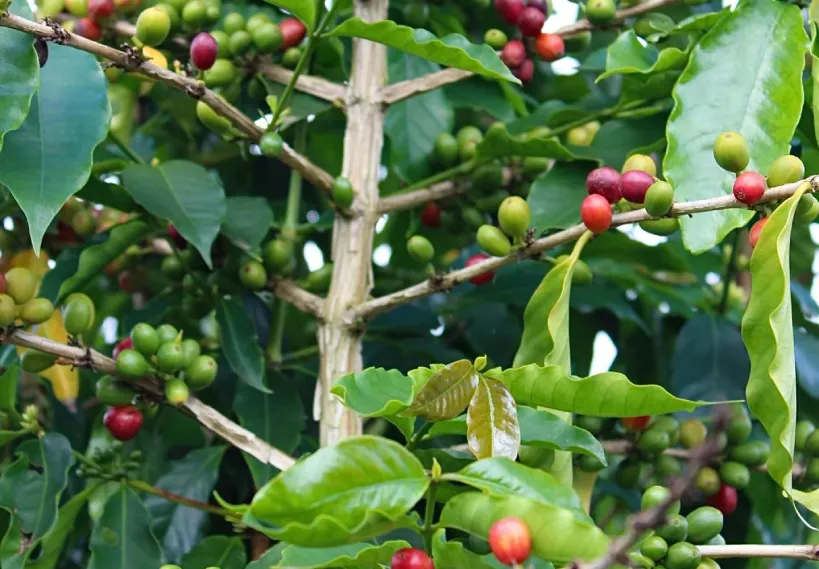
Many coffee connoisseurs consider Kona coffee beans to be among the best in the world. They are grown in the district of Kona on the Big Island of Hawaii, which is blessed with a microclimate and geography ideal for growing Arabica coffee (1).
Produced on the fertile slopes of the Hualalai and Mauna Loa volcanoes, Kona coffee has a unique and highly-prized flavor profile. Brewing Kona coffee yields a cup that is bright, sweet, smooth, and clean.
What are the grades of Kona coffee?
Kona coffee is graded by the Hawaiian Department of Agriculture (HDOA), which looks at four separate factors when awarding Kona coffee grades: shape and size, color, moisture content, and number of defects.
The Kona coffee rating also considers roasting quality (the beans must possess uniform color and brightness when roasted) and final aroma and flavor.
Green coffee beans are classified by seed type before evaluating the characteristics that determine their rating. Standard coffees with two beans per cherry are Type I, whereas Type II (also known as peaberries) have just one round bean per cherry.
Type I Beans
There are five classifications for Type I beans, listed here from the highest to lowest grade.
1. Kona Extra Fancy
Roughly 20% of each Kona crop consists of Extra Fancy beans, the most coveted and expensive Kona grade. These beans are the largest (they can’t pass through a 19/64″ round hole), have a uniform green color, high moisture content (9-12%), and a maximum of 8 defects per 300 grams.
2. Kona Fancy
Beans that meet the Fancy grade standards are still impressively high quality. They’re large (won’t pass through an 18/64″ round hole) and have a uniform green color and 9-12% moisture like the Extra Fancy grade, but they are allowed up to 12 imperfections per 300g.
3. Kona Number 1
Kona Number 1 beans are medium-sized (won’t pass through a 16/64″ round hole) and are allowed 18 defects per 300g. They’re still green and uniform in color with 9-12% moisture.
4. Kona Select
The last two grades don’t have any color or size requirements, so the beans are usually relatively small. Kona Select beans have 9-12% moisture and are allowed up to 5% defective beans.
5. Kona Prime
Kona Prime beans are usually the smallest. The only difference between Prime and Select is Prime allows for more defects – up to 20%.
Grades Below The Kona Minimum
A Hawaiian coffee must meet at least the Prime grade to be called Kona coffee; simply being grown within the Kona coffee region is not enough (2).
Kona coffee means green coffee processed from cherry coffee which is grown in the geographic region of Kona and which at least meets the minimum requirements of Kona Prime green coffee.
There are two more grades for beans falling below Prime, which can’t be called Kona coffee.
- The X-3 Grade (with 35% defects and 9-12% moisture) must be labeled as “Hawaiian coffee.”
- The OFF-Grade, which includes beans that don’t meet any of these criteria, must be labeled as “generic coffee.”
Type II Beans
Type II beans, or peaberries, are the result of a genetic mutation that causes a single bean to grow inside the coffee cherry instead of two. Peaberry beans are rounder, fuller beans with more evenly concentrated flavors. They make up less than 5% of each harvest and are subdivided into two grades.
1. Kona Peaberry Number 1
These are the very best of their kind and are bound to give you a memorable cup of joe. They won’t pass through a 10/64″ hole, must have 9-12% moisture, and a maximum of 18 defects per 300g.
2. Kona Peaberry Prime
As with Kona Prime, Peaberry Prime has no bean size requirements, which means they’re usually smaller. They need to have 9-12% moisture and are allowed as much as 25% defective beans.
What is the best Kona coffee?
The best Kona coffee is the one that tastes best to you, though I realize that’s not a very satisfying answer. Most coffee experts will steer you towards Kona Extra Fancy (the highest grade) as the cream of the crop, and that’s a safe answer. But that doesn’t mean you won’t find a Kona Fancy or Peaberry coffee you enjoy more.
What does 100% Kona mean?
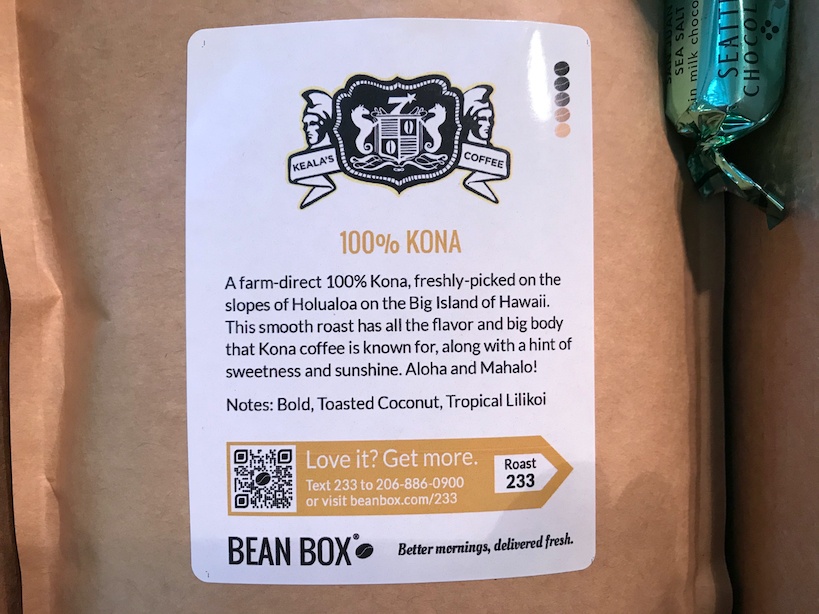
A bag of coffee beans labeled as 100% Kona means that every bean in the bag was grown in the Kona district and is at least of the Kona Prime grade. This is very different from a Kona blend, which, by law, can contain as little as 10% Kona beans. The other 90% can be coffee from anywhere – hardly a good way to experience this world-renowned single origin (2).
Other Kona Coffee Descriptors
Aside from the official grades from the HDOA, you may notice some other qualifiers when you’re shopping for the finest Kona coffee. Here’s a brief rundown of the most common:
- Estate Coffee refers to beans from a single estate farm, as opposed to a blend from different farms in the same region. There are no grade requirements associated with the Estate Kona coffee label.
- Microlot Coffee comes from a single lot on a particular farm. Think of it as a single origin taken to its ultimate extreme.
- Reserve or Private Reserve Coffee doesn’t have a specific definition, but it tends to be a blend of the top beans from a given estate. It’s usually the beans the estate owner has selected as the best showcase of their coffee.
Why does Kona coffee use a grading system?
To capitalize on the Kona name’s reputation, many companies used to market their coffees as ‘Kona style’ even when the beans had nothing to do with Kona’s farms. To protect both Kona coffee farmers and consumers, the Hawaii Department of Agriculture compiled the grading classification system to ensure that only authentic Kona beans are marketed and sold as such.
Final Thoughts
True gourmet Kona coffee is often listed among the best in the world. Tasting its wonderfully balanced flavor profile is a memorable experience for any coffee lover, as long as you’re getting the real thing.
The Kona coffee grading system is an important innovation that protects coffee growers and consumers alike. Now that you understand its nuances, you’re armed with the knowledge to buy the best Kona coffee your budget allows – and to avoid any potential Kona scams.
FAQs
Kona coffee is so expensive for a number of reasons. First, the Kona growing region is relatively small, which naturally limits production. Demand outstrips supply. Second, Kona coffee benefits from decades of building an international reputation for quality coffee, for which consumers are willing to pay a premium. Third, Hawaii is the only coffee growing region in the United States. As such, it is bound by U.S. labor and wage requirements, which substantially increases the cost to produce coffee.
No, not all Kona coffee beans qualify as specialty. In fact, the Specialty Coffee Association has standards that surpass even Kona Extra-Fancy. For example, one of the minimum requirements is that the beans are allowed no more than 5 defects per 300 g (3).
To avoid Kona scams, start by looking for the label “100% Kona Coffee.” If it says simply “Kona,” “Kona Coffee,” or “Kona Blend,” it’s probably not entirely the real thing. You should also stick with reputable Kona brands and coffee farms, which can be easily checked online. Lastly, be wary of any Kona coffee being sold for less than $20/pound.
References
- Institute for Scientific Information on Coffee. (n.d.). Coffee Farming. Retrieved from https://www.coffeeandscience.org/about-coffee/coffee-farming
- Hawaii Department of Agriculture. (2012). Hawaii Administrative Rules, “Standards for Coffee.” Retrieved from https://hdoa.hawaii.gov/wp-content/uploads/2012/12/AR-143.pdf
- Coffee Research. (n.d.). SCAA Green Coffee Classification. Retrieved from https://www.coffeeresearch.org/coffee/scaaclass.htm
