
JAPANESE STYLE ICED COFFEE RECIPE: ICE COFFEE IN A FLASH
I make this Japanese-style iced coffee recipe at least a few times a week during the summer months and now you can, too!

Photo: Aleksandra Peric (recipe maker)
There’s nothing better than cold coffee on a hot day. And there is no better recipe than Japanese-style iced coffee when you need that icy caffeinated beverage right now. With no steeping or chilling time, it’s the fastest way to make iced coffee. And it’s no more difficult than preparing a classic pour-over brew.
Follow along with my step-by-step guide to the perfect cup.
What Makes Japanese Iced Coffee Different?
Before we leap into the recipe, let’s chat about Japanese-style iced coffee. It’s a bit different from the standard iced coffee recipe and many iced coffees around the world.
The Japanese iced coffee method brews hot coffee directly onto ice for a surprisingly bright and refreshing iced beverage. The reward is immediate—you can drink great coffee right away. Thanks to its speedy nature, the method is also called flash brew (1).
This is distinct from cold brew coffee and Kyoto-style slow drip cold brew, both of which use cold water and a long extraction time to produce a super-smooth cold coffee.
Ingredients and Equipment
- 25 grams of coffee
- 8 ounces of water
- 1 cup of ice cubes
- Pour-over coffee maker with filter
- Carafe, Mason jar, or large glass
- Kettle
AT A GLANCE
BREW TIME
5 – 10 minutes
YIELD
One 12-oz iced coffee
How To Make Japanese Iced Coffee Recipe
Here’s how to make Japanese-style iced coffee at home. To account for a bit of dilution from the ice, we’ll use a slightly higher coffee to water ratio than when brewing hot coffee. But other than that, making a glass of iced coffee is just like brewing a traditional pour over!
Step 1: Add Ice To The Carafe Or Jar
Put 1 cup of ice into your carafe, jar, or glass.
I usually pop the ice-filled jar into the freezer to chill while I weigh and grind my coffee.

Step 2: Measure Your Coffee
Weigh 25 grams of freshly ground coffee. The grind size should be the same as you would use for making hot coffee. I like medium-fine for my V60 dripper.
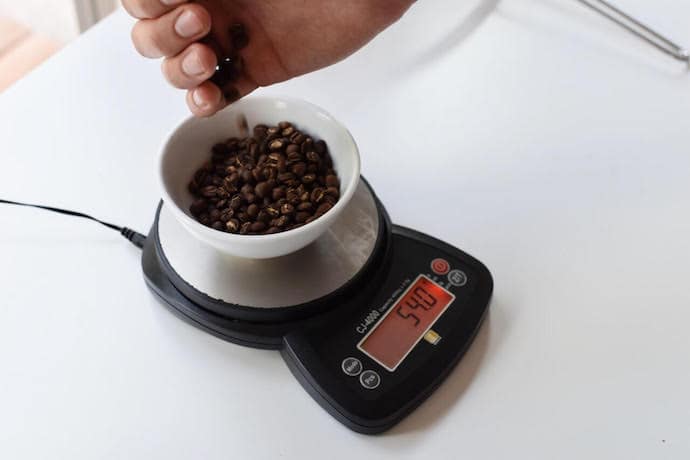
I always prefer to measure the amount of coffee by weight rather than volume to ensure accuracy and consistency. But if you don’t have a coffee scale, 25 grams is roughly 5 tablespoons.
Pro tip: The quality of the coffee matters for this simple drink. I generally use a medium or dark roast, but you can use any specialty coffee beans you enjoy.
Step 3: Prepare The Coffee Maker
Settle the pour-over dripper on the jar, and add a paper filter. For authenticity, I recommend using the made-in-Japan Hario V60 for this brewing method. But you can use any pour-over device, including the Chemex or Origami Dripper.
Add the ground coffee to the filter.

Step 4: Heat Water
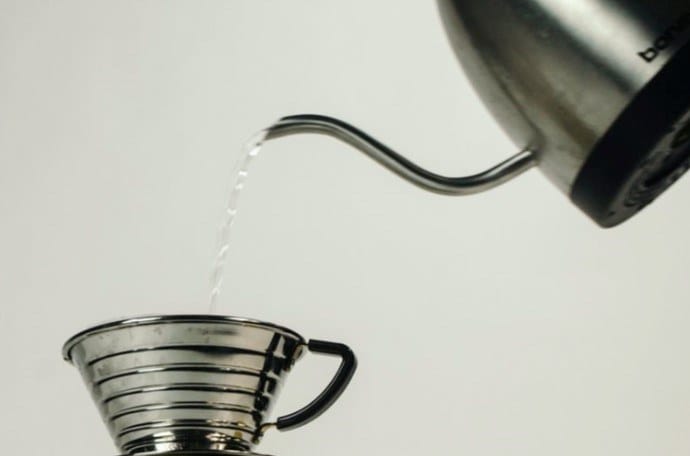
Heat your cup of brewing water to 200 F, ideally in a gooseneck kettle. If you don’t have a variable-temperature kettle or a thermometer, bring your water to a boil, then take it off the heat and let it sit for 30 seconds to bring it down to roughly the right temperature.
Pro tip: Never use boiling water to brew coffee. It scalds the coffee beans, producing burnt and bitter flavors.
Step 5: Embrace The Bloom
Slowly and steadily pour just enough hot water over the grounds to fully saturate them. If you are using freshly roasted coffee beans, you should see some bubbles as the ground coffee off-gasses CO2.
Allow the water to drip through for about 45 seconds.

Step 6: Brew The Coffee
Slowly pour about half of the remaining water over the coffee grounds in a circular motion. Allow it to drip through, then slowly pour the remaining water.
Let it drain completely.

Step 7: Serve And Enjoy!
Remove the filter and brewer and dispose of the grounds.
If you brewed iced coffee in a Mason jar or glass, you’re ready to drink. If it’s in a carafe, pour your final brew into a tall glass to serve.
Coffee shops typically serve Japanese-style iced coffee black, but you can add sweetener, cream, or milk to taste.
Pro tip: Trying to dissolve sugar in cold drinks is a challenge. So if I want a sweet treat, I usually turn to a liquid sweetener like honey or maple syrup.
Final Thoughts
The Japanese method of making iced coffee is wonderful not just for its speed and delicious flavors but also for its versatility. This recipe works with any pour-over cone and any type of coffee bean. In fact, even if you’re not a coffee fan, you can use this same method to make a lovely iced tea!
Have you tried it? What do you think? Let me know in the comments.
FAQs
Japanese iced coffee is so good because brewing directly over ice preserves the bright and complex flavors and aromatics of freshly brewed coffee while still yielding a refreshing cold drink. In comparison, other cold brew methods produce smoother coffee with less vibrant flavors.
The Japanese way of making cold brew, also known as Kyoto-style slow drip coffee, involves slowly dripping cold water over ground coffee, usually over the course of 12 to 24 hours. This method produces a smooth drink with more complexity and acidity than traditional steeped cold brew.
Coffee has a long history in Japan, stretching back to the 16th century. Today, Japan is the 4th largest consumer of coffee globally. Coffee remains incredibly popular for social and cultural reasons, everything from affordable canned convenience coffee to high-end specialty coffee shops (2).
References
- Gant, A. (2022, April 13). Should coffee shops offer flash brew coffee? Retrieved from https://mtpak.coffee/2022/04/flash-brew-coffee-should-roasters-offer-the-new-trend/
- Thomson, D.J. (n.d.). Coffee culture in Japan. Retrieved from https://www.jrpass.com/blog/coffee-culture-in-japan
