
How To Make Decaf Cold Brew Coffee: All Flavor, No Jitters!
Decaf cold brew is rarely seen on local coffee shop menus, so let’s learn how to make it at home.
Do you love cold brew coffee but hate the resulting caffeine jitters? You’ll be happy to hear that you can just as easily enjoy a decaffeinated cold brew. The brewing process is exactly the same. Just start with great decaffeinated beans and go from there.
I’ll walk you through it, including some handy pro tips, in this easy recipe for decaf cold brew at home.
How To Make Decaf Cold Brew Concentrate
Making decaf cold brew is a piece of cake, requiring no barista skills or special equipment – though you can make your life a little easier with one of the best cold brew coffee makers. All you need are some high-quality decaf coffee beans and a little patience.
Not a patient person? Check out my guide to making decaffeinated espresso instead. It’s ready in seconds!
Decaf Cold Brew Ingredients
- 6 ounces decaf coffee beans
- 18 ounces filtered water
Time:
12 – 24 hours
Yield:
2 cups decaf cold brew coffee concentrate
Special equipment:
- Burr coffee grinder
- Cold brew coffee maker, large Mason jar, or French press
- Kitchen scale
The Best Decaf Cold Brew Recipe
The procedure for making cold brew decaf coffee is the same as for making caffeinated cold brew. Simply replace your regular coffee beans for cold brew with decaf equivalents. Don’t worry, I’ll help you find your favorite decaf coffee.
Related: What Is Decaf Coffee?
If you haven’t made cold brew before, keep reading. This recipe walks you through the process step by step.
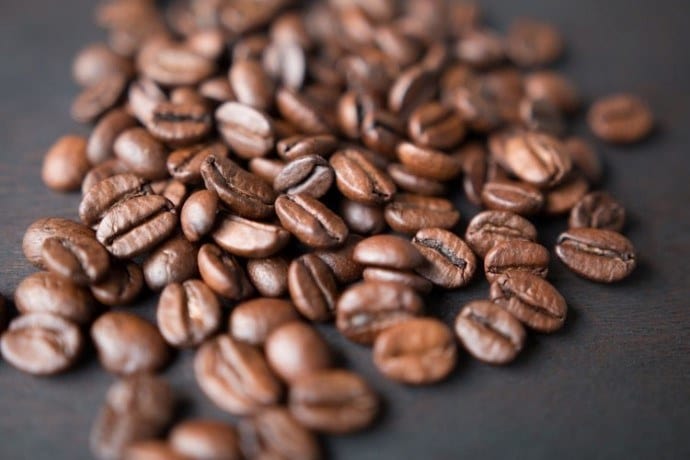
Step 1: Choose your decaf coffee beans
Cold brew is low in acidity, with smooth and mellow flavors (1). So it’s essential to start with the best-tasting decaf coffee beans to avoid a bland brew. Decaf coffee has come a long way since the days when it ranged from flavorless to burnt. There are plenty of great options at every roast level to suit your taste.
- Lighter roasts have a brighter acidity and lighter body, with flavors like fruits, florals, nuts, milk chocolate, and honey sweetness.
- Darker roasts have low acidity and a heavy body, with bittersweet flavors of dark chocolate, toasted nuts, dried fruit, and caramel or molasses sweetness.
Pro tip: If you plan to add milk or cream to your decaf cold brew coffee, I recommend the bolder flavor of a medium or dark roast. If you like to drink your decaf coffee straight, a lighter roast provides more complex flavors.
Step 2: Grind your decaf coffee beans
Weigh 6 ounces of decaf coffee beans, and grind them coarsely using a burr grinder. You want something coarser than you would use for a French press. Otherwise, you risk over-extraction during the long brew time, leading to astringent flavors and a bitter aftertaste.

Pro tip: If you don’t have a burr grinder, look for brands that offer cold brew-specific blends that come coarsely ground. Or buy from roasters that let you choose your grind size when you order, and choose a coarse grind.
hoose the coarsest option.
Step 3: Brew the concentrate
Brewing cold brew concentrate is as simple as combining cold filtered water and ground coffee in a cold brew coffee maker (or mason jar or French press).
The ratio of coffee to water dictates the strength of the concentrate. I like to use a 1:3 ratio, adding 18 ounces of water to my 6 ounces of ground coffee. But you can experiment to suit your taste.
After mixing the water and coffee, put the lid on the brewer and let the coffee steep for between 12 and 24 hours – again, variable to suit your taste. A 16-hour brew time is a great starting point.

Pro tip: You can brew in the fridge or at room temperature, bearing in mind that the extraction time will be longer in the colder setting.
Step 4: Strain the coffee
Follow the instructions on your cold brew maker to strain your coffee grounds. If you’re using a Mason jar, you can achieve the same effect by lining a mesh sieve with cheesecloth or a paper coffee filter and letting the decaf cold brew drip through.
You can store your batch of cold brew in the fridge in a sealed container for up to two weeks.

Step 5: Dilute and enjoy
Before serving, dilute your concentrate 1:1 with either filtered water or milk. Pour over ice in a glass and enjoy.

Pro tip: Feel free to get creative here. Dilute your cup of cold brew with cashew milk, almond milk, or coconut milk. I sometimes dilute mine with tonic water to mimic the famous espresso tonic (2).
Did you know that you can make decaf espresso, too? Here’s where you can learn more about decaffeinated espresso and how to make one.
Final Thoughts
Turns out that preparing decaf cold brew is just as easy to brew at home as regular caffeinated coffee, so now there’s no reason you can’t enjoy a cold brew at any time of day! Just pick up some excellent decaf beans, and you’ll be sipping a delightfully smooth and jitter-free drink by tomorrow.
FAQs
No, Starbucks doesn’t have decaf cold brew. Your best bet is to order a decaf iced Americano, which you can have topped with cold foam.
Coffee is decaffeinated via several processes, all of which are carried out on green coffee beans. The Swiss Water Process is considered the best because it uses only water and removes the most caffeine of any method (3). Learn more in our article: How coffee is decaffeinated.
The difference between cold brew and iced coffee is that cold brew is brewed cold, whereas regular iced coffee is hot brewed coffee that has been chilled. The two methods extract different flavor compounds from the beans, yielding two distinct flavor profiles.
None of the major coffee shop chains offer decaf cold brew, but many coffee companies sell decaf cold brew beans or ready-to-drink decaf cold brew options. That includes major names like Stone Street Coffee, Stok, Java House, Wandering Bear, and Atomic Coffee Roasters.
References
- Grant, T. (2020, January 16). How Cold Brew Captured the Millennial Market. Retrieved from https://perfectdailygrind.com/2020/01/how-cold-brew-captured-the-millennial-market/
- Kumstova, K. (2018, August 3). Espresso & Tonic: The Story of the Famous Coffee Drink. Retrieved from https://europeancoffeetrip.com/espressoandtonic-story/
- Wood, D. (2020, October 5). Understanding Swiss Water Process Decaf. Retrieved from https://library.sweetmarias.com/understanding-swiss-water-process-decaf/
