
THE AEROPRESS INVERTED METHOD (AKA THE UPSIDE DOWN AEROPRESS)
What do the soft ride of your car and the smooth flavor of Aeropress coffee have in common? Hydraulics. With your finely toned and coffee-saturated muscles as the driving force, the AeroPress uses a simple hydraulic cylinder to persuade the flavor from your ground coffee beans.
This simple system delivers a full-bodied and sweet coffee we all know and love. But what if I told you that your very same Aeropress can make an even more flavorful brew? In this recipe, I’ll explain why you should consider brewing your Aeropress upside down, and I’ll walk you through how to do it step by step.
What You Need For Inverted Aeropress
- Coffee beans
- Water
- Aeropress coffee maker
- Aeropress filters
- Funnel
- Stirrer
- Digital scale or coffee scoop
- Kettle
- Burr grinder
At a Glance
Brew Time
5 Minutes
Yield
2 Cups
Despite the complex connotation “hydraulic cylinder” brings to mind, the AeroPress is a straightforward device. It only has a couple more parts than a pour-over brewer, and in many ways, it’s more forgiving.
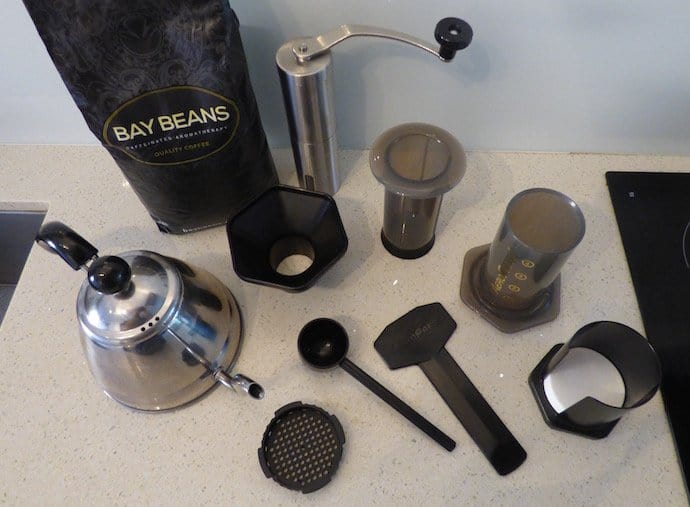
The different Aeropress parts are the plunger, chamber, filters, and filter cap. It also includes a measuring scoop, funnel, and stirrer. I always recommend measuring coffee by weight rather than volume to ensure consistency, so I suggest replacing that scoop with a coffee scale if possible (1).
Along with your Aeropress bits and pieces, don’t forget your kettle, whole coffee beans, and a burr grinder. I also suggest picking a bag of good coffee for Aeropress.
What Is The Inverted Aeropress Brew Method?
The Aeropress was invented by Alan Adler in 2005 (2). Mr. Adler deserves boundless credit for his creativity in inventing the Aeropress, but his classic Aeropress brewing instructions aren’t the most flavor-efficient.
The three big problems with his method are:
- Pouring the grounds and heated water on top of the filter allows some under-extracted coffee to drip into your cup.
- The grounds don’t have enough steeping time to facilitate extraction.
- The thin layer of foam that is rich in aroma and flavor is lost when it is pushed through the puck of grounds sitting at the bottom of the chamber.
Why Is Inverted Aeropress Better?
Thanks to the ever-critical minds of fanatical baristas, a solution has been found. Inverting the AeroPress tackles all three problems, yielding a more consistent and flavorful brew. But it’s still just as simple and fast as the original. If you’re anything like me, once you go inverted, you’ll never go back!
But don’t just take my word for it, check out our reviewer Steven using the inverted method to make “the best cup of coffee in the world.”
How To Brew The Inverted Method With An Aeropress
Now that I’ve sold you on the merits of flipping your Aeropress to make coffee, I will walk you through how to do it step by step. I promise it’s easier than you think, and these steps work just as well with the Aeropress Go!
Step 1. Measure and Grind
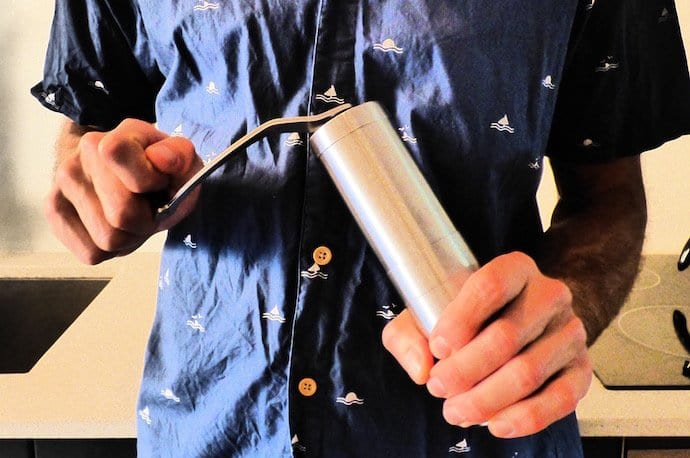
If you’ve read any of our brew guides, you know this is true no matter how you make your coffee. Pre-ground coffee loses more flavor the longer it sits, so it is best to grind only what you plan on brewing.
I like to use 17 grams of coffee when brewing a full Aeropress, which amounts to a coffee-to-water ratio of 1:16.
Grind the coffee to medium-fine using a burr grinder. I aim for my Aeropress grind to be a bit finer than I use for filter coffee but coarser than for espresso – similar to table salt.
Step 2. Warm Up and Rinse Your AeroPress
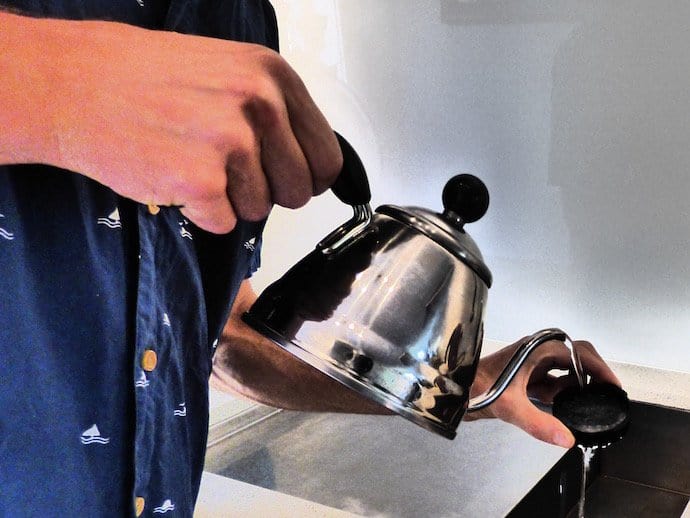
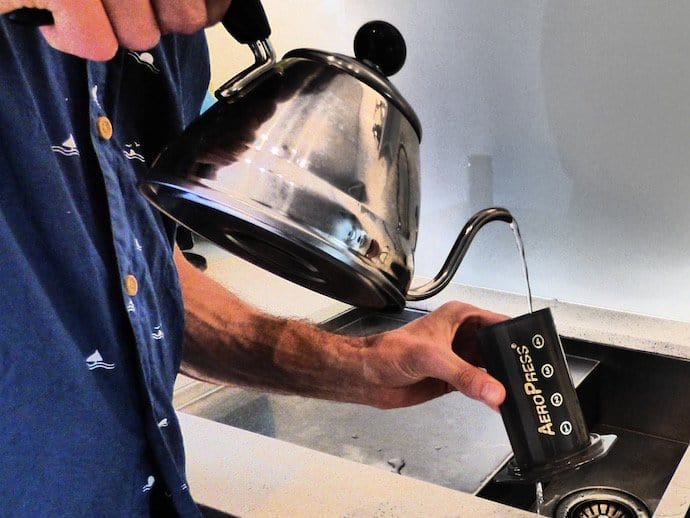
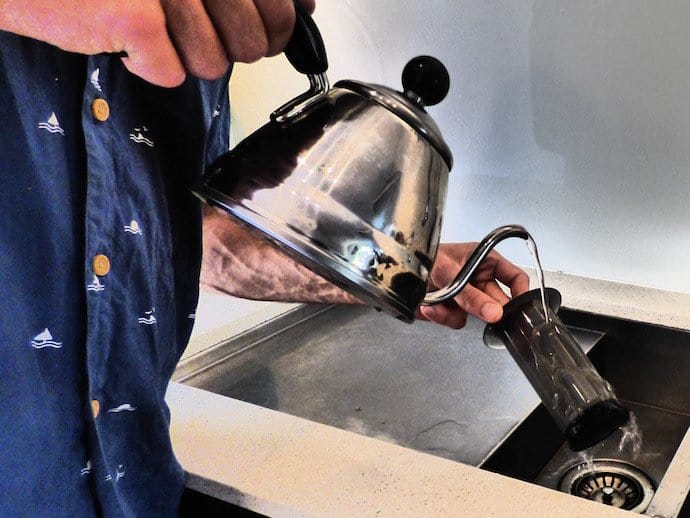
Use hot water to rinse the Aeropress filter and warm up the chamber.
I’ll also pour some hot water into my mug at this stage to preheat it in the interest of keeping my coffee hotter for longer.
Not everyone is convinced by the necessity of this step, so skip it if you must. But my motto is, “Why have a good coffee when you can have a great coffee?” So I say go the extra mile.
Step 3. Some Assembly Required
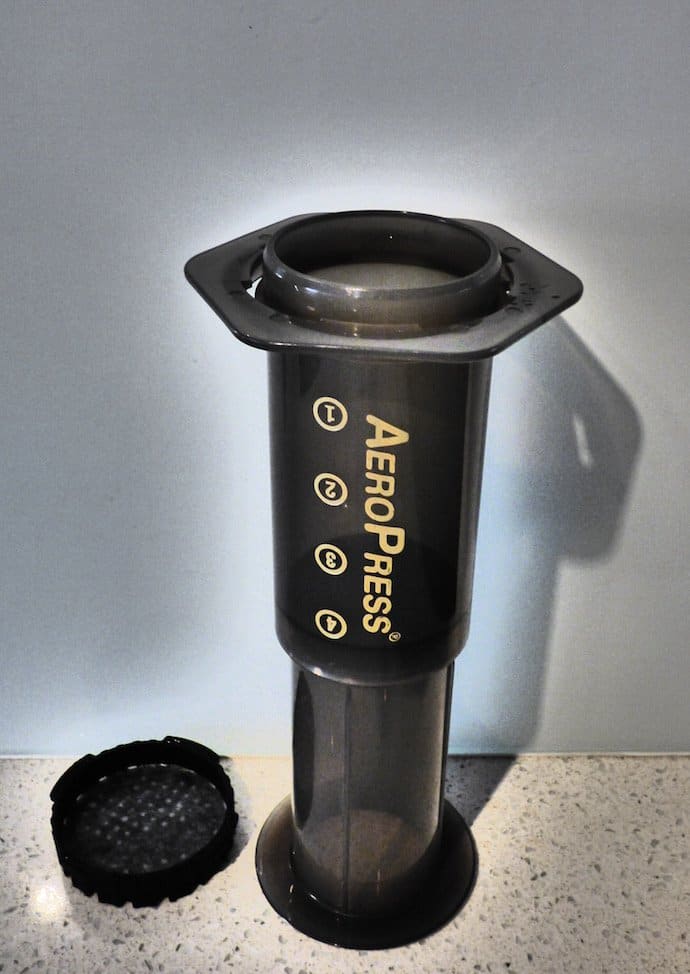
Take the plunger and push the rubber end into the smooth end of the chamber. But don’t plunge it all the way in. I push the plunger about a finger’s width into the chamber.
Now place the AeroPress on a solid surface with the open end of the chamber facing up, and make sure you have a good seal between the chamber and the plunger.
Step 4. Add Coffee And Water
Heat your water to about 195ºF (3). The best way to do this is with a variable temperature kettle or using a thermometer. But I have a tip for you if you’re not as coffee-obsessive as I am and don’t have all the gear. Just bring your water to a boil and let it cool for 45 seconds.
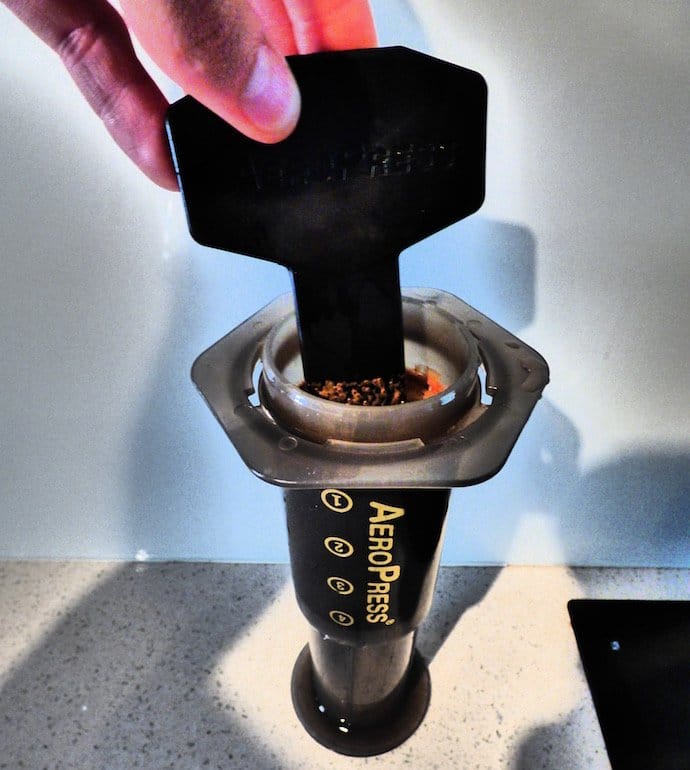
Place the funnel on top of the AeroPress, and dump in your coffee grounds. Now pour in your water. Carefully pour around the sides of the funnel to wash down any extra grounds, and then steadily fill the AeroPress to the bottom edge of the funnel.
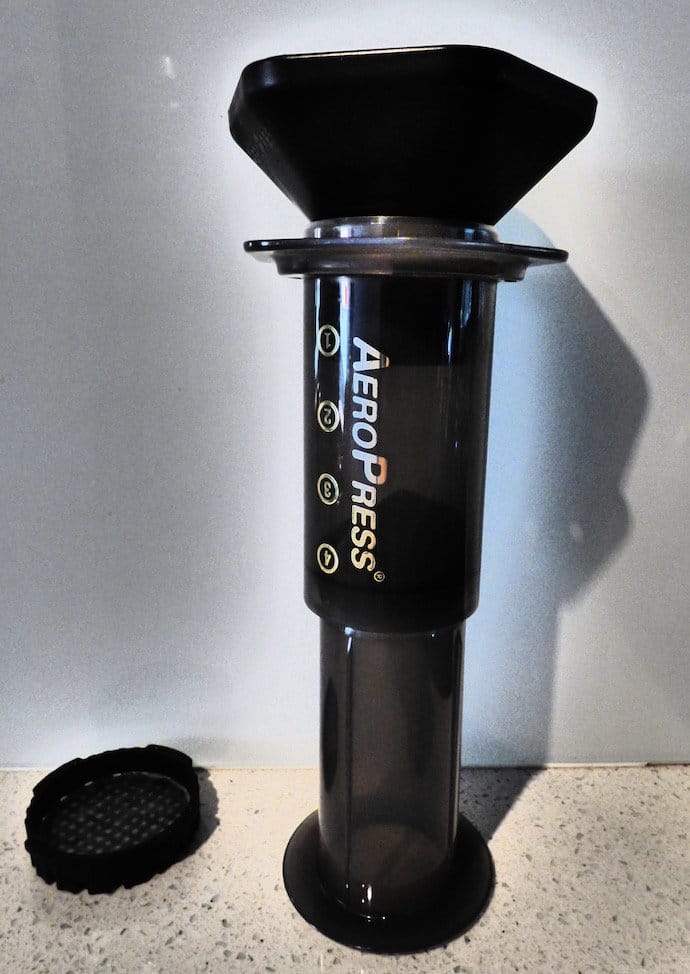
Yes, that odd-looking black thing is a a funnel.
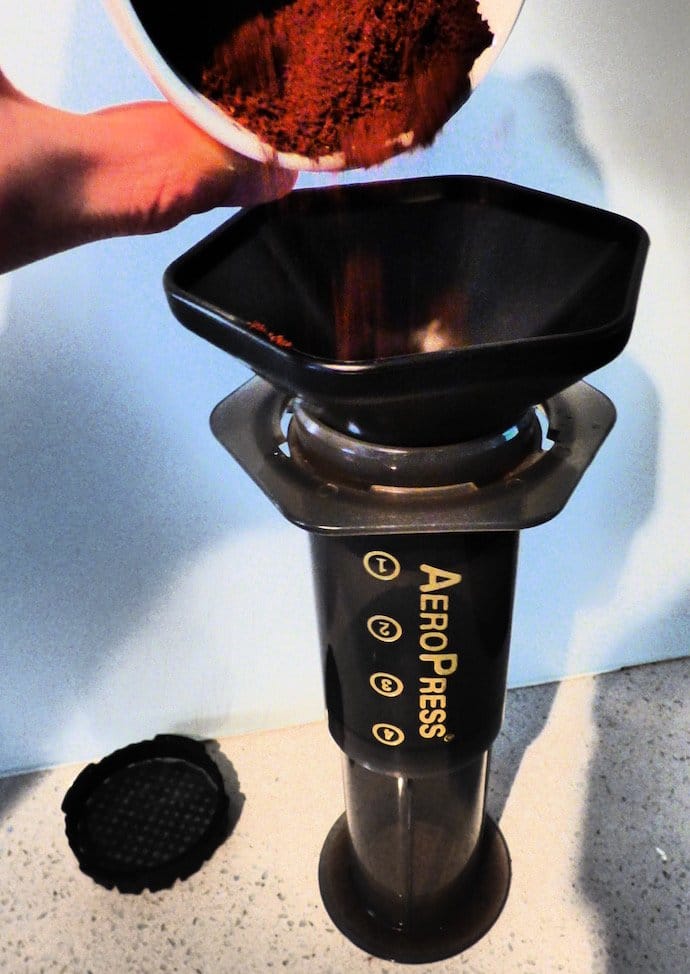
The AeroPress funnel helps you get your grounds in with losing any goodness.
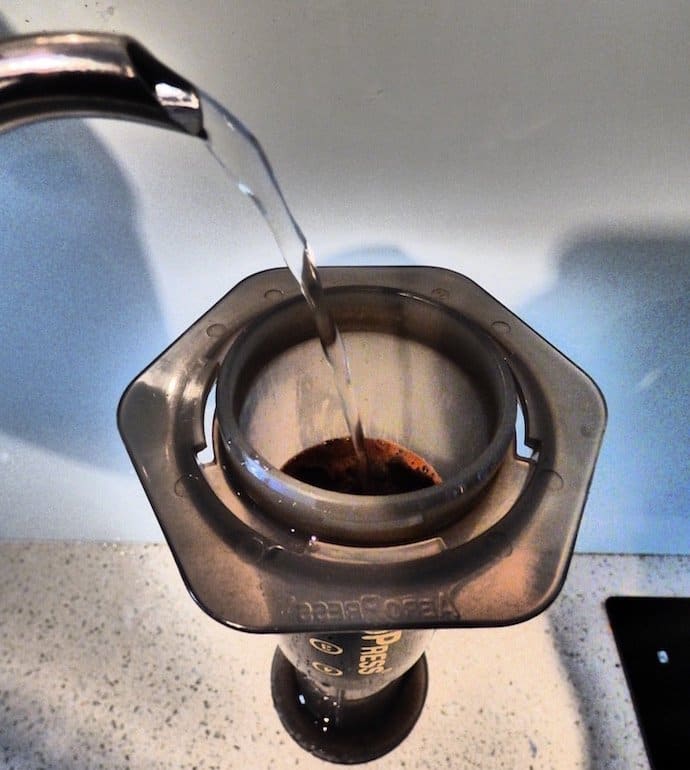
Step 5. Stir And Steep
Once you’re done pouring the water, remove the funnel, grab your stirrer, and get stirring. I generally stir for about 30 seconds, long enough to saturate the grounds. You’ll see a thick caramel-colored foam begin to form.
Next, pour the remaining water into the Aeropress until the chamber is filled to just below the rim.
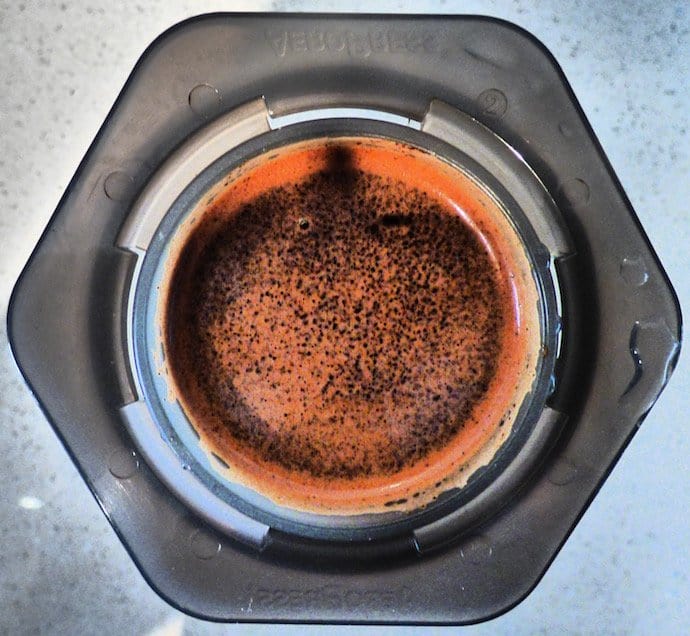
Screw on the filter cap, and let the grounds steep for one minute.
Step 6. Push It
You’re ready to get your brewed coffee out of your Aeropress and into your cup!

(1)

(3)

(2)

(4)
I do this by turning my mug upside down and placing it on top of the AeroPress filter cap. With one hand holding the mug and the other holding the AeroPress, I carefully flip the whole setup so the mug is on the bottom.
Set it down. Now we’re back in standard Aeropress mode.
Keep one hand around the lip of the AeroPress to hold it in place on top of the mug. Gently press down on the top of the plunger with the other hand.
When pressing on the plunger, I always aim to position my shoulders over the AeroPress and use moderate pressure. Too much force can cause the AeroPress to fly off – speaking from experience here. Stop pushing the moment you hear the hissing sound of escaping air.
Step 7. Final Touches
There is only one final (entirely optional) step between you and your delicious coffee.

The coffee in your mug right now is quite concentrated; you may want to dilute it with hot water.
How much water you add depends on your personal taste, so I recommend taking the time to experiment a little. Personally, I usually add about an ounce of hot water to my mug.Now sit back and enjoy a great-tasting cup of AeroPress coffee. For more Aeropress hacks, check this out!
Final Thoughts
Brewing an Aeropress inverted is a game changer if you’re an Aeropress fanatic like me. This clever immersion brewing method takes the standard sweet and smooth Aeropress brew and makes it even more flavorful. And it doesn’t require any extra time, gear, or skills. It’s one of those rare instances in life where you do get to have your cake and eat it, too!
We don’t know who first proposed an upside-down Aeropress brew, but they have my eternal gratitude – hopefully yours as well!
FAQs
The coffee ratio for inverted Aeropress in this recipe is 1:16, which is measured by weight. That means 17g of coffee brewed in 272 g of water. But you can play with the ratio of coffee to water depending on the style of coffee you want. For example, increase the ratio to brew a more concentrated coffee designed to be diluted.
If you’re interested in more tricks for mastering the art of Aeropress brewing, here are some Aeropress brewing tips from World Aeropress Championship competitors.
The difference between the Aeropress and inverted Aeropress methods is the brewer’s position during the bloom and steeping stages. When brewing with the inverted method, the Aeropress is upside down for the brewing process, balanced on its plunger rather than sitting on a mug. This allows for a longer steep time and more thorough extraction.
You brew the Aeropress upside down for about 1 minute and 30 seconds. That includes 30 seconds of stirring and bloom time followed by one minute of steeping. However, brew time is a variable worth experimenting with. Certain beans, especially light roast specialty coffee, may taste better with a longer bloom or brew time.
You can use your favorite coffee blend or single-origin bean for brewing with the AeroPress, but choosing freshly roasted coffee is always best. The AeroPress produces a slightly bolder and stronger cup than other brewing methods. So be sure you’re a fan of the coffee you choose because the AeroPress will accentuate the flavor profile of those beans.
References
- Mazzarello, B. (2017, February 27). Do You Need a Scale to Make Coffee? Retrieved from https://blog.bluebottlecoffee.com/posts/do-you-need-a-scale-to-make-coffee
- Levy, S. (2015, March 16). First Alan Adler Invented the Aerobie. Now He’s Created the Perfect Cup of Coffee. Retrieved from https://www.wired.com/2015/03/first-alan-adler-invented-the-aerobie-now-hes-created-the-perfect-cup-of-coffee/
- National Coffee Association. (n.d.). Retrieved From https://www.ncausa.org/About-Coffee/How-to-Brew-Coffee
