
HARIO SKERTON HAND GRINDER REVIEW: STILL THE TOP BUDGET PICK?
Today I’m reviewing one of the best budget-friendly grinders, the Hario Skerton Pro.
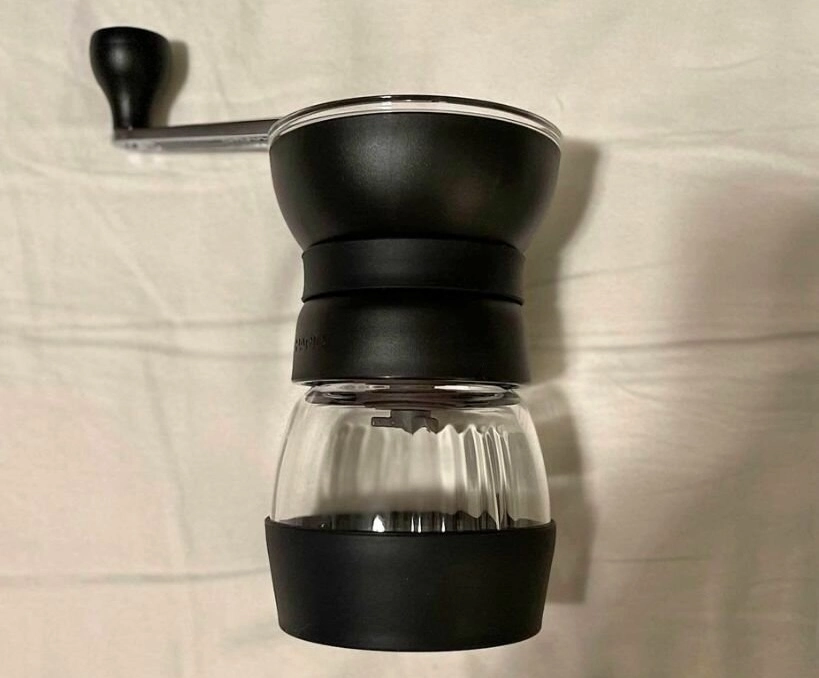
It’s easy to believe that embracing the world of quality coffee at home is too expensive to be worthwhile. But I’m here to reassure you that that’s not the case.
A manual burr grinder is the most cost-effective way to make huge improvements in your coffee experience. So set that blade grinder or bag of pre-ground beans aside.
Things I liked:
- Improved grind consistency, particularly at coarser settings
- Large-capacity grinder can hold 100 g of beans
- Easy-to-access grind adjustment knob
- Durable and well-made
Things I didn’t like:
- Large steps between grind settings
- Slow grind speed
Hario Skerton: The Classic, The Pro, and The Plus
Hario currently sells two Skerton models, both upgrades from the original, which is now discontinued.
The Pro is the better of the two. It was designed in response to user complaints that the Plus produced inconsistent grinds in the coarse range. Along with better coarse ground uniformity, it has a sturdier design and a more premium look and feel. Adjusting the grind size is much easier on the Pro than the Plus, as you no longer have to disassemble the whole grinder.
The Pro only costs $8.50 more than the Plus, so I think it’s clearly the smarter buy, especially for fans of French press or cold brew coffee.
How We Rated It
-
Grind Consistency
-
Ease of Use
-
Build Quality
-
Design
-
Value for Money
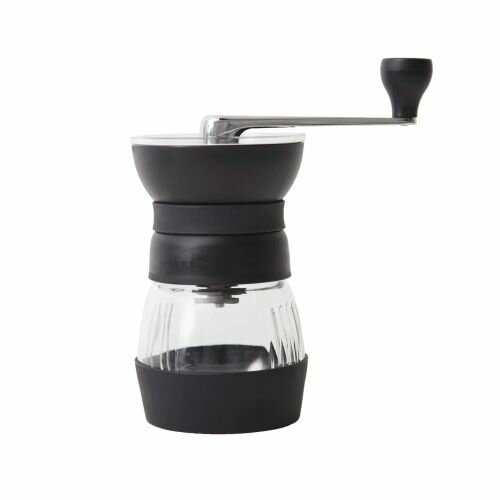
The Full Hario Skerton Pro Review
The Skerton Pro is a valuable addition to the Hario grinder line. It’s an affordable and easy-to-handle grinder suitable for nearly every brew method, particularly those in the medium range of the grind spectrum. If you’re a drip coffee lover on a budget, this grinder is worth a closer look.
Grind Settings, Quality, and Consistency
The Hario Skerton Pro uses ceramic conical burrs, a relatively common option at this price point. The choice of ceramic versus steel burrs is multi-faceted, with plenty of excellent manual grinders in both camps.
The main advantage of ceramic burrs is that they remain cooler than steel during grinding, maintaining the natural flavors and aromas of your coffee beans. They are also less expensive and longer-lasting (1).
“Ceramic burrs are more resilient than other materials and can retain sharpness for around twice as long as general stainless steel burrs.”
Ceramic burrs aren’t as sharp as steel initially, and they’re more brittle, so you should avoid banging the Skerton around or accidentally grinding little stones – things I’d recommend avoiding with any coffee grinder, to be honest (2).
Better Engineering For Better Grind Quality
In designing the Skerton Pro grinder, the engineers at Hario set out to solve the issues with inconsistent grinds in the earlier iterations of the Skerton hand grinder. Previously, users reported that the grind quality decreased as the grind size got larger, making it hard to grind for French press and cold brew coffee.
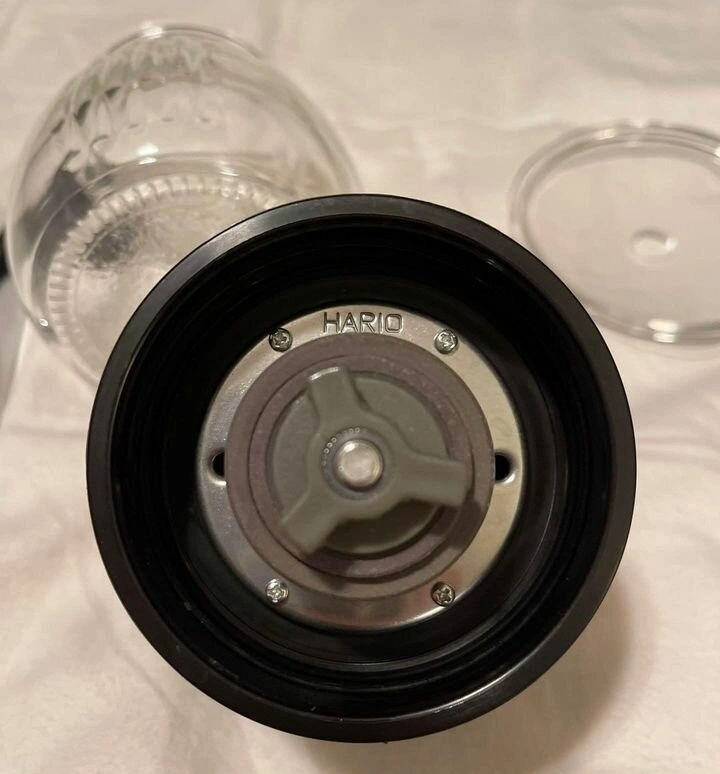
The new Skerton Pro includes a stabilizing shaft and a lower burr spring to keep the burrs from wobbling as you grind your coffee, giving a more precise and consistent final product.
Can the Hario Skerton Pro grind for espresso?
I wouldn’t recommend the Skerton Pro for espresso, although I will say it overperforms for its price. It can grind fine enough, but the grind size is somewhat inconsistent at the finer settings. More importantly, the steps between grind sizes are too big to dial in a shot properly. It’s only really suitable for an espresso machine with a pressurized portafilter.
How To Use The Hario Skerton Pro
The Hario Skerton Ceramic Coffee Mill works like many manual coffee grinders. To adjust the grind size, unscrew the grind catcher and turn the dial underneath the burrs. You’ll hear and feel clicks as you turn the knob; count the clicks to track your current setting. Then it’s just a matter of filling the hopper with beans and turning the handle to grind.
Grind Settings
There are 10 usable grind sizes on the Skerton, with roughly 100 microns between each step. It is worth experimenting to find the ideal setting for your taste, brewing method, and favorite coffee bean, but here is what I’ve been using in my tests:
- Turkish coffee: 1 click
- Espresso (pressurized portafilter): 2 clicks
- Moka pot: 3 clicks
- Hario V60: 5-6 clicks
- Chemex: 6-7 clicks
- Aeropress: 4-7 clicks
- Drip coffee maker: 5-8 clicks
- French press: 8-10 clicks
- Cold brew: 10 clicks
How fast does it grind?
I found that the Skerton Pro is speedier than the Plus but not on par with some of the newer hand crank grinders on the market. It takes me about 1 minute and 10 seconds to grind 20 grams of coffee to medium fine for a pour-over. In comparison, it takes me less than 30 seconds to grind the same amount with the 1Zpresso JX.
Cleaning and Maintenance
The Hario Skerton Manual Coffee Grinder is durable and easy to clean. Disassemble by removing the swivel arm and then unscrewing the burrs.
I generally use a dry brush to remove old coffee grounds from the burrs. You can use warm water and mild dish soap to remove stubborn coffee residue; this is NOT the case for steel burrs.
Build Quality And Design
Build quality is one place I really noticed the progression from the Skerton Plus to the Pro. It looks and feels like a better-made grinder, and the new shape sits more firmly on the counter while grinding beans.
The Skerton Pro’s heavy-duty plastic hopper holds 100 grams of coffee, one of the largest-capacity options on the market.
I can grind enough for a 10-cup carafe without having to refill. The grounds catch bin is Hario’s famous heat-proof glass, and it comes with an airtight lid for bean storage.
The whole grinder measures 6.6 x 3.7 x 7.7in with the handle installed and weighs 17.6 oz – just over a pound.
Build-Related Upgrades To The Skerton Pro
Hario redesigned the handle of the Skerton Pro; the new die-cast aluminum crank is more durable and smoother to operate. They also added a no-slip silicone grip, making it easier to hold steady while grinding. I really appreciated this at the finer grind settings, which require a bit more muscle. Lastly, the hopper lid was changed from soft silicone to a hard plastic design that locks more firmly into place.
Travel With the Skerton Pro
The Skerton Pro is already small and lightweight, but it has an extra trick up its sleeve that makes it ideal for travel.
The hopper and coffee grinding mechanism are sized to be compatible with a standard mason jar.
If you take your Skerton on the road, especially rough backcountry travel, I definitely recommend leaving the glass grounds catcher at home and swapping in a plastic mason jar for a lighter, more durable alternative.
Is The Skerton Pro Worth It?
Five years ago, the answer was a resounding yes. Today, it’s a more qualified yes. The market for budget hand grinders has grown considerably, and Hario faces stiffer competition (3).
I still think the Skerton Pro is the best grinder at its price, which is around $50 to $60. But now there are notably better grinders that are only slightly more expensive.
The Skerton reigns supreme for capacity, and its grind quality is excellent in the medium range. If brewing large volumes of morning drip coffee is your goal, you can’t beat the value of the Skerton. However, if you want better grind consistency over a wider range, spending just $20 more – on something like the Timemore C2, for example – can net you better results.
Don’t Buy It If…
- You want something more compact: The Skerton has an impressively large capacity, which naturally translates to a bulkier grinder. If you’re looking for something sleek for travel, the Hario Slim Mini Mill is probably a better fit. Or check out the ever-popular Porlex Mini, which fits right inside an Aeropress.
- You want an espresso grinder: You’ll need to spend a little more on a good coffee grinder for espresso, but probably not as much as you think. The stepped 1Zpresso JX-Pro has just 12.5 microns between grind settings and costs well under $200. The stepless Kinu M47 Simplicity is more of a splurge but still excellent value.
- You prefer steel burrs: If you want a manual coffee grinder with stainless steel burrs that won’t break the bank, Timemore is the brand for you. Their Chestnut C2, Chestnut C3, and Slim Plus are all affordable good quality grinders. If you want to go a little more premium, the Comandante C40 MK4 is a leader in grind consistency.
The Verdict
The first thing you learn when you get into specialty coffee is that you need freshly ground coffee beans for a perfect cup of coffee. Fortunately, investing in a great grinder doesn’t have to drain your bank account.
The new and improved Hario Skerton Pro burr coffee grinder is a fantastic budget option for the budding coffee geek, delivering a consistent grind for drip and pour over coffee in an easy-to-use, well-made package.
References
- Pipunic, A. (2022, July 25). Which material should your grinder burrs be made from? Retrieved from https://perfectdailygrind.com/2022/07/which-metal-should-grinder-burrs-be-made-from/
- Bicknell, B. (2018, September 25). Grinding at home. Retrieved from https://fivesenses.com.au/blogs/news/grinding-at-home/
- Daily Coffee News Staff. (2022, April 24). New From the 2024 SCA Expo: Home Brewers and Grinders. Retrieved from https://dailycoffeenews.com/2024/04/22/new-from-the-2024-sca-expo-home-brewers-and-grinders/
