
THE HANDPRESSO REVIEW: IS IT PERFECT OR JUST PORTABLE?
In this review, I’ll tell you about my experience with the Handpresso and whether I’d recommend it to fellow adventurers.

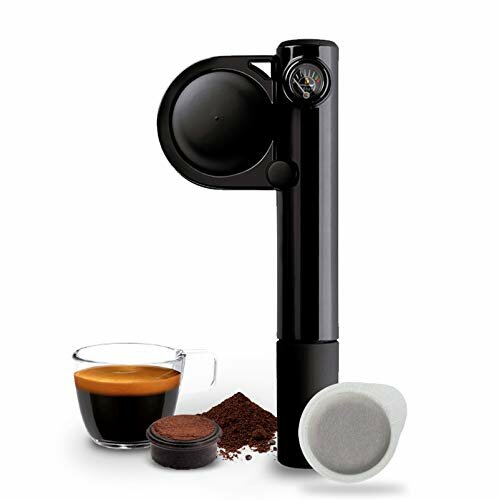
Many brands have tried to create the ultimate portable espresso maker, but few have succeeded. One of the top contenders is the Handpresso Wild Hybrid, a sleek espresso maker with a reasonable price tag and bicycle pump vibes.
As an avid hiker and backpacker who can’t live without great coffee, I was excited to pick one up to see how it performed on the trail.
Things I liked:
- Easy to use, clean, and maintain
- Builds enough pressure for a real espresso shot
- Compatible with either ground coffee or ESE pods
- Compact and lightweight design
Things I didn’t like:
- Can only pull single shots
- Requires a separate way to boil water
- Takes a little arm power
The Full Handpresso Wild Hybrid Review
I was interested to learn that the Handpresso was the original espresso on-the-go machine, first launched in 2008. I couldn’t help but wonder if that was a good or bad thing. Is it a relic from the past still coasting on an initial reputation? Or is its longevity a sign of timeless quality?
How We Rated It
-
Ease Of Use
-
Brewing Capability
-
Build Quality
-
Cleaning and Maintenance
-
Value for Money
How Does The Handpresso Work?
Using the Handpresso Wild Hybrid is simple, though, like any portable espresso machine, it takes some muscle. Here’s how it works:
- Use the pump to build the pressure up 16 bars, which is indicated by the green zone on the pressure gauge.
- Fill the filter basket with ground coffee and tamp.
- Add hot water to the water chamber.
- Insert the basket, add the lid, and twist it to lock in place.
- Invert the whole device over your espresso cup and press the infusion button to force hot water through the coffee.
- Press the button a second time to stop the shot of espresso.
With that basic outline in mind, here are my thoughts on the user experience.
First, I like the Handpresso pump design, which works like a bicycle pump. While I can’t operate it one-handed, it allows me to rely on the bigger muscles of my arms to pump faster and with less overall fatigue than the hand-piston designs from brands like Wacaco.
You don’t need to be a gym-goer to make espresso with the Handpresso. It takes me about 15 to 20 seconds of pumping to hit 16 bar of pressure.
I love that the pressure gauge takes the guesswork out of when I’ve generated enough pressure.
My best tip to improve extraction is to preheat everything. This goes for brewing a cup of coffee with any device, but it’s particularly key for making espresso with something with a small thermal mass. Rinse the filter basket, brewing chamber, and serving cup with hot water. This ensures a consistent temperature during brewing and means your espresso won’t cool too fast when it hits the cup.
Using ESE Pods
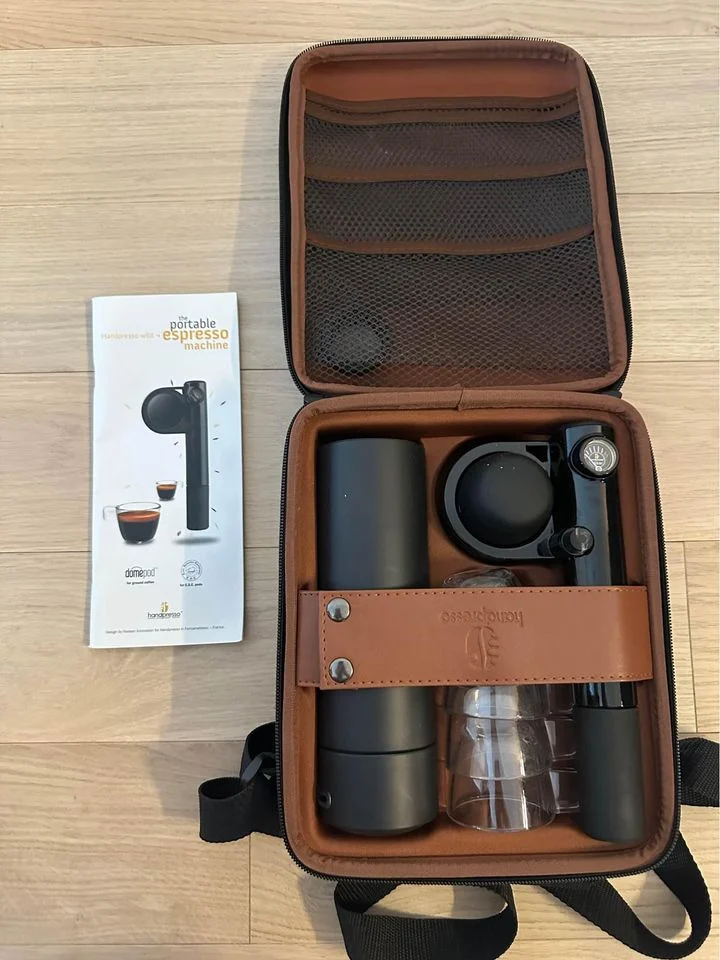
The Handpresso includes two filter baskets – one for ground coffee and one for Easy Serve Espresso pods.
I generally prefer to use freshly ground beans for the best flavor, but I appreciate the convenience of using pods when I’m camping. I love that it uses ESE pods, which are cheaper and more environmentally friendly than Nespresso coffee pods – though not as widely available in North America.
Cleaning And Maintenance Demands
The Wild Hybrid handheld device is easy to clean, a must for any coffee gear designed for camp use, in my opinion. There’s no way I’m bringing soap and a scrubby on a lightweight backpacking trip.
Just dump out the coffee grinds (they’re great for plants!) and give the brew chamber a quick rinse with water. If you’re using ESE pods, they are biodegradable, but I still advise a “pack it in, pack it out” ethos. Once you get back to civilization, give everything a thorough soapy clean.
The only long-term maintenance task is to monitor the O-ring in the portafilter fitting, which is crucial to maintaining the pressure seal. If you notice any cracking or stiffening, just pull the old one out and slip the new one in. Every Handpresso is sold with an extra O-ring, and it’s easy and affordable to buy more. I’d start checking for this after the first year.
Handpresso recommends putting a drop or two of cooking oil on the shaft of the pump, to make sure it glides when you’re pressurizing the chamber. This also oils the internal O-rings, which helps keep them working properly. I did this with mine after the initial unboxing and first wash. I plan to repeat it whenever I replace the O-ring or if I notice any sticking with the pump, but after 6 weeks, it is still very smooth.
All this is small potatoes compared to backflushing, descaling, and lubricating an electric espresso machine.
Can The Handpresso Really Make Espresso?
Yes, the Handpresso makes espresso! This isn’t a pseudo-espresso maker like a Moka pot or other steam-driven options. The pump generates enough pressure for a proper rich shot with a dense layer of crema (1).
So it’s real espresso, but is it good espresso?
I was pretty impressed by the shots I pulled with the Handpresso! As with most manual espresso makers, the effort you put in dictates the quality you get out.
My most delicious shots were pulled using freshly ground coffee from a good burr grinder. I packed as much coffee as possible into the small basket, roughly 8 grams, and preheated everything with boiling water from my kettle. I then let the water cool to 205 F before brewing.
The resulting espresso was sweet and smooth with surprising flavor complexity, little acidity, and no bitterness. I had the most success with medium and dark roasts, which are less prone to underextraction (2).
“Underextraction, like low extraction temperatures, often makes coffee sourer.”
Don’t worry if you’re deep in the backcountry and don’t have time for all that. Even the shots I pulled using espresso pods or pre-ground were perfectly acceptable. And everyone knows that coffee tastes better when you stumble out of your tent for it anyway.
Single Shots Only
The main complaint about the Handpresso is that the filter basket only holds about 8 grams of coffee – enough for a single shot of espresso. As a reviewer, I’m surprised this surprises people because it’s pretty standard. The Wacaco Nanopresso and Minipresso have the same limitation, as do most travel-friendly designs. Nespresso pods are even weaker, usually containing 5 to 7 grams.
The brew chamber holds 50 mL of water. If you want a traditional espresso shot, stop after dispensing 30 mL. For a more dilute cup of espresso, dispense the full volume. For a double shot, repeat the brewing process twice. For an Americano, pull a 30 mL shot and top it off with 60 mL of hot water.
Sure, I’d love to be able to pull a double shot, but a compact design requires sacrfices, and I’ml impressed with the versatility of the Handpresso.
Fresh Espresso Anywhere? Build Quality And Portability
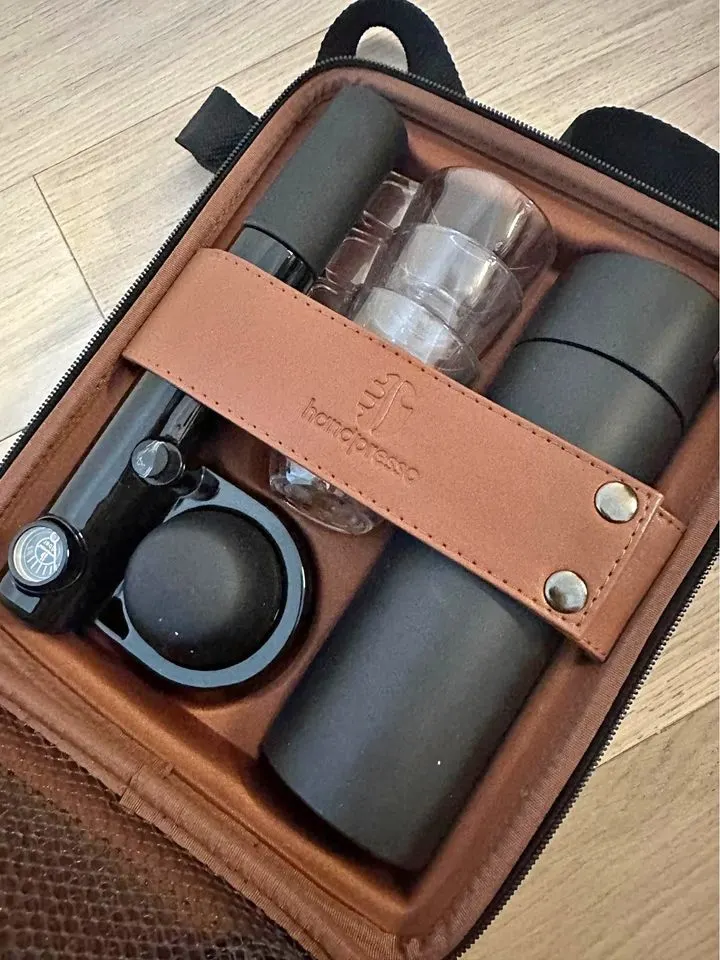
Portability is the main selling point, so let’s start there. The Handpresso measures 8.7 x 3.9 x 2.7 inches and weighs just over a pound (17 ounces). With its long and slender shape, I usually to tuck it into the side pouch of my pack (wrapped in a clean sock for safekeeping).
The body and pump mechanism are primarily aluminum, which strikes a nice balance between light weight and durability.
The plastic around the brewing chamber feels robust enough to take a beating. My Handpresso has picked up some dings and scratches but nothing that interferes with performance.
The simplicity of the design leaves little to go wrong. Most users cite the eventual failure point as the pressure-release button. Once that conks out, there’s no way to start or stop extraction. This usually occurs around the 4 to 6 year mark, which is the expected lifetime of this device. A 2-year warranty has you covered if it happens earlier.
Should You Buy The Handpresso?
The Handpresso hits a happy medium with its price, typically around $115. It’s more expensive than the all-plastic alternatives or brewers that don’t make real espresso, but I think it’s good value given its quality and features. It’s certainly much cheaper than buying an electric espresso machine.
I recommend the Handpresso to anyone looking for an easy-to-use, practical, and highly portable option. Its unique bicycle pump operation and ESE pod compatibility make it particularly great for making coffee on camping trips when you want a tasty brew with minimal effort.
Remember that you need a separate way to heat water, so add that to the budget if you’re shopping for an outdoor set. I recommend the JetBoil for backpacking. It’s multipurpose, super light, and boils water lightening fast.
Don’t Buy The Handpresso Portable Espresso Machine…
- You don’t need something ultra-lightweight: If your idea of travel is more road trip and less backcountry, check out the Flair Classic Espresso Maker. Though larger than the Handpresso, it’s still portable – even including a custom carrying case – and delivers cafe-quality espresso shots.
- You’ll settle for pseudo-espresso on a budget: If you’re just as happy with a strong cup of good coffee, opt for the Aeropress or the classic Bialetti Moka Express. You’ll miss out on the crema and mouthfeel of true espresso, but these coffee makers are affordable, durable, portable, and make fantastic coffee.
- You want quality and portability: In my opinion, the best portable espresso maker on the market is the Wacaco Picopresso. It’s tiny, well-made, and pulls espresso shots to rival any automatic machine (3). What’s the catch? It takes a little more practice to master and works best with freshly ground coffee.
The Verdict
The Handpresso Wild Hybrid’s appeal lies in its practicality and portability. This low-maintenance espresso machine can produce a great shot with a little effort or a decent espresso with no trouble at all.
I think it’s a great choice for campers or backpackers looking for espresso on the go. But harried office workers or espresso lovers with a small kitchen and limited budget should also take notice.
References
- Fasman, D. (2018, February 1). Defining the Ever-Changing Espresso – 25 Magazine: Issue 3. Retrieved from https://sca.coffee/sca-news/25-magazine/issue-3/defining-ever-changing-espresso-25-magazine-issue-3
- Rao, S. (2017, February 26). Roasting for Espresso vs. Filter. Retrieved from https://www.scottrao.com/blog/roasting-for-espresso-vs-filter
- Bryman, H. (2021, June 28). Wacaco’s New Picopresso Keeps Espresso at Hand and Home. Retrieved from https://dailycoffeenews.com/2021/06/28/wacacos-new-picopresso-keeps-espresso-at-hand-and-home/
