
BEST COFFEE GRINDER FOR FRENCH PRESS: COARSE GRINDING WINNERS
French press is an incredibly forgiving brewing method, but it still benefits from a quality coffee grinder.

One of the easiest ways to make your French press coffee even better is to invest in a great burr grinder. If you’ve been brewing coffee with pre-ground beans or relying on a blade grinder, prepare to be blown away by the flavor and aroma of your morning brew!
Because French press is a forgiving brewing technique, you don’t need to spend a fortune on a top-of-the-line grinder – no matter what that pushy salesman might tell you. There are plenty of affordable options perfect for the job, and I’ve rounded up my six top picks.
At A Glance:
- TOP PICK: Eureka Mignon Filtro
- BEST HAND GRINDER: 1Zpresso J-Manual
- GREAT VALUE: Hario Skerton Pro
The 6 Best Coffee Grinders for French Press in 2026
The best coffee grinder for French press needs to produce consistent grounds at the coarser end of the grind spectrum (1). And I would argue that it should do this for a reasonable price, given that French Press is such an inexpensive and beginner-friendly brewer (2).
| image | product | details | |
|---|---|---|---|

|
Eureka Mignon Filtro |
|
|
|
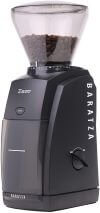
Baratza Encore |
|
|
|
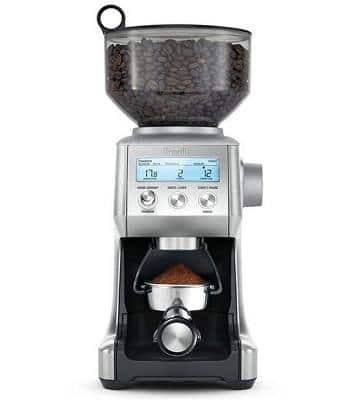
Breville Smart Grinder Pro |
|
|
| No products found. | 1Zpresso J-Manual |
|
|
| No products found. | Hario Skerton Pro |
|
|
| No products found. | Capresso Infinity Plus |
|


The French press is one of the most tolerant ways to make coffee. A long infusion time makes it easy to get a good extraction.
This means there are plenty of excellent burr grinders on the market that are perfect for pairing with your coffee press. Just don’t be tempted to save money with a blade grinder!
1. Eureka Mignon Filtro
Burr shape: Flat
- Burr size: 50 mm
- Burr material: Steel
- Hopper capacity: 10.6 oz
- No. grind settings: Infinite
Eureka specializes in expensive prosumer grinders, so it might surprise you to learn they make an affordable model perfect for the French press.
The Mignon Filtro has a 50 mm set of flat steel burrs that, as you might guess, were designed specifically for filter coffee. This brew grinder performed admirably throughout the medium range of the grind spectrum, delivering the most uniform grounds of any grinder I tested – from Aeropress fine to French press coarse.
It has the same stepless grind adjustment, Anti-Clump and Electrostaticity (ACE) system, and durable aluminum casing as Eureka’s more expensive models. And it was one of the fastest and quietest grinders I surveyed for this review.
All in all, it’s an amazing piece of equipment for under $200 and an easy choice for Best Overall.
The affordable price stems from a lack of programmability. With no timer or scale for dosing, you need to start and stop it manually. I didn’t find this a hardship, particularly since French press is a brewing method that doesn’t suffer if you’re a half gram off on your dose.
2. Baratza Encore
Burr shape: Conical
- Burr size: 40 mm
- Burr material: Steel
- Hopper capacity: 8 oz.
- No. grind settings: 40
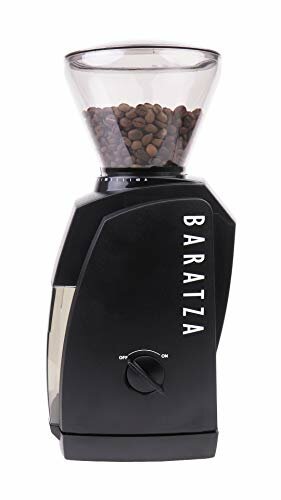
Baratza is one of few brands specializing in high-end home coffee grinders and has won awards from the Specialty Coffee Association (3). The entry-level Baratza Encore has long been my go-to recommendation for coffee lovers ready for their first burr grinder. It’s affordable, easy to use, and ideal for every brew method except espresso.
It can’t match the Mignon Filtro in grind consistency or build quality, but it runs about $40 cheaper, so I’d say the two offer similar value for money. You can let your budget be your guide.
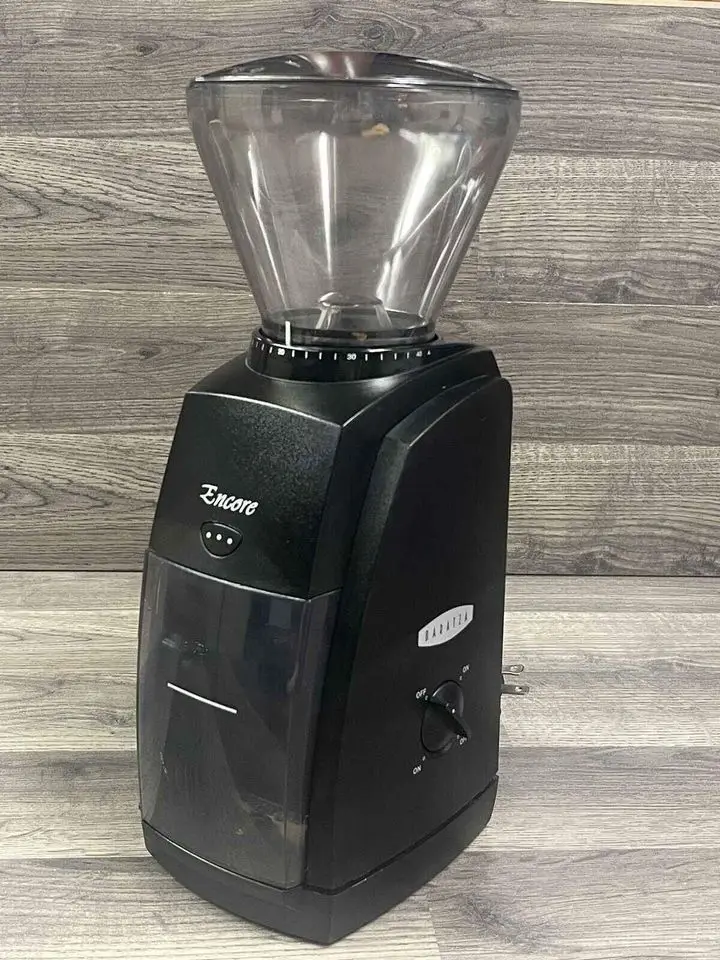
The Encore has a very solid set of 40 mm conical steel burrs, a simple adjustment mechanism, and a powerful DC motor. There’s a reason this grinder has changed little since its initial release in 2012. Baratza knows better than to mess with a good thing.
The Encore has 40 grind settings, which is more than enough to dial in your perfect French press brew – or drip coffee or pour-over, for that matter. It uses the same manual dosing strategy as the Filtro to keep the price low.
3. Breville Smart Grinder Pro
Burr shape: Conical
- Burr size: 40 mm
- Burr material: Steel
- Hopper capacity: 18 oz.
- No. grind settings: 60
Breville is well-known for making easy-to-use appliances that deliver professional-caliber results, and I expect their recent acquisition of Baratza is only going to improve their grinder department (4).

The Breville Smart Grinder Pro is my recommendation for a do-it-all grinder that won’t break the bank. There are better all-around grinders on the market, but most run upwards of $500. If you enjoy espresso as much as French press coffee, this is your best bet under $200. It even comes with an interchangeable portafilter holder and coffee grounds bin.
Where this coffee grinder stands out is its impressive user interface and programmability, giving it the “Smart” moniker. Use the large LCD screen to select a grind setting and program a dose – either number of cups, espresso shots, or a set time, precise to 0.2 seconds.
4. 1Zpresso J-Manual
Burr shape: Conical
- Burr size: 48 mm
- Burr material: Steel
- Hopper capacity: 35g
- No. grind settings: 30 clicks per rotation
1Zpresso is a relatively new company that has quickly become a dominant force in the hand grinder market, delivering high quality at low prices. In fact, they make my overall favorite manual grinder.
But you don’t need the top-of-the-line model to brew fantastic French press coffee. The entry level J-Manual is perfect.
With a 48 mm conical burr set, it outperforms many electric grinders at just a fraction of the cost – provided you’re willing to put in a little work.
The latest version adds a clever fold-away handle, making it ideal for travel or stashing in a small kitchen.

1Zpresso grinders are notorious for grinding comfort. The J-Manual is slender enough fit comfortably in even my small hands, and it has a smooth grinding mechanism, especially when grinding at coarser settings. The sharp burrs churn through coffee beans like butter (almost).
The downside is that it is somewhat finicky to adjust the grind, though this is true of most hand grinders. It uses a system of clicks to track the grind setting, with each click representing 25 microns between the burrs. It’s precise, but if you lose track of the count, you’ll need to re-zero and start over.
5. Hario Skerton Pro
Burr shape: Conical
- Burr size: 38 mm
- Burr material: Ceramic
- Hopper capacity: 2.1 oz.
- No. grind settings: n/a
Japanese company Hario is famous for its functional, affordable, and attractive designs (5). The beloved V60 pour-over brewer might be their top seller, but the Skerton manual burr grinders are just as worthy of attention. The new-and-improved Skerton Pro features some nice upgrades from the original Skerton, especially for French press fans.
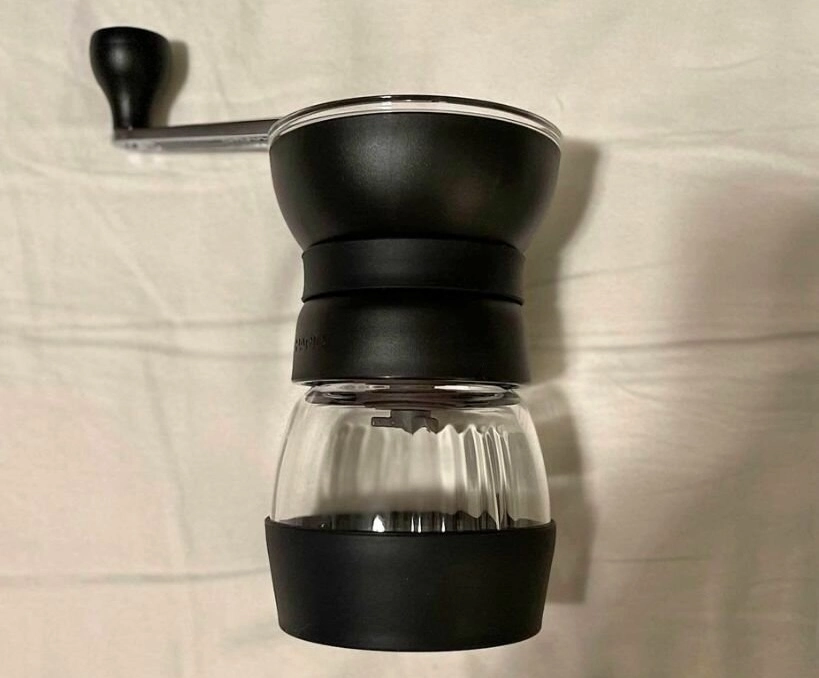
The Hario Skerton Pro uses ceramic conical burrs, and its 2.1 oz hopper and 3.5 oz grounds’ container are substantial for a manual coffee grinder. The body is primarily glass and plastic, so it’s not bombproof, but the broad silicone base is an excellent new addition, planting it firmly on the counter while you grind.
Compared to the older Skerton, the handle is more durable and simpler to connect to the lid, and a new adjustment mechanism makes it easier to find the perfect grind setting. But the biggest improvement, in my opinion, is the reduced burr wobble. The Skerton Pro produces noticeably more consistent grounds, especially in the coarser grind range. In the past, I’ve recommended against the Skerton for French Press, but no longer!
6. Capresso Infinity Plus
Burr shape: Conical
- Burr size: 40 mm
- Burr material: Steel
- Hopper capacity: 11 oz.
- No. grind settings: 16
The Capresso Infinity is a popular entry-level electric burr coffee grinder. I’ve owned two in my coffee journey, and I’ve recommended them to friends and family. It’s affordable, reliable, easy to use, and a huge step up from a blade coffee grinder.

The Infinity has two features that put it ahead of its peers on the market. One, the design of its burr set produces an impressively uniform distribution, particularly in the medium to coarse range. You can even use this grinder for cold brew. Two, the relatively low-speed motor renders it one of the quietest and least static-prone grinders in its class.
The Infinity Plus is the latest edition of the grinder, and it’s only about $5 more than the base model, so you might as well buy it. It’s slightly nicer aesthetically and has a larger bean hopper. The Infinity Plus is also available with a metal casing, but it ups the price so substantially, I wouldn’t recommend it. At that point, just buy one of my top two picks.
How to Choose the Best French Press Coffee Grinder
Choosing your ideal new grinder comes down to your budget, taste in coffee, lifestyle, and whether you brew using other coffee makers as well. This buyer’s guide will help you tackle all the variables to make the right decision.
Burr shapes and sizes: What does it all mean?
Buying your first burr grinder can feel confusing. Does it matter if you choose conical or flat burrs? How important is burr size, really?
In all honesty, if you’re buying a coffee grinder for French press, the most important thing is simply to get a burr coffee grinder rather than a blade grinder. Yes, the size and shape of the burrs can affect the flavor of your coffee – and I’ll talk about how in a second – but the average coffee drinker probably won’t taste the difference.
Bigger is better when it comes to burr size because it grinds faster. Fast grinding isn’t just efficient, it generates less heat. And heating coffee beans during grinding risks destroying flavor compounds. However, this factor is vastly more important in commercial settings. Grinding for a French press coffee at home won’t take long, no matter the size of your burrs.
What about shape? Conical burr grinders are known for producing more fines. Some coffee lovers enjoy fines because they add body, and French press coffee drinkers, in particular, enjoy coffee with a heavy body.
French press coffee is dense and heavy, yet it has its own sort of elegance.
In contrast, flat burr grinders are known for better consistency; the grounds are more uniform with fewer fines. Some prefer this style as it gives a cleaner cup. It all comes down to personal taste, which is why I’ve suggested options for both.
Ceramic versus steel burrs
Steel is the more common burr material, but there are advantages to steel and ceramic.
Steel burrs are sharper and less brittle. They cut more easily through coffee beans and are more resistant to unexpected damage, like if a stone gets into the coffee grinder or you accidentally drop it. Most electric grinders have steel burrs because the steel can withstand the high speeds generated by a motor.
However, provided you are careful to protect your coffee grinder from brute force damage, ceramic burrs will last longer. Ceramic is a harder material that dulls at a slower rate.
Do you want a manual grinder or an electric grinder?
There are excellent reasons to opt for a manual or electric grinder, depending on your lifestyle. I have one of each!
Manual grinders are inexpensive because you’re mostly paying for a burr set, not a motor, screen, timer, or any other electronics. This also makes them wonderfully quiet. Hand coffee grinders are fantastic for travel, as they’re tiny, light, durable, and don’t require electricity.
Sure, a manual coffee grinder takes a bit of elbow grease to grind the coffee beans, but the coarse ground coffee required for a French press is the easiest to produce.
The main advantage of electric coffee grinders is that the motor works for you. Not everyone can or wants to start the day with an arm workout. For the same reason, electric coffee grinders are better for grinding a lot of coffee at once – worth considering if you have a large French press.
Don’t overthink the number of settings
A large number of grind size settings is important if you want to use your coffee grinder for many different coffee brewing methods, especially if one of them is espresso.
However, if you only plan to use your grinder with your French press, don’t get too hung up on the number of settings. As long as you’re getting consistent medium-coarse ground coffee beans, you’re going to make great coffee. You don’t need to dial it in like you would an espresso.
The Verdict
You’re in luck if a rich French press brew is your favorite coffee in the morning because there are plenty of affordable coffee grinders to meet your needs. This list has six of them, all tested and recommended by myself and the Home Brews Coffee team of experts.
This year, my pick for the best grinder is the Eureka Mignon Filtro. This remarkably affordable prosumer grinder has an exceptional flat burr set, stepless grind adjustment, and commercial-grade build quality – at a price that is sure to surprise you!
FAQs
A medium-coarse or coarse grind is best for French press coffee. It needs to be coarse enough that it won’t come through the metal filter or over-extract during the steeping time.
I don’t recommend a blade grinder for any coffee-making method, but if you insist, you’ll have better luck with a French press than espresso or pour over. Burr grinders deliver a far more uniform grind size, which ensures an even extraction and a better-flavored brew.
French press coffee is not bad for you! Because it uses a metal filter, this brewing method keeps the coffee oils in your cup of coffee. Those oils produce the wonderfully rich mouthfeel but can be an issue for anyone with a predisposition to high cholesterol (6).
You can use pre-ground coffee in your French press, but freshly ground coffee is a better choice. For one, coffee quickly goes stale after grinding. And for two, most pre-ground coffee is not the coarse grind size you need for French press brewing.
References
- Pikzirnyte, I. (2020, November 16). French Press – What is It and History of It? Retrieved from https://www.baristainstitute.com/blog/ieva-pikzirnyte/november-2020/french-press-what-it-and-history-it
- Bodnariuc, D. (2018, November 26). Is A Fine Grind Better For French Press Coffee? Retrieved from https://perfectdailygrind.com/2018/11/should-you-grind-finer-for-better-french-press-coffee/
- Specialty Coffee Association. (2013, April 15). 2013 SCAA Event Best New Product Winners Announced. Retrieved from https://web.archive.org/web/20211018103652/https://scanews.coffee/2013/04/15/2013-scaa-event-best-new-product-winners-announced/
- Brown, N. (2020, October 2). Breville Acquires US Grinder Maker Baratza for $60 Million. Retrieved from https://dailycoffeenews.com/2020/10/02/breville-acquires-us-grinder-maker-baratza-for-60-million/
- Kumstova, K. (2018, May 16). The Story and Development of Hario V60. Retrieved from https://europeancoffeetrip.com/hario-v60/
- Godman, H. (2016, April 29). Pressed coffee is going mainstream — but should you drink it? Retrieved from https://www.health.harvard.edu/blog/pressed-coffee-going-mainstream-drink-201604299530
