
PERCOLATOR VS FRENCH PRESS: WHICH MAKES THE BEST COFFEE?
When used properly, either the percolator or the French press offers a bold coffee flavor. Which way of making coffee is right for you?
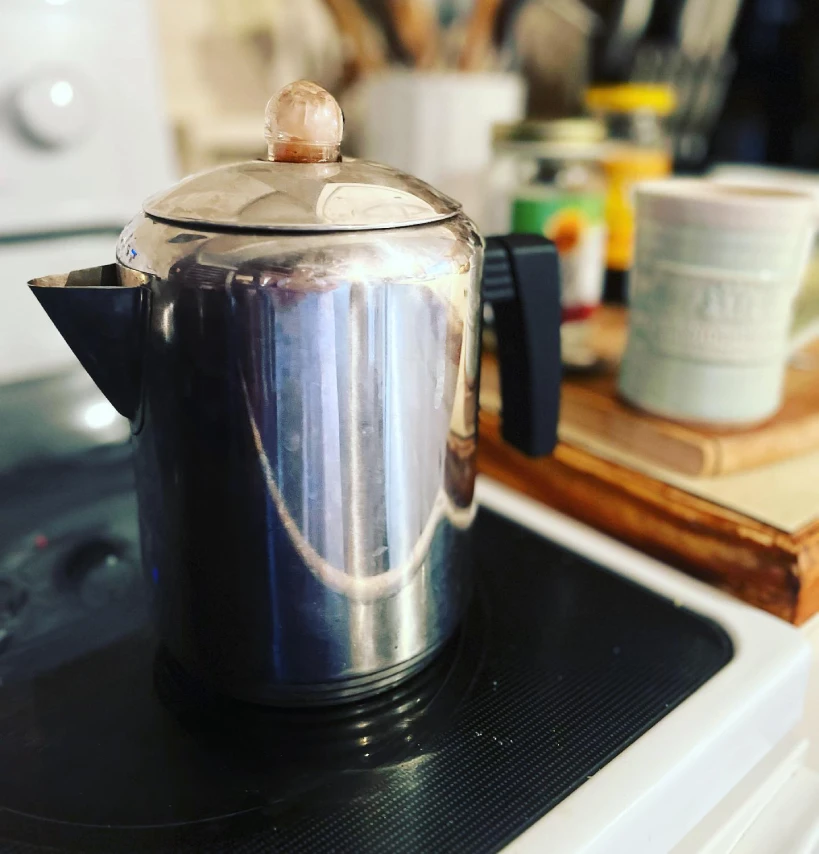
Are you looking for a simple and affordable way to make a strong pot of coffee? Then the percolator and the French press coffee maker are both fantastic options. Each method of brewing has its fans and detractors, but is one better than the other?
I’ve spent years brewing with these two devices, so I feel well-positioned to offer some guidance. In this article, I’ve lined up some facts and features to help you compare these two old-school favorites.
What Is A Percolator?
There’s something about the coffee percolator that conjures up images of campfires and old log cabins. This old-fashioned way of coffee making was invented in the late 1800s and represented a huge improvement on previous brewing techniques.
The design has changed little in the decades since. At the base, you have a water chamber that also holds the brewed coffee. The ground coffee sits in a perforated metal filter basket near the top. As the water is heated, pressure forces the water up a pipe in the brewer’s center, where it falls over the coffee grounds and back to the base. This process is repeated until the coffee is as strong as you want.
The first electric percolators were released in the 1920s, and they remained popular until drip coffee machines captured the nation’s hearts in the 1970s (1). A percolator should not be confused with a Moka pot, another stovetop brewing device known for its robust coffee.
Pros
- Great for brewing large amounts of coffee
- Perfect for camping
- Super durable
- Electric models are very easy to use
Cons
- Stovetop models require monitoring
- Easy to over-extract the coffee
What Is A French Press?
The French press is debatably as old as the percolator, but it never really fell out of fashion (2). Its continued popularity is due to its ease of use, affordability, and the full-flavored coffee it creates.
The French press design also hasn’t changed much since its creation. It consists of a brew chamber, a lid, and a plunger with an attached mesh filter. The chamber can be glass, metal, or ceramic. Some more expensive models have a double-walled beaker to help retain heat as the coffee steeps.
The French press, also known as a cafetiere or coffee press, is an immersion brewer. The coffee grounds are in constant contact with the hot water for the entire brewing process, yielding coffee with a bold flavor and robust body.
Pros
- Produces rich, full-bodied coffee
- Consistent brewing results
- Inexpensive
- Great for all roast levels and types of coffee
Cons
- Requires a separate kettle
- Coffee can contain sediment
Which Is Better, A Percolator Or French Press?
Given the percolator’s not-so-stellar reputation among coffee enthusiasts, you might not expect much competition when it comes to brewing coffee with a French press vs percolator. But bear with me; there are some instances where the humble perk has its uses.
Ease Of Use
The user-friendliness of a percolator varies depending on whether you opt for a stovetop or electric version.
Using a percolator is relatively easy – add the coffee and the water and let it brew – but nailing the brew temperature and time with a stovetop model takes some practice (3). The water needs to get hot enough to achieve the required steam pressure but not so hot that you’re burning your beans. Then you need to stop the cycle when the brew is strong enough but not over-extracted to the point of bitter coffee.
Electric models take the guesswork out of the process. They monitor the heat, time the brew cycle, and most even switch to a “keep warm” mode once the coffee is ready.
The French press requires the least hands-on time of any manual coffee brewing method, except perhaps for cold brew. Brewing is just a matter of adding grounds and hot water and letting it sit. Of course, it does take some attention to detail with variables like the coffee grind, water temperature, and timing to get your ideal cup of joe.
In my experience, clean-up is similarly annoying for both. In either case, you need to scrape a load of wet coffee grounds into your compost, ensure the filter is grit-free, and rinse the brew chamber.
Winner: I’m calling this one a tie. A French press is easier and more reliable than a stovetop percolator, but it can’t match the automated convenience of an electric one.
Versatility
The coffee percolator isn’t known for its subtlety. Most fans of the brewer love it for the face-slapping strength of its extra-hot coffee.
The electric version offers little room for tweaks beyond the grind size and amount of coffee you use. The stovetop version adds control over the brew time, which directly correlates to coffee strength.
With the French press method, you can adjust variables at every step of the brewing process, offering far more control over the resulting fresh cup of coffee. The water-to-coffee ratio, grind size, water temperature, and steeping time are all easily measurable and adjustable. This versatility means a coffee press works for brewing any roast or type of coffee.
You can even make an espresso-style coffee if you use a method known as double brewing. Just beware not to go too fine with the grind size, or you’ll end up with a mouthful of muddy coffee.
Winner: The cafetiere takes this round hands-down. Its full manual control means you can make a perfect cup of coffee exactly how you like it.
Portability And Travel
The stovetop percolator has been around since the 19th century, so it isn’t reliant on electricity. It was created to be used with any available heat source and sturdy enough to survive years of use. Percolators made from aluminum won’t be quite as long-lasting as the ones made from stainless steel, but it’s light enough for travel and camping.
The average French press isn’t large or heavy, but it’s not necessarily the best choice for brewing on the go. While it doesn’t require an electric socket, you do need a separate kettle or another way to heat water. Plus, many French presses have a glass brewing chamber – not ideal for shoving into your backpack.
Available Sizes
Percolators are great for making many cups at a time. I’ve seen massive percolator coffee pots that hold over 100 ounces. In contrast, it’s rare to see a French press over 50 ounces. However, French presses come in very small sizes, down to a single serving, whereas it’s nearly impossible to make a single cup percolator.
Winner: The percolator is an easy choice if you need a way to make coffee while camping, especially if you plan to serve a crowd.
Brew Time
Comparing the brewing time for these two devices is more complicated than it first appears. For a percolator, a common guideline is about one minute per cup of coffee. So a full 10-cup pot will take ten minutes.
In comparison, a French press only requires three to five minutes of steeping time, no matter how much coffee you want to make. But don’t forget that you need to first boil your water, and it takes more time to boil more water.
Winner: It’s a tie! In either case, plan on roughly ten minutes from the moment the coffee craving strikes to enjoying your first steaming sip.
Coffee Flavor
I’ve saved the most important category for last. Ease of use and portability are fine and dandy, but do percolators make good coffee?
The brewing method has a bad reputation for burnt-tasting or bitter coffee. But fans know that knowing how a percolator works can help you avoid serious errors. Bitter notes in coffee are fine when properly balanced, and when done correctly, percolated coffee is a rich, aromatic, and strong brew.
The French press is also known for producing a full-bodied and flavorful coffee, but typically not as strong or hot as the percolator. It does a better job of delivering a bold coffee without losing the more subtle complexities of the beans.
In my opinion, the percolator does a fine job with a nice medium roast blend. But for darker or lighter roast coffees, as well as single origins or specialty coffee, you’ll be better served by a great French press. Just make sure you tweak the brewing variables to suit the coffee beans.
Winner: The more nuanced flavor you get from French press coffee takes the prize in this round.
The Verdict
French press and percolator coffee makers are both excellent ways to get your caffeine fix, but based purely on my love of great coffee, I’m inclined to favor the former. I’m sure some coffee drinkers will object to this, and to be fair, there are times when the percolator will prove to be more useful. It’s all about what you’re looking for in a coffee maker.
Use a percolator if:
- You like a very hot and strong coffee
- You need to brew large batches of coffee
- You don’t have a separate kettle
Use a French press if:
- You’re brewing specialty coffee
- You prefer complete control over brewing variables
- You want a shorter brewing time
FAQs
Percolators largely fell out of favor with the invention of the drip coffee maker in the 1970s. Compared to percolators, drip coffee makers were easier to use, easier to clean, and delivered more reliably delicious coffee. The current coffee industry trend of Third Wave specialty coffee has not helped the percolator’s case.
Whether you prefer percolated or pour over coffee depends on personal taste, but I think most coffee lovers would opt for a pour over brew. Like the French press, this simple coffee equipment allows complete control over all brewing variables, so you can tease the best flavor out of your coffee beans.
The best coffee for a French press brewing is any high-quality Arabica bean with a medium-coarse grind. The specifics depend on your taste, though full-bodied medium and dark roasts tend to be favored by many French press coffee aficionados. If you need help selecting beans for French Press, we’ve rounded up some of our favorites.
References
- Ademnur, Y. (2021, February 08). The History of Electric Coffee Percolator. Retrieved from https://kitchenzap.com/the-history-of-electric-coffee-percolator/
- Kumstova, K. (2018, March 22). The History of French Press. Retrieved from https://europeancoffeetrip.com/the-history-of-french-press/
- L.A. Times Archives. (1998, December 12). How to Keep Percolators Rising to the Occasion. Retrieved from https://www.latimes.com/archives/la-xpm-1998-dec-12-hm-53098-story.html
