
HOW TO MAKE MEXICAN COFFEE: EASY CAFE DE OLLA RECIPE
Forget the boozy recipes you’ve seen online; this Mexican coffee recipe is the real deal.
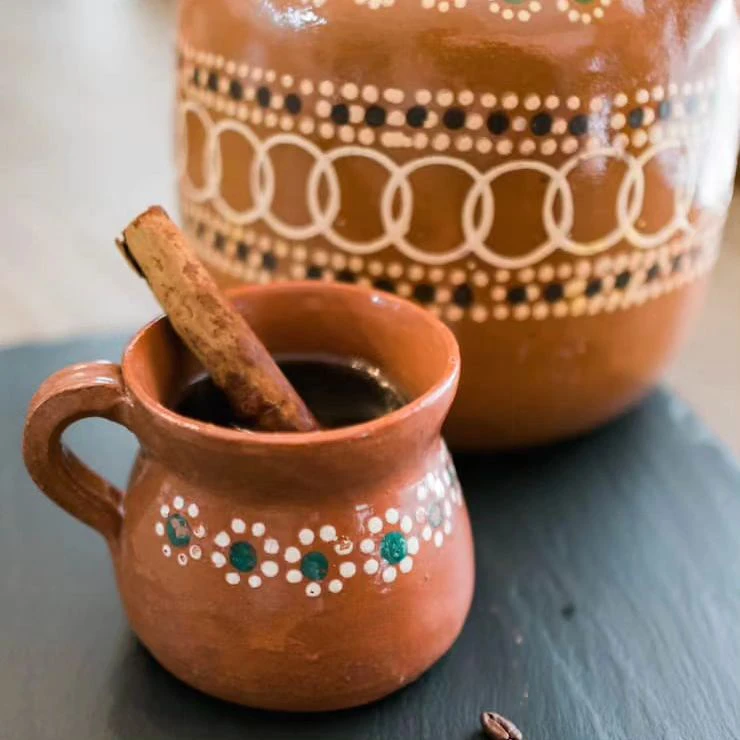
The traditional Mexican coffee, known as café de olla, is a far cry from the Kahlua-laden cocktails that often bear the same name. Strong, sweet, and spiced – this is a true taste of Mexico. And you don’t need a trip to Oaxaca to try it yourself.
Cafe de olla is easy to make at home. Just follow my step-by-step Mexican coffee recipe.
What Makes Mexican Coffee Different?
This traditional Mexican drink is known in México as café de olla, which translates to “coffee from a pot.” The name stems from the traditional clay pot in which it’s made, which is said to add its own flavor to the brew.
Like many historical recipes, the exact formula varies from region to region and home to home, but coffee, piloncillo, and cinnamon sticks are constants. You might also find dark chocolate, orange zest, or additional spices.
Sweet and spicy café de olla has a proud history of readying soldiers for battle, so just imagine what it can do for your workday! It’s a perfect pick-me-up that boosts energy, fights hunger, and settles the stomach and nerves (1).
Mexican Coffee Ingredients
- 50 grams of ground coffee (or roughly 6 tablespoons)
- 4 cups of water
- 85 grams (3 oz) piloncillo or brown sugar
- 1 stick of Mexican cinnamon
- 1 star anise (optional)
- 1 clove (optional)
- Peel from half an orange (optional)
- Olla (large clay pot) or any heavy saucepan
At a Glance
Time
10 – 15 minutes
YIELD
Four 8-ounce cups
What is piloncillo?
Piloncillo is the traditional sweetener for café de olla. In other parts of South America, you may see this referred to as panela or rapadura. It’s a raw dark sugar made by boiling down cane juice, which is then left to harden in cone shapes. The taste is rich like molasses, with a hint of bitterness.
You can usually find true piloncillo at any Mexican grocery store, but if you can’t get your hands on it, brown sugar or jaggery are good substitutes.
What is the best coffee to use?
I’d recommend a medium or darker roast coffee to make this recipe. You want something a little toasty and bitter to balance out the sugar. But there are no hard-and-fast rules for the best coffee.
If you’re undecided, I suggest trying coffee beans from Mexico! Not only is it authentic, but Mexico is an emerging coffee-growing region that is producing increasingly high-quality beans – organic beans, in particular (2).
If possible, buy whole beans and grind them yourself right before brewing for the best flavor. This recipe works best with a medium-coarse grind, just a bit finer than you’d use for a French press.
Step-By-Step Authentic Mexican Coffee Recipe
There’s nothing complicated about making this coffee drink. Indeed, it arose in an era when supplies were short. With just a few ingredients (or simple pantry substitutes), you’ll be enjoying a taste of Mexico in minutes.
Step 1: Steep The Flavorings
Add your water, cinnamon, and piloncillo to the pot or small saucepan. Also, add any other spices or orange peel, if using.
Place over low heat until the water comes to a gentle boil and the piloncillo is dissolved. Stir the mix occasionally to break down any lumps in the sugar.
Pro tip: If you don’t have an olla, an enameled Dutch oven is a great alternative.
Step 2: Add The Coffee
Once the piloncillo has dissolved, stir in the ground beans and immediately remove the pot from the heat. Cover with a lid and leave to sit for 5 minutes.
Step 3: Strain The Coffee Grounds And Serve
Once it has finished steeping, strain the hot coffee into a carafe for serving. Use a fine mesh strainer for a full-bodied brew, a layer or two of cheesecloth for fewer sediments, or a paper coffee filter for the cleanest cup.
Cafe de olla is traditionally consumed black, but you can add milk or cream to taste if you prefer.
Pro tip: Serve the coffee in a Mexican clay mug if you want the most authentic experience, but any ceramic mug is just fine.
What About The Mexican Coffee Cocktail?
If you searched for “Mexico coffee,” you were probably greeted with a long list of Mexican coffee cocktail recipes. These dessert-like drinks vary widely, often containing some mix of brewed coffee, brown sugar, coffee liqueur, and tequila. They come adorned with whipped cream and garnished with cinnamon or grated chocolate.
If that sounds more like what you’re after, check out our full list of coffee cocktail recipes, including tequila coffee and Kahlua coffee. For a caffeinated dessert without the hangover risk, try this Spicy Mexican Hot Chocolate Mocha recipe.
Final Thoughts
A Mexican-style brew is a great way to switch up your regular coffee routine, especially if you’re a fan of sweet or spiced drinks, It requires a few extra ingredients, but once you have them on hand, it’s easy to make it a regular treat.
FAQs
Mexicans add cinnamon to their coffee largely to enjoy its warm and spicy flavor. Cinnamon is incredibly popular in the country and found in many drinks and dishes. It is also high in antioxidants and conveys health benefits like a reduced risk of heart disease (3).
Mexican coffee has a strong flavor of coffee, sugar, and spice. In terms of caffeine content, it will be on par with any coffee made using an immersion coffee brewing method – about 80 to 100 mg per serving. You can also make the recipe using decaf coffee.
Yes, you can make an iced Mexican coffee for a delicious hot-weather treat. To make an iced coffee, simply replicate the great recipe above, but allow the coffee to chill in the fridge until it is room temperature or below. Then serve over ice in a chilled glass, with or without milk.
References
- Galindo, E. (2020, January 14). The Best Café De Olla In Los Angeles — And Why You Need To Drink It. Retrieved from https://laist.com/news/food/best-cafe-de-olla-in-los-angeles-and-why-you-need-to-drink-it
- Harper, J. (2020, May 12). Coffee origins: A guide to Mexico. Retrieved from https://perfectdailygrind.com/2020/03/coffee-origins-a-guide-to-mexico/
- Meister, E. (2022, October 26). The Benefits of Mixing Cinnamon in Coffee. Retrieved from https://www.drinktrade.com/blogs/education/cinnamon-in-coffee
