
HEALTH BENEFITS OF INSTANT COFFEE: IS IT GOOD OR BAD FOR YOU?
How do instant coffee’s health benefits compare to fresh coffee? Let’s look at the hard science to find out!
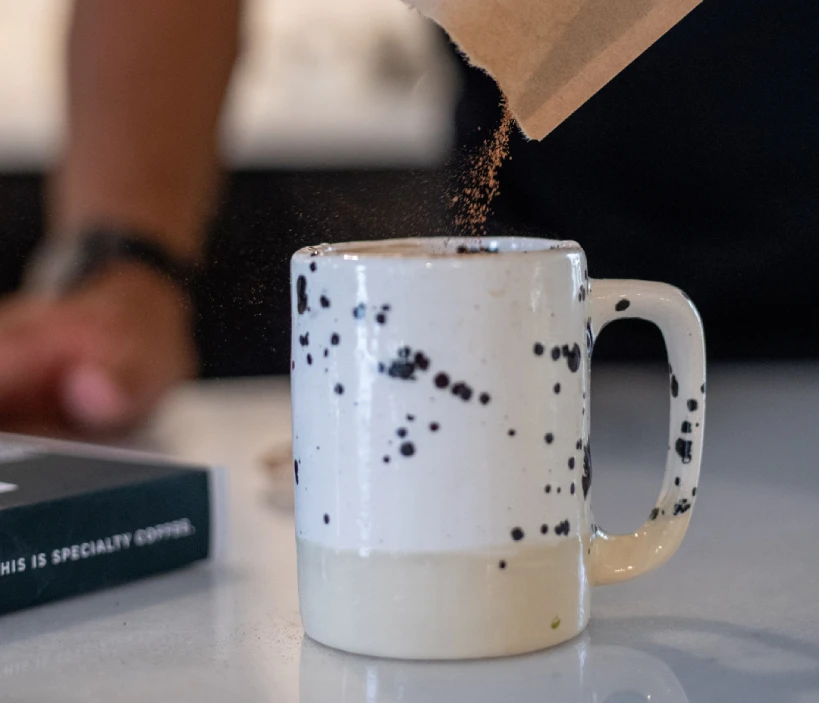
We’re used to being told that our favorite convenience foods are bad for us, so you might be expecting the same when it comes to instant coffee powder.
Well, you’re in for some good news! Instant coffee contains many of the same advantages as freshly brewed beans – in a much more convenient form. Just don’t expect the same quality of flavor.
In this article, I’ll explore the health benefits and potential risks of drinking instant coffee and how they compare to regular coffee.
Is Instant Coffee Good For You?
Do you know how instant coffee is made? It’s essentially just regular brewed coffee that has been concentrated into a coffee extract and then spray-dried or freeze-dried to create a powder. So it has all the same benefits as a regular cup of joe.
Instant coffee contains antioxidants, caffeine, and essential nutrients like vitamin B2, vitamin B5, vitamin B3, manganese, and potassium. These work independently and in concert to convey a variety of well-documented positive health effects.
Energy And Athletic Performance
You’re probably well aware of how drinking coffee, instant or otherwise, helps you on a daily basis. Coffee provides a boost of energy, increases alertness, and enhances athletic performance (1). These benefits stem mainly from its caffeine content, so you won’t find the same effects when drinking decaf.
Instant coffee is, on average, slightly less caffeinated than regular, though it varies between brands and types of coffee. You can always drink a bit more or brew a stronger cup if you need an extra pep in your step.
Long-Term Disease Prevention
The long-term benefits of coffee and instant coffee, due to their caffeine and antioxidant levels, are even more impressive.
Coffee is the biggest source of antioxidants in the modern diet.
Studies have shown that regular coffee drinkers have a lower risk of Parkinson’s disease, stroke, cirrhosis of the liver, certain cancers, and type 2 diabetes, as well as lower levels of depression (2). Indeed, regular consumption of coffee has been linked to a lower risk of mortality overall (3).
Other Benefits Of Instant Coffee
There are plenty of other reasons to use instant coffee beyond its nutritional content. After all, not many instant coffee drinkers choose it for its taste.
- Convenient: Making instant coffee doesn’t require a coffee maker or other special gear; just add hot water. And because the soluble coffee granules dissolve completely, there is nothing to clean up.
- Fast: Instant coffee is, essentially, instant. The brew time is the time it takes to heat the water. Once the instant coffee is added, you’re ready to drink.
- Less Waste: Brewing instant coffee means you only need to make exactly as much as you plan to drink. It wastes less water, coffee grounds, and energy than brewing a full carafe that sits on a hot plate for a half day before being thrown out.
- Shelf Stable: As long as you keep it free from moisture, it can sit in your cupboard for decades without any loss of flavor. The same cannot be said of roasted coffee beans.
- Great For Baking And Cooking: Coffee granules are perfect for adding to baked goods (especially chocolate ones) to boost flavor without disrupting the liquid balance of a recipe. Instant coffee is also a key component of the popular Dalgona coffee.
Is Instant Coffee Bad For You?
We just covered a lot of good reasons to consider adding instant coffee to your life. But are there any dangers?
Instant coffee shares the same primary health risk associated with regular coffee, which is the possible over-consumption of caffeine. This can lead to jitters, insomnia, anxiety, or an upset stomach in the short term, and potential caffeine withdrawal symptoms like headaches in the long run. However, these effects tend to be mild and short-lived.
It is very difficult to overdose on caffeine by drinking instant or brewed coffee. In a recent study, the minimum dose reported for lethal caffeine intoxication was 57 mg/kg, which is around 50 cups of instant coffee for a 150-pound adult (4). The average was 175 mg/kg – 154 cups of coffee!
Acrylamide Concerns
The only major reported difference in chemical makeup between regular coffee and instant coffee is the amount of a compound called acrylamide. Acrylamide is created when coffee beans are roasted and is found in many foods, including potato chips and peanut butter.
A 2013 study found that instant coffee had 358 ug/kg of acrylamide versus 179 ug/kg for brewed coffee – and, interestingly, 818 ug/kg for coffee substitutes made from roasted grains (5).
The fact that instant coffee contains double the acrylamide seems ominous, especially as acrylamide is a neurotoxin and probably carcinogen (6). But it’s important to keep things in perspective. For example, the acrylamide concentrations in roasted nuts and seeds, fresh bread, and breakfast cereals are all higher than in instant coffee (7). Potato chips have about 65 times as much!
So the difference between drinking instant coffee vs regular is about the same as eating an extra chip. Neither comes close to exceeding the recommended safe levels for human consumption.
Which Is Healthier, Instant Coffee Or Brewed Coffee?
Objectively, freshly brewed coffee is marginally healthier than instant coffee. Thanks to its reduced processing, it has slightly higher levels of caffeine and antioxidants, along with a slightly lower amount of acrylamide (8).
Subjectively, the difference between instant coffee and regular is so small, particularly when taken in context with the complexity of human life and diet, that it is unlikely to produce a noticeable effect.
So my advice is to go ahead and enjoy whatever form of coffee you enjoy. The pros of instant coffee certainly outweigh drinking no coffee at all!
Consider Additives
As a final note, I’ll mention something that has far more potential to impact health than a few nanograms of acrylamide.
Additives like sugar, creamer, whipped cream, powdered milk, artificial colors and flavors, etc., can dramatically alter the nutritional profile of your coffee. The healthiest option is to choose a high-quality coffee whose flavor you love so much that it needs little to no embellishment.
Final Thoughts
Instant coffee is a popular and convenient way to get your daily coffee fix, and it has essentially the same risks and benefits as regular coffee made from ground coffee beans. In either case, the key to reaping the rewards without the harm is moderation. Keep your instant coffee consumption to less than four cups a day for a happy, healthy, and caffeinated life.
FAQs
Most coffee lovers with sensitive stomachs prefer coffee with lower acidity levels, though there is little scientific evidence to support this. You can look for specially crafted low-acid blends, or any dark roast coffee may be low in acidity. Cold brewing also results in a lower-acidity cup as hot water is needed to extract certain acids from the ground coffee.
Yes, instant coffee offers some benefits for the gut microbiota – at least in the case of sleep-deprived rats with depression (9). This research area is relatively new, so more long-term human studies are definitely needed. Interestingly, decaf coffee has a much lower effect, suggesting that caffeine is an important factor.
Instant coffee generally has from 50 to 80 mg of caffeine per cup, which is slightly less caffeine than an average cup of brewed coffee. However, different brands, bean types, and brewing recipes all have a strong impact on caffeine levels.
References
- SZEREJ, Krzysztof, DOROBEK, Wioleta, STANKIEWICZ, Katarzyna and ŚWIECZKOWSKI-FEIZ, Janusz. The Role of Caffeine in Enhancing Physical Performance: From Metabolism to Muscle Function. Journal of Education, Health and Sport. Online. 14 February 2024. Vol. 59, pp. 158-165. DOI 10.12775/JEHS.2024.59.010.
- Safe S, Kothari J, Hailemariam A, Upadhyay S, Davidson LA, Chapkin RS. Health Benefits of Coffee Consumption for Cancer and Other Diseases and Mechanisms of Action. International Journal of Molecular Sciences. 2023; 24(3):2706. https://doi.org/10.3390/ijms24032706
- Dan Liu, Zhi-Hao Li, Dong Shen, et al. Association of Sugar-Sweetened, Artificially Sweetened, and Unsweetened Coffee Consumption With All-Cause and Cause-Specific Mortality: A Large Prospective Cohort Study. Ann Intern Med.2022;175:909-917. [Epub 31 May 2022]. doi:10.7326/M21-2977
- Pina Cabral J, Sousa DL, Carvalho C, Girao A, Pacheco Mendes A, Pina R. Caffeine Intoxication: Unregulated, Over-the-Counter Sale of Potentially Deadly Supplements. Cureus. 2022 Jan 9;14(1):e21045. doi: 10.7759/cureus.21045.
- Mojska H, Gielecińska I. Studies of acrylamide level in coffee and coffee substitutes: influence of raw material and manufacturing conditions. Rocz Panstw Zakl Hig. 2013;64(3):173-81.
- Mucci LA, Wilson KM. Acrylamide intake through diet and human cancer risk. J Agric Food Chem. 2008 Aug 13;56(15):6013-9. doi: 10.1021/jf703747b. Epub 2008 Jul 15.
- Government of Canada. (2012). Canadian Exposure Assessment for Acrylamide in Food. Retrieved from https://www.canada.ca/en/health-canada/services/food-nutrition/food-safety/chemical-contaminants/food-processing-induced-chemicals/acrylamide/canadian-exposure-assessment-acrylamide-food-food-processing-induced-chemicals.html
- Hudáková, J., Marcinčáková, D., Legáth, J. Study of Antioxidant Effects of Selected Types of Coffee. Folia Veterenaria. 2016; 60(3): 34—38. Retrieved from https://intapi.sciendo.com/pdf/10.1515/fv-2016-0026
- Gu X, Zhang S, Ma W, Wang Q, Li Y, Xia C, Xu Y, Zhang T, Yang L, Zhou M. The Impact of Instant Coffee and Decaffeinated Coffee on the Gut Microbiota and Depression-Like Behaviors of Sleep-Deprived Rats. Front Microbiol. 2022 Feb 25;13:778512. doi: 10.3389/fmicb.2022.778512.
