
HOW TO MAKE GREEK COFFEE (A SIMPLE RECIPE + CULTURAL TIPS)
Here’s everything you need to know about Greek coffee, including how to make the perfect cup plus tips for serving and drinking like a Greek local.
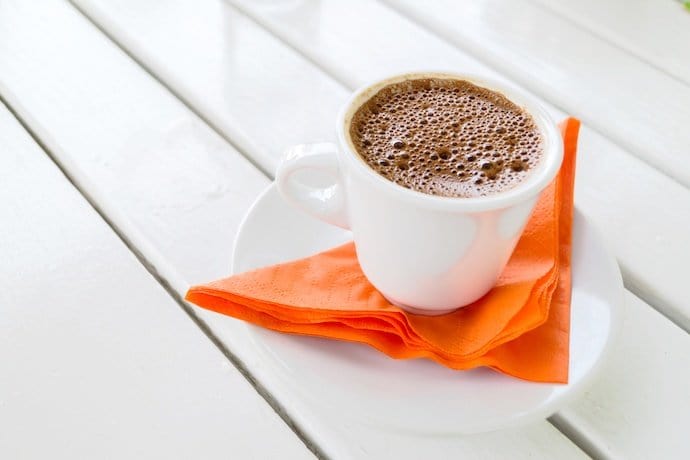
Greek coffee is an old brewing method with enduring modern appeal. The resulting rich, dark, and strong brew is a cultural and social experience as much as a drink. Even in the current era of crisp filter coffees and light roasts, Greek coffee is still beloved by coffee lovers worldwide – myself included.
How do you make Greek coffee?
Traditional Greek coffee is a strong black coffee capped with a rich layer of foam. It’s an unfiltered coffee served with the grounds still in the cup, similar to Turkish coffee or cowboy coffee.
Greek coffee is made using a steeping method in which very finely ground coffee beans are boiled in a tall pot called a briki.
Sipping a bold and sweet Greek coffee is a unique experience and an integral part of Greek culture. Mastering the simple brewing technique is well worth it to enjoy this style of coffee at home!
Greek Coffee Ingredients
- 2 teaspoons finely ground coffee
- 1 – 2 teaspoons sugar (to taste)
- 3 ounces cold water
- Briki coffee pot
- 3-ounce demitasse cup
At a Glance
Time:
5 minutes
Yield:
One coffee (3 ounces)
The Briki Greek Coffee Maker
Greek coffee is traditionally made in a briki, a tall, thin pot with a long handle that angles upward from the rim. The same device is used to make Turkish coffee, where it’s known as a cezve or ibrik (1).
Brikis usually come in 2, 4, or 6-cup sizes. A general rule of thumb is to make as many cups as your briki can hold minus one cup. This should leave you just enough room to manipulate the foam, as too much extra room can ruin the foaming process.
Can you make Greek coffee without a briki?
You don’t need to make Greek coffee in a briki. Any small saucepan will work, provided it’s the correct size for the number of cups you want to make. A pouring spout is helpful but not mandatory.
What is the ratio of coffee to water for Greek coffee?
The ratio of coffee to water for Greek coffee is roughly 1:13, measured by weight. That equates to 7 grams of coffee brewed in 90 grams of water. This ratio can easily be varied to suit your taste.
What size cup for Greek coffee?
Greek coffee is served in a demitasse cup, also known as an espresso cup, as it is a very strong coffee best enjoyed in small doses. These tiny cups hold between 2 and 3 ounces of coffee.
The Best Greek Coffee Recipe
This recipe may seem simple but there are a few critical details to master. So let’s walk through making a perfect cup of Greek coffee step by step.
Greek coffee is a technique as much as it is a recipe, so you are welcome to adjust your preferred amount of coffee and sugar.
Step 1: Add The Water
Add the required amount of water to your briki – approximately 3 ounces per serving. The best way to do this is to use your demitasse cups themselves to measure the water.
Step 2: Add The Coffee And Sugar
Add 2 teaspoons of coffee per cup to the water in the briki. If you want your cup of coffee sweetened, add the sugar at this stage as well. Unlike typical North American coffee preparations, sweetener is added before rather than after brewing.
Pro tip: Greek coffee requires a very fine grind of coffee beans, even finer than espresso – often labeled Turkish grind. If you’re grinding your own, you’ll likely need a special Turkish coffee grinder.
Step 3: Place Over Heat
To make the coffee, put the briki on the stove over medium heat and stir the coffee until thoroughly mixed with the water and sugar. Then stop stirring, let the coffee heat, and wait as the coffee starts to foam.
Step 4: Let The Kaïmaki Rise
Allow the coffee to sit on the heat. As it approaches a boil, a foam will begin to rise – known as the Kaïmaki (ka-ee-MAH-kee).
When enough foam forms to approach the lip of the briki, quickly remove the coffee from the heat before it spills over. With a small briki, this can happen quickly, so watch carefully.
Step 5: Serve The Drink
To serve Greek coffee, use a spoon to evenly distribute the foam amongst the cups first. Then carefully pour the coffee into each demitasse.
How To Drink Greek Coffee
Drinking Greek coffee the right way is an essential part of the experience (2). The main thing to remember when drinking authentic Greek coffee is to take it slow. You need to let the coffee settle to the bottom, assuming you don’t want coffee grounds in your mouth.
Greek coffee is best enjoyed with good company. Take your time, drink the coffee in little sips, and savor good conversation. It’s a part of the cultural experience. In Greece, coffee breaks often take upwards of an hour and a half!
What do Greeks put in their coffee?
Greek coffee is not traditionally served with milk or cream, but it is often sweetened with sugar (3). If you order Greek coffee in a coffee shop in Greece, the different ways to prepare Greek coffee have individual names:
- Sketos: Black coffee without sugar.
- Metrios: Semi-sweetened black coffee (1 tsp of sugar per serving).
- Glykos: Moderately sweet coffee (2 tsp of sugar per serving).
- Vary Glykos: Boldly sweet (3-4 tsp of sugar per serving).
Final Thoughts
Next time you’re craving a strong coffee in the morning, why not make traditional Greek coffee at home? It’s a bold and flavorful way to kickstart your day! For true authenticity, serve it with a tall glass of water and some cookies, baked goods, or other sweets. And remember that the most important part is sipping slowly and enjoying yourself and the company of others.
FAQs
Greek coffee is different from regular coffee because Greek coffee is not filtered. This gives Greek coffee a uniquely bold flavor and rich mouthfeel, similar to espresso coffee.
The best coffee for Greek coffee is one from a Greek brand. But I’d recommend choosing your favorite fresh-roasted beans for making coffee you enjoy. Typically, Greek coffee is blonder than Turkish but still a dark roast coffee.
Yes, Greek coffee is a strong brew of coffee, which is why you typically only drink a small amount of coffee at a time. It has a very bold flavor and high caffeine content relative to its volume. That’s why the coffee is often served with water and food to temper its intensity.
References
- Barista Hustle. (n.d.). The History of the Cezve. Retrieved from https://www.baristahustle.com/lesson/6-01-the-history-of-the-cezve/
- Charles, S. (2020, August 19). Greek Coffee Culture: A Story Of Tradition And Renewal. Retrieved from https://perfectdailygrind.com/2020/08/greek-coffee-culture-a-story-of-tradition-and-renewal/
- Dilouambaka, E. (2016, November 4). How To Drink Greek Coffee Like A Local. Retrieved from https://theculturetrip.com/europe/greece/articles/how-to-drink-greek-coffee-like-a-local
