
HOW TO GRIND COFFEE BEANS WITHOUT A GRINDER IN 6 EASY WAYS
Grinding coffee beans right before brewing is the best way to ensure a fresh and flavorful cup and this can be an issue if you don’t have a grinder at home. Here are 6 ways to grind coffee mechanically.
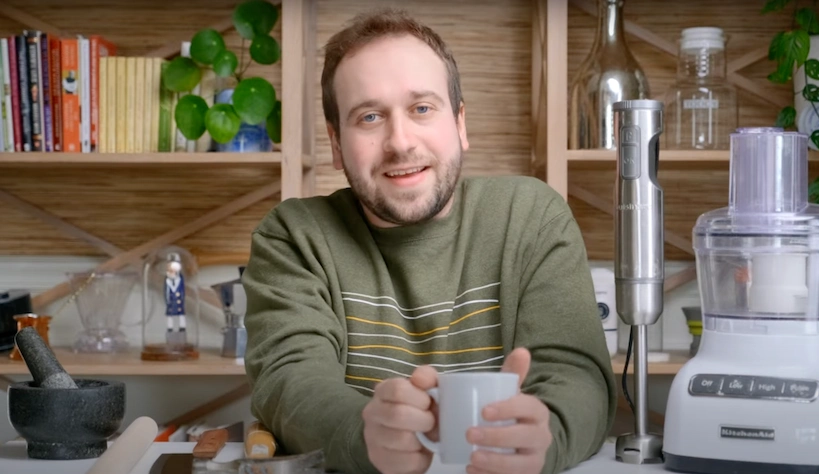
Once coffee is ground, exposure to oxygen causes it to go stale much faster, leaving you with a bland and boring brew.
A good-quality burr grinder should be on every coffee lover’s wish list. But it’s an expensive purchase, so what should you do if your coffee budget doesn’t stretch that far? Here are six easy ways to grind coffee beans at home without a grinder – all using gear likely already in your kitchen.
Hack Your Kitchen: Ways to Grind Coffee Mechanically Using Utensils Or Appliances
With some simple kitchen tools and a little elbow grease, you can almost replicate the texture and consistency produced by a real grinder. Even if it doesn’t brew the perfect cup, it still spares you from buying pre-ground coffee or finding a coffee shop.
Before you get started, take a look at our coffee grind chart to see what grind size is best for your coffee maker. Some methods to grind beans without a grinder are better than others, depending on whether you need a fine or coarse grind.
Watch Steven from Home Brews Coffee try all the methods in this hilarious video:
With Food Processor
Can you grind coffee beans in a food processor? A food processor is basically just a larger version of a blade grinder. So while you won’t have great control over grind consistency or particle size, it’s one of the better kitchen tools for grinding coffee beans if you’re in a pinch.
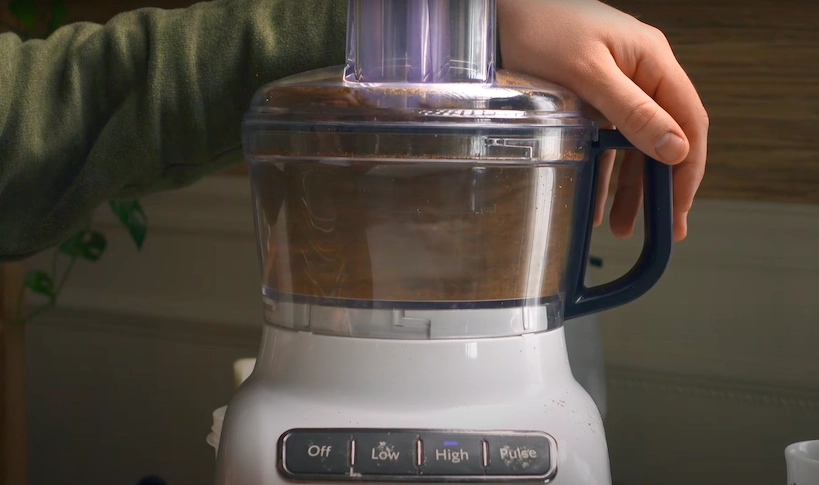
How To Use a Food Processor to Grind Coffee Beans
- Use the “pulse” setting to grind in short bursts. For the best results, tilt the processor slightly from side to side while grinding; this causes the larger portions of the beans to move into the blades.
- Pour a few scoops of coffee into the processor bowl and secure the lid on top.
- Empty the processor, add new beans, and repeat until you reach the desired amount of ground coffee.
The pulse technique is the key to getting a decent cup of coffee. Turning on your machine in short, quick bursts coarsely grinds the beans closest to the blades. Then shaking allows the larger pieces to fall closer to the bottom blade.
With A Blender
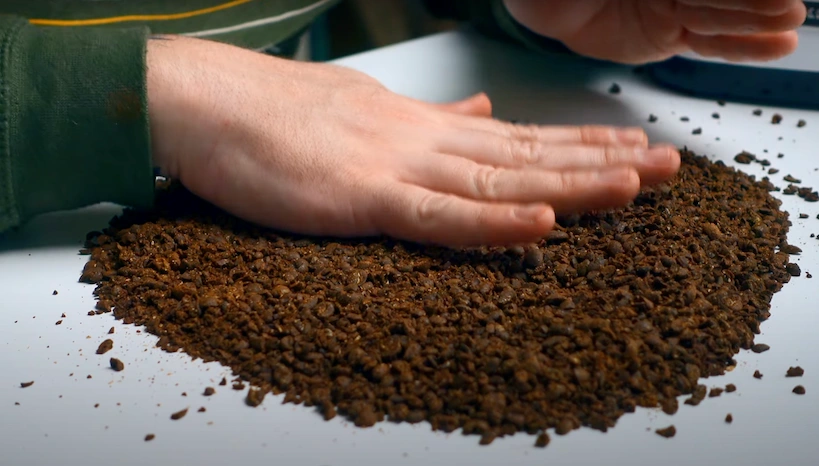
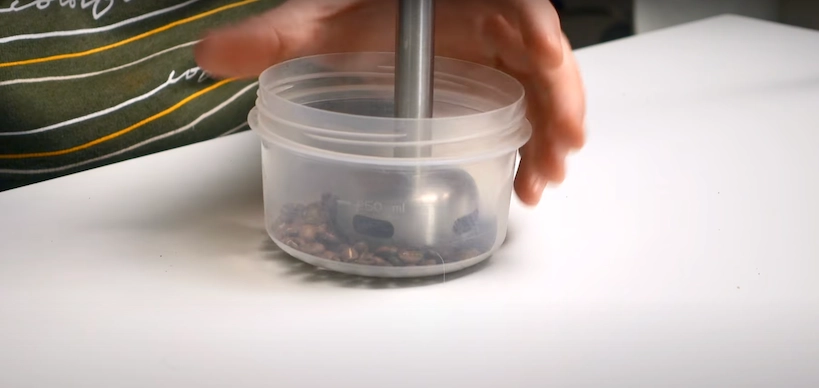
Like a food processor, a blender’s blade chops the coffee in a manner similar to a blade grinder. In fact, some blenders include a “grinder” setting for coffee, nuts, whole grains, spices, etc. Again, you’ll want to pulse the beans in short bursts to produce the most even grounds and avoid overheating the blades, which can interfere with the flavor of your coffee.
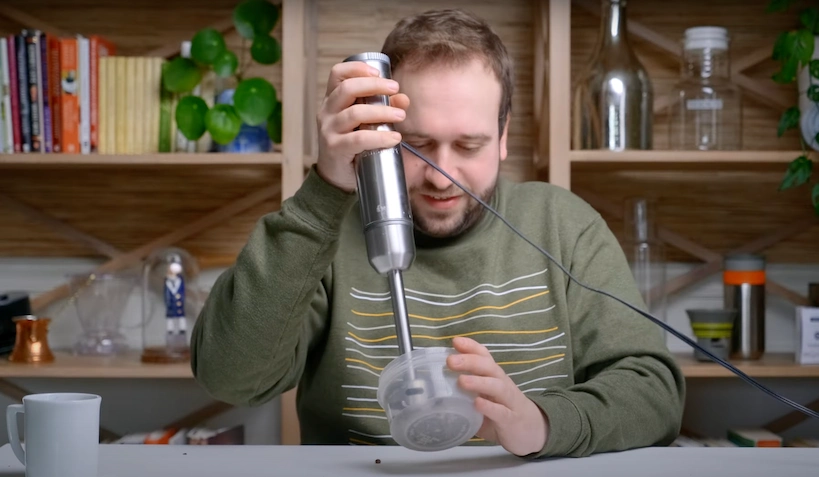
How Use a Blender to Grind Coffee
- If your blender has a “grinder” setting, select it. If not, select a medium-high speed.
- Pour a small amount of coffee into the grinder and place the lid firmly on top.
- Blend the beans to your preferred consistency, using the “pulse” technique, grinding in short bursts.
- Tilt the blender slightly from side to side while grinding to ensure a more even grind.
- Empty the blender, add new beans, and repeat until you reach the desired amount of ground coffee.
Using A Mortar And Pestle
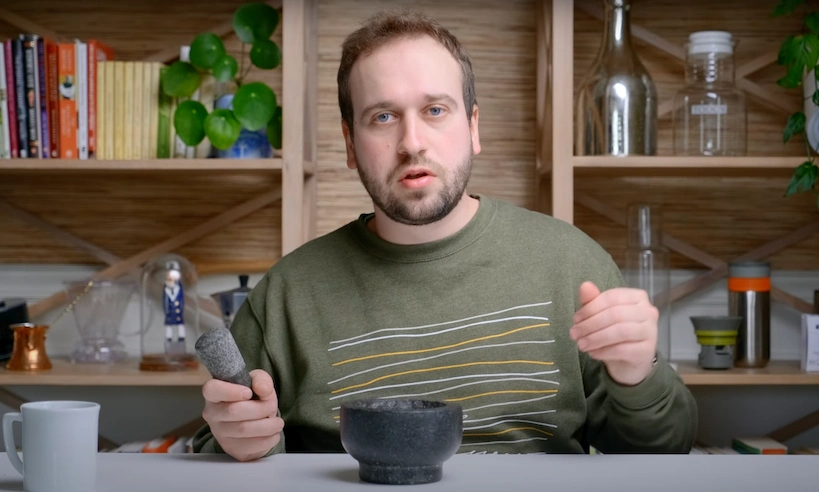
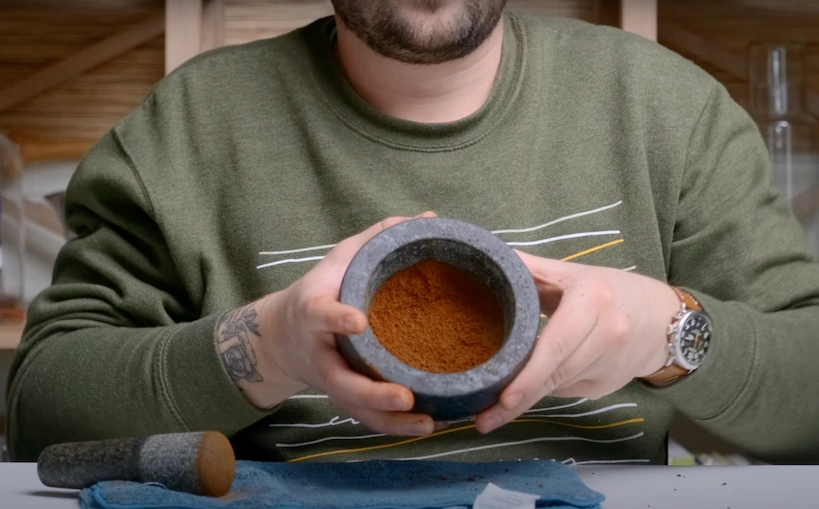
Pharmacists and cooks have used the mortar and pestle for centuries to grind herbs, spices, and medicines into a fine powder (1). The method combines a hammering and rolling motion to help create a consistent texture. It gives you fine control over a range of grinds, and it’s the best option for the fine grounds needed for espresso or Turkish coffee.
How to Use Mortar and Pestle to Grind Beans
- Add a small amount of beans to your mortar. For the best control, don’t fill it more than about a quarter full. You can always grind a second batch.
- Hold the pestle with your dominant hand; use your other to hold the mortar in place.
- Using the pestle, forcibly press down and crush the beans with a twisting motion.
- Once crushed, use the pestle to roll the coffee around the bowl until you achieve the desired consistency and texture.
- Empty the ground coffee into a bowl (or your coffee maker) and repeat the process until you have enough grounds.
With A Knife
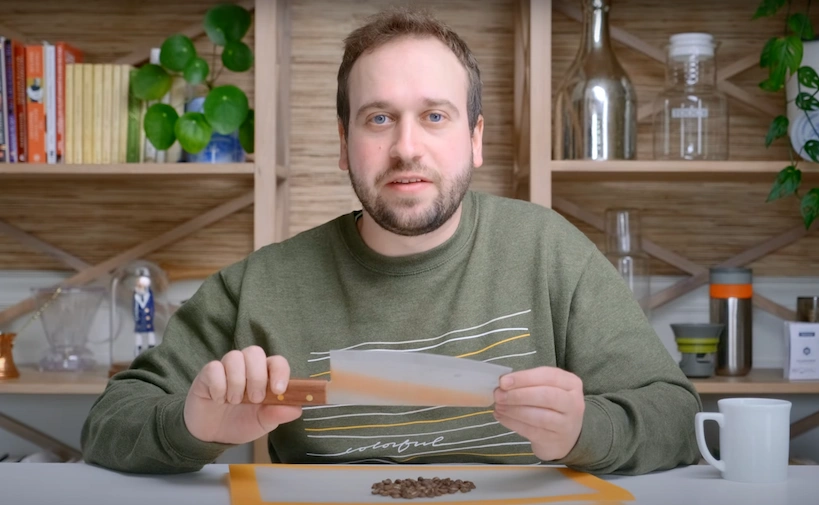
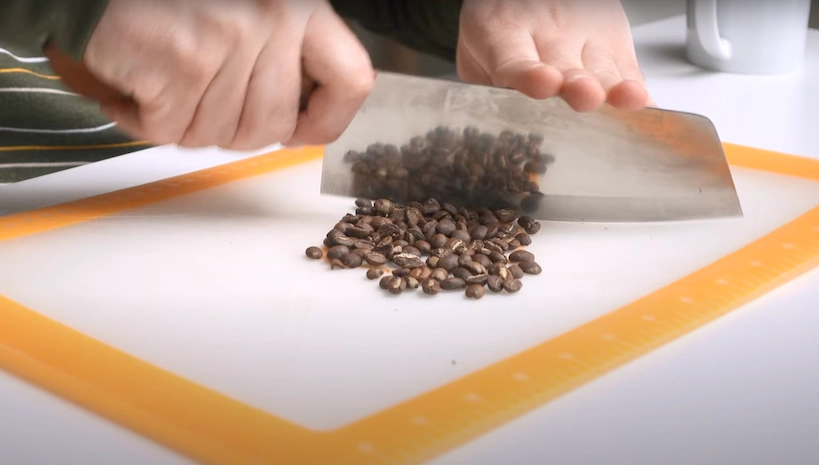
The best way to grind your beans with a knife is to use the flat of the blade, not the edge. The design of a butcher knife or chef’s knife, with its slightly wider and stiffer blade, helps provide extra leverage when crushing and cracking the beans.
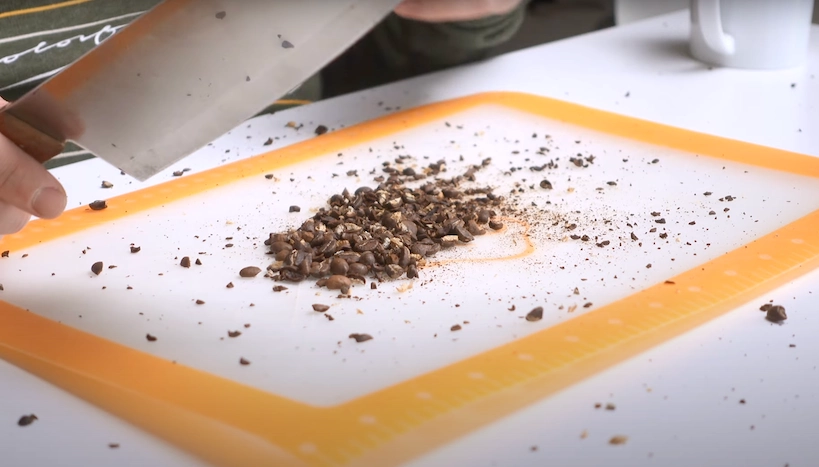
Crushing beans with the flat of the blade gives you surprisingly excellent control and lets you produce a medium-fine to medium grind. The more time you’ve spent in chef school, the easier this will be.
How to Crush Coffee Beans with a Knife
- Place your coffee beans on a cutting board – the bigger, the better to help catch flyaway bean bits.
- Place your knife flat on top of the beans, being careful to place the sharp edge on the board.
- Lay a kitchen towel (or paper towels) over the knife to protect your hand and prevent stray coffee grounds from drifting away.
- Place your palm on top of the blade and press down firmly to crack the beans. Don’t be tempted to strike the blade; the beans will bounce away.
- Once the beans are broken, continue pressing down on the blade, pulling it slightly towards you to make the grind finer.
Using A Hammer, Tenderizer, or Mallet
A meat tenderizer, mallet, or hammer can easily crush your coffee beans – or your hand or kitchen counter, so use with caution. As you break down the beans, you can refine your technique to achieve a finer powder. However, because of the jerky, explosive effect of the hammer, this method is best suited for coarser grounds. Use this grind for cold brew, French press coffee, Chemex, or drip coffee makers.
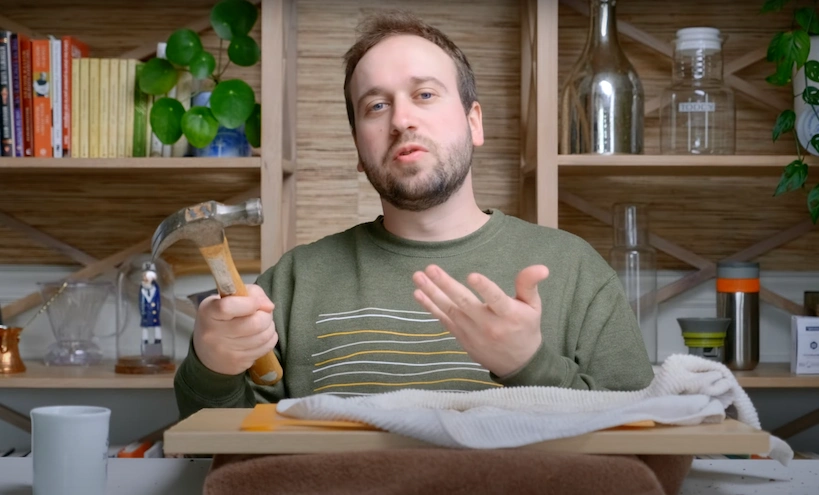
How To Crush Coffee Beans Using a Hammer
- Fill a heavy-duty plastic bag with coffee beans. Or place your beans between two sheets of parchment with the edges folded over to enclose the coffee.
- Put the bag on a plastic or wooden cutting board to protect your counter.
- Use the hammer or mallet to press down firmly on the beans to crush them until the desired consistency is met. You don’t need to hit the beans; they aren’t nails you’re trying to drive into your countertop.
- For a more consistent grind, start crushing on one side of the bag and move gradually to the other side.
With A Rolling Pin
The classic rolling pin can crush and grind beans at the same time to produce a more even texture. It is a bit better for finer grinds versus the hammer or knife. If done right, this technique can achieve a medium-fine to fine grind, ideal for a drip or pour-over coffee brewing method. However, you’ll need a little elbow grease and an observant eye to ensure uniformity.
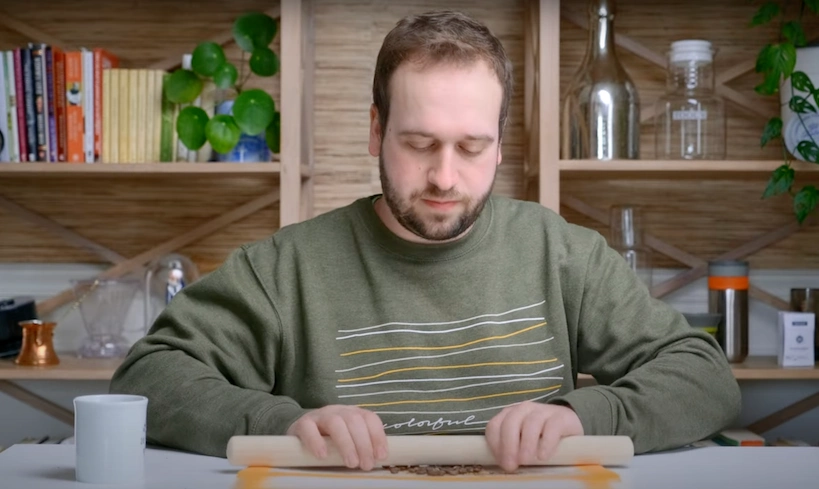
How To Crush and Grind Beans with a Rolling Pin
- Place the beans in a plastic bag or between two sheets of parchment paper with the edges folded over to seal them in.
- Lay the bag flat on the counter or on a cutting board.
- Press down on the bag with the rolling pin to crush your beans.
- Once crushed, roll the pin over the beans while pressing down hard enough to break the bean fragments into smaller pieces.
- Keep rolling the pin over the coffee grinds until they reach the consistency you prefer.
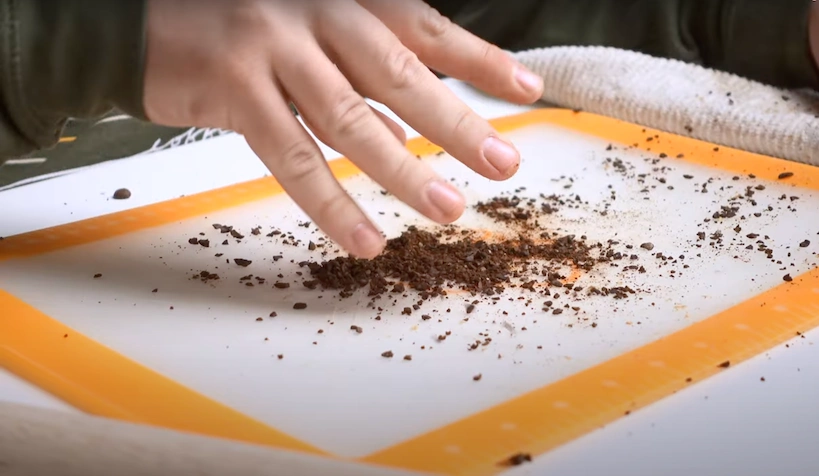
The Importance Of Grind Consistency (And A Cool Hack)
The uniformity and consistency of the grind are critical to brewing quality coffee. A consistent grind ensures an even extraction, which translates to the perfect balance of flavors in your brew. An inconsistent grind has a tendency to over-extract some grounds and under-extract others, resulting in a sour or bitter coffee and a “chalky” aftertaste (2).
The best way to achieve consistent grounds is, of course, with a burr coffee grinder. But if there’s no grinder available, the most important thing when using any of the methods above is to grind or crush only a few beans at a time. This gives you much greater control over grind size, as well as a visual cue for the texture and fineness you’re aiming for.
For the most uniform grind, go slowly and take care to repeat the same movements, whether you’re using a knife or a blender.
Consider making coffee with a French press if you don’t have a grinder. This style of immersion coffee maker performs better with a coarser grind and is more tolerant of inconsistencies than other brewers.
Watch this cool video from James Hoffman, which shows you how to achieve a decent grind using any of the above methods:
Final Thoughts
There are many ways to grind coffee beans without a grinder depending on what’s available in your kitchen, though none can match a proper burr grinder when it comes to brewing the most delicious coffee in the morning.
My preference is to use a blender or food processor for coarser grinds and a mortar and pestle for finer grinds. Just remember that no matter which method you choose, the most important thing is to aim for a uniform grind size.
FAQs
The best method for grinding coffee beans is using a manual or electric burr coffee grinder. In this type of grinder, the beans are crushed between two carefully aligned burrs, and the spacing between them dictates the grind size. This is by far the most reliable way to achieve a uniform grind consistency.
Freshly ground coffee is better because it has more flavor. Heat, light, and oxygen all cause coffee to go stale (3). When coffee is ground, that process occurs much faster due to its higher surface area. That’s why it’s important to buy whole coffee beans and grind them right before brewing.
Yes, you can grind your coffee beans manually. A manual grinder is a fantastic way to achieve a high quality grind without spending too much money. You can buy a hand grinder for less than $100 that will perform better than any of the methods above.
Yes, a coffee grinder can grind other hard, dry items like spices, whole grains, dried beans, etc. However, I would advise against it. The tastes and aromas will linger on the burrs, ruining the flavor of your next batch of coffee, and deep cleaning a coffee grinder is not something you want to do regularly.
References
- Angus, K. (2016, January 13). Ten Thousand Years of the Mortar and Pestle. Retrieved from https://www.theatlantic.com/science/archive/2016/01/mortar-pestle-object-lesson/423852/
- Barista Hustle. (2017, January 30). Coffee Extraction and How to Taste It. Retrieved from https://www.baristahustle.com/coffee-extraction-and-how-to-taste-it/
- Handground. (n.d.). Coffee Chemistry Made Simple: A Look At What Happens Inside The Bean. Retrieved from https://handground.com/grind/the-chemistry-of-grinding-coffee-beans

Been there done that! Have had to use a couple of these methods when i didn’t have a grinder at home