
DEGASSING COFFEE AND WHY FRESHER IS NOT ALWAYS BETTER
Degassing coffee beans is an important natural process that dramatically impacts the flavor and quality of your morning brew.
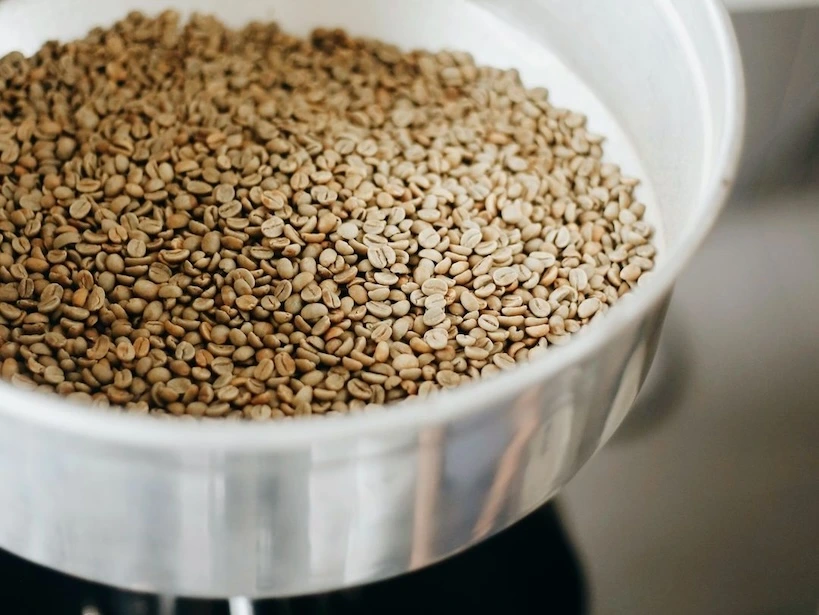
Whether you’re a home roaster or just an avid coffee lover, understanding how, why, and how long to degas coffee is a crucial part of getting the most from your beans.
When it comes to coffee, fresh is best but fresher is not always better.
In this article, I’ll explain why you shouldn’t brew coffee straight from the roaster and help you determine exactly how long you need to wait for your beans to hit their peak.
What Is Degassing In Coffee?
The degassing process is the natural release of gases from a coffee bean after roasting. The majority of the off-gas is carbon dioxide (nearly 90%), with the remainder consisting of carbon monoxide, nitrogen, and other volatile organics (1).
Coffee beans undergo many chemical reactions during the roasting process, which is clear from their vastly different aroma and appearance pre- and post-roast. The high heat of roasting breaks down the complex carbohydrates found in green coffee beans into smaller molecules, producing carbon dioxide gas (CO2) in the process.
“At the end of the roasting process, part of the gases remains trapped inside the pores of the coffee beans and are gradually released during storage or more abruptly while grinding or extracting.”
First crack during roasting is an audible indication that enough gas has formed inside the bean to rupture its cell wall. But CO2 formation continues throughout the roasting process, peaking near the end.
Why Do You Need To Degas Your Coffee?
It is important to degas coffee before brewing to ensure the most flavorful cup. When you brew fresh coffee that is actively off-gassing, you’ll notice a dramatic amount of bubbling as you add hot water to the ground beans. That’s the gas bubbling out. Those bubbles prevent the coffee grounds from being evenly saturated, resulting in an uneven extraction and a less-than-flavorful cup (2).
On the other hand, it is possible to let coffee rest too long. A certain amount of CO2 in the beans is valuable for a number of reasons.
For a coffee roaster, packaging coffee that is still degassing in a coffee bag with a one-way valve (also known as a degassing valve) is the best way to keep it fresh and extend its shelf life. The outgoing CO2 prevents oxygen from getting to the freshly roasted beans.
As a consumer, some bubbling when you bloom your grounds is a good indicator of coffee freshness and quality. When you brew espresso, carbon dioxide aids in the formation of crema on the espresso shot.

How Long Does It Take Coffee To Degas?
The exact time to degas coffee varies depending on the roast level and profile, the type of coffee, and the brewing method. If you’re buying coffee from a reputable roaster, they should be able to tell you the best day to start brewing your beans. If you’re a home roaster, it may take a little trial and error to find the peak time to taste your coffee.
Here are some useful rules of thumb to get you started:
- Degassing occurs rapidly in the first two hours after roasting. Roughly 40% of the gas has left the coffee within the first 24 hours after roasting.
- The best time to drink freshly roasted coffee is generally between 3 and 14 days after roasting.
- The rate of degassing is faster for dark roasted beans than lighter roasts.
- Assuming the roast level is the same, beans with shorter roast times degas faster than longer roast times.
- Slower brewing methods like French press or drip coffee require less degassing time than fast methods like espresso or Moka pot.
The only way to know for sure if your freshly roasted coffee beans are ready to brew is to make a sample cup. Eventually, experience will guide you.
You can test older beans by sealing them in an airtight bag and leaving them overnight. If the bag is puffed up in the morning, there is still some carbon dioxide being released, meaning your beans are nice and fresh. Otherwise, you’ve got stale coffee on your hands.
How to degas coffee quickly?
The easiest way to make coffee degas faster is to grind your coffee beans. The dramatic increase in surface area makes it easier for gases to escape. However, I don’t recommend this method for the same reason I don’t recommend buying pre-ground coffee.
First, many of the volatile flavor compounds will dissipate along with the CO2. Second, you’re exposing more of the bean’s surface to oxygen, and oxidation reactions are another mechanism to break down flavor molecules.
Your extraction will be even, but your coffee won’t be as richly flavorful. Patience is a virtue in this case.
A better, though not quite as fast, option is to put your freshly roasted beans in a sealed vacuum canister. As the common expression goes, “nature abhors a vacuum.” The CO2 will be drawn out of the beans more quickly to fill the empty space. This can easily cut a few days off your degassing time.
The Importance Of The Bloom Phase
The final step in coffee bean degassing actually takes place during the first stage of brewing. Pre-infusing your coffee with a small amount of hot water allows the remaining trapped CO2 to escape.
This process is known as the bloom. It ensures that the coffee grounds are evenly saturated as the main brewing cycle begins (3). This is why you should invest in a coffee maker or espresso machine with a pre-infusion stage if you’re spending your hard-earned cash on freshly roasted specialty coffee.
To bloom your coffee in a manual brewing method, add just enough hot water to cover or saturate the ground coffee and let it rest for 30 seconds. Then add the rest of the water to brew your coffee.
How To Store Fresh Coffee Beans
The best way to store coffee after roasting is in a dedicated coffee storage canister with a one-way valve. This style of coffee packaging lets the CO2 escape while keeping oxygen out – crucial for keeping roasted coffee fresh.
It’s also important to store your coffee in a cool, dry, and dark place. Light, heat, and moisture all cause coffee to go stale much faster.
Find more tips in my complete guide to storing coffee at home.
Final Thoughts
Degassing is the process in which the gases formed within the bean during coffee roasting are slowly released. It starts immediately after the roasting cycle and peaks in the first 24 hours.
It’s important to give the coffee time to degas to ensure and even extraction and flavorful cup, but how much time is hard to quantify. Degassing is complex and influenced by a myriad of factors, including how the coffee is roasted, processed, and brewed.
Now that you have a solid understanding of the degassing process, you’re better equipped to enjoy your fresh coffee at its best. I’m confident that with a bit of experimentation, you’ll discover the ideal degassing time for your favorite coffees, elevating your home roasting and brewing experience.
FAQs
Yes, degassing affects the flavor of your coffee. While CO2 gas doesn’t have its own flavor, its presence or absence impacts how coffee tastes by influencing extraction. If your coffee is too fresh, the excess CO2 will make the extraction uneven, and the taste of your coffee will be unbalanced – too sour or too bitter. If your coffee is too old, it will taste bland and one-note.
Degassing time varies with brewing method because the time of contact between the coffee grounds and the water varies. You don’t need to degas as long before slow brewing methods with a longer contact time, like pour over or immersion, because there is a longer time window to saturate the grounds.
Coffee doesn’t spoil like most food products; it won’t rot or make you sick, but it does get stale. After coffee beans are roasted, they stay fresh for about 3 to 6 weeks, after which you’ll notice the flavor start to drop off. Once ground, coffee goes stale much faster. You should try and use pre-ground coffee within a day – a week at most.
References
- Time-Resolved Gravimetric Method To Assess Degassing of Roasted Coffee
- Samo Smrke, Marco Wellinger, Tomonori Suzuki, Franz Balsiger, Sebastian E. W. Opitz, and Chahan Yeretzian. Journal of Agricultural and Food Chemistry 2018 66 (21), 5293-5300. DOI: 10.1021/acs.jafc.7b03310
- Gagne, J. (2019, January 29). The Dynamics of Coffee Extraction. Retrieved from https://coffeeadastra.com/2019/01/29/the-dynamics-of-coffee-extraction/
- Driftaway Coffee. (2015, February 9). What Is The Bloom And How Does It Affect Taste? Retrieved from https://driftaway.coffee/bloom/
