
COFFEE SHOP EQUIPMENT LIST: A CHECKLIST FOR STARTING A CAFÉ
If you want your business to las, you need the right coffee shop equipment .
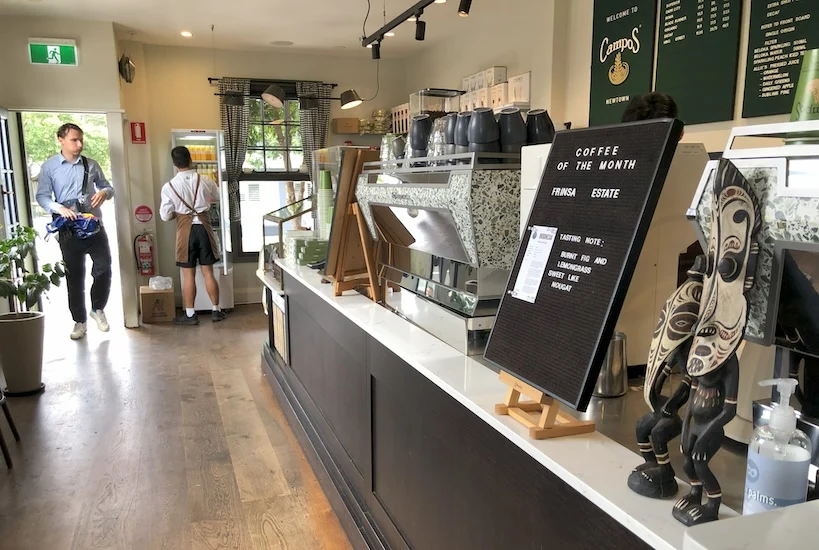
Photo: Kashmir Brummel
A perfect location and beautiful café design are a great start. But, after the venue, the equipment is the most expensive part of opening your cafe. So it’s essential to choose your gear wisely, always keeping your budget in mind.
What equipment do you need to start a coffee shop? This article provides a quick cafe equipment checklist for up-and-coming coffee shop owners, with some tips and tricks along the way.
What Equipment Is Needed For A Coffee Shop?
So, you want to open a new coffee shop? The first step is to write a business plan, including a budget for all the equipment you’ll need. Are you immediately overwhelmed? There’s a lot to consider. Let me help you out with this easy-to-follow coffee shop equipment checklist.
1. A Commercial Grade Espresso Machine
A good-quality commercial espresso machine is often the focal point of a specialty café or coffee shop. Many are equal parts engineering marvel and art piece.
The espresso machine is the workhorse of your coffee shop and not a place to skimp.
Espresso drinks can be one of the biggest money-makers in a successful coffee shop business, so you can expect a worthwhile return on your investment.
It’s important to have a machine with the capacity to keep up with customer demand. You’ll lose clients fast if they regularly wait 30 minutes for a morning latte. So look for a good balance of machine output, build quality, and an optimal number of group heads.
Your coffee shop’s proposed size dictates your espresso machine’s capacity. You might get away with a single-group machine for a small business, perhaps with a greater focus on brewed coffee and food.
Small-to-medium coffee shops are better off with a semi-automatic machine with two group heads, which can make four coffees and host two baristas at the machine. Expect to spend upwards of $10,000 on a quality model. Larger cafes and coffee shops might need a three or four-group machine, easily costing $20,000 or more.
Espresso Gear For Baristas
Remember to equip your baristas with the tools they need to succeed at their job. That includes espresso tampers, milk frothing pitchers, tamping mats, and knock boxes. Remember that tampers can be manual or automatic, and an automatic model can help prevent costly repetitive strain injuries in your employees in a busy coffee shop.
2. A Commerical Coffee Brewing Setup
It’s crucial to have a drip coffee option for customers who prefer regular coffee. And drip coffee is a great way to serve customers quickly, even if it lacks the glamour of an espresso drink.
Commercial automatic drip coffee makers, also known as batch brewers, can brew several liters of coffee at a time. Depending on whether your model has a warming plate, you may also need to buy glass carafes, thermal carafes, or an airpot to serve coffee warm.
Batch brewers aren’t necessarily renowned for their high-quality coffee (1). Suppose specialty brews are your coffee shop’s focus. In that case, you may want to establish multiple coffee pour-over stations or a collection of siphon brewers – which will attract customers for their unique design as much as their excellent coffee.
Coffee Accessories
Again, don’t forget about accessories. Depending on your choice of coffee machine, you’ll likely need coffee filters and decanters. Consider purchasing extra thermal carafes if you want to offer a self-serve station for milk and cream.
3. An Industrial Coffee Grinder – Or Two
Depending on the size of your cafe and menu, you need at least one commercial burr grinder. But if you plan to serve coffee and espresso, you probably need two.
This is another piece of coffee equipment that is worth splurging on. The right coffee bean grinder can make or break the quality of your coffee drinks.
Plan on spending at least several thousand dollars for a good-quality espresso grinder.
Some commercial coffee grinders grind for espresso and drip coffee. But the best are specialized for a specific brewing method because it doesn’t make sense to keep readjusting a grinder in a commercial setting. You might also consider a smaller third grinder to offer freshly ground coffee beans for decaf fans.
In addition, you can get a digital measurement tool to zero the grinder and maintain consistency regularly. A precision digital scale is a crucial accessory if your grinder doesn’t have a built-in scale.
4. Water Filtration System
Good water is the backbone of great specialty coffee. Indeed, since almost 98% of coffee is water, this ingredient may be as important as the beans (2).
Installing a water filtration system is the easiest way to influence the coffee quality for the better. Coffee shop owners generally go for reverse osmosis filtration, which clears impurities and helps remineralize the water. Alkaline water is en vogue at the moment and can help with acidity in some types of coffee.
“Water isn’t just an ingredient added to roasted coffee seeds; it can transform the character of a coffee and make or break its flavor.”
Using filtered water to make coffee improves its flavor and prolongs the life of your equipment by avoiding the build-up of grime.
A water filtration system that can support the needs of a cafe or coffee shop doesn’t need to be expensive. But it’s important to test your water first to determine exactly what kind of filtration system is best for your business.
5. Refrigeration Gear
Unless you plan to serve exclusively black coffee, you’ll need at least one refrigeration unit to store milk for your coffee drinks. But chances are you also plan to serve juices, food, or sweets at your coffee shop. Plus, you’ll likely also need an ice machine for iced coffee and perhaps a freezer.
The size and capacity of this equipment depend on your needs, and prices vary from under $1,000 to $3,000+. At the start, getting a smaller, cheaper, under-the-counter fridge and freezer options is okay, then scaling up later if necessary. If you’re going to make compromises, let it be here rather than the equipment you need to brew coffee.
6. Point-Of-Sale System
If the espresso machine is the heart and soul of your coffee shop, the point-of-sale (POS) system is its brain. A comprehensive coffee shop POS system is crucial. Keeping customers happy with an easy and efficient check-out option makes them more likely to return and leave a generous tip. It also means a better experience for your employees.
7. Odds And Ends
Getting your coffee shop up and running can feel a bit like filling a bottomless hole. Just when you think you have everything, the coffee shop supplies list grows again.
Once you’ve got the basic business needs listed above, here is some more equipment to consider when you start a coffee shop:
- Dishware: Quality coffee cups and mugs can enhance the coffee-drinking experience, and don’t forget the right sizes for all your different espresso drinks. Don’t forget about plates and cutlery if you offer food. Do you plan to offer to-go cups and take-out food? Consider environmentally friendly options.
- Furniture And Decor: Do you want your place to be a hangout where people linger, drinking coffee throughout the day? Opt for comfortable couches and a lounge-like feel. Or maybe you have a small venue and prefer the express Italian espresso bar route? In that case, prioritize counter space and stools.
- Cooking Equipment: If you plan to offer a full menu or house-made baked goods, plan on dropping a lot of cash on a commercial oven. But if you just want to serve simple snacks as part of your coffee experience, even a basic panini press and toaster oven can be valuable additions to your cafe.
- Beverage Equipment: Add a commercial-grade blender to the list if you plan to offer smoothies or blended iced coffee drinks like frappuccinos.
- Cleaning And Maintenance Supplies: It’s the least sexy part of owning a cafe, but every coffee shop needs to budget for cleaning and maintenance. It keeps customers safe and happy and ensures your expensive equipment lasts as long as it should. Aside from day-to-day supplies, make sure you have the specialty cleaners and tools required to scrub and service your espresso machine, brewers, and grinders.
Final Thoughts
What is on the essential coffee shop equipment list? In my opinion, the key pieces of coffee shop equipment are the espresso machine, coffee brewer, and burr coffee grinder. They should form the majority of your budget and planning. After all, the most important thing is serving your customers a perfect cup of coffee. For everything else, start small, choose the right equipment wisely, and plan to upgrade once those profits start flowing!
FAQs
The cost to set up your coffee shop can vary widely depending on size, location, permitting procedures in your area, and menu. A conservative estimate for a sit-down coffee shop is $50,000 to $80,000, but this can easily run to $300,000 (3). You can save some money by choosing used equipment for your coffee shop, as commercial gear is built to last.
Again, how much a coffee shop makes in a day varies considerably. The biggest factors are location and established clientele, which influence the amount of coffee you sell. An average independent coffee shop grosses approximately $700 to $1500 per day, but well-established chains like Starbucks in prime locations can make upwards of $10,000 a day!
To set up a coffee shop, start with a business plan, a good coffee shop name and brand, and a promising venue. Then, you must find the resources to prepare the space, gather the equipment needed, and hire and train staff. Many coffee shops take more than a few months from conception to launch.
You can use digital and traditional methods to promote your coffee shop. In this day and age, it is advisable to focus your efforts on digital. Social media should be an integral part of the online marketing strategy for new coffee shop owners. Consider teaming up with a popular social media influencer with your target group for huge exposure at a reasonable cost.
References
- Lara, A. (n.d.). Why Good-Quality Pour-Over is Crucial in the Best Specialty Coffee Shops. Retrieved from https://marcobeveragesystems.com/pour-over-coffee/
- Cadwalader, Z. (2021, August 16). How Much Coffee Counts Toward Your Daily Hydration Goals? Retrieved from https://sprudge.com/how-much-coffee-counts-toward-your-daily-hydration-goals-180679.html
- Neugarten, J. (2023, April 6). How to Run Your Own Coffee Shop. Retrieved from https://www.investopedia.com/articles/personal-finance/010816/economics-owning-coffee-shop.asp
