
HOW TO MAKE CHOCOLATE COVERED COFFEE BEANS: EASY RECIPE

Many years ago, when I was young and naive, I decided to impress a first date by volunteering to accompany them on a single-day 50-kilometer hike. I survived that day for one reason: chocolate covered coffee beans. Since then, I have refused to embark on any challenge without a full bag of these little energy powerhouses.
Whether your challenge is enduring a long hike, getting through a 12-hour workday, or finding the perfect edible Christmas gift, this chocolate coffee bean recipe is the answer.
How To Make Chocolate Covered Coffee Beans
Chocolate-covered coffee beans are a delicious snack that pack a punchy energy boost. They’re incredibly simple to make at home, requiring just two ingredients and no special equipment.
Be sure to check out Home Brews Coffee’ recipes like coffee candy and coffee chocolate,
Chocolate Coated Coffee Beans Ingredients
- 100 grams of chocolate
- ⅓ cup whole coffee beans
- Optional toppings: cocoa powder, icing sugar, crushed nuts, coconut flakes, freeze-dried berry powder, etc.
AT A GLANCE
BREW TIME
10 mins + 1 h to chill
YIELD
⅓ cup chocolate-coated beans
What chocolate is best for coffee beans?
You can use chocolate chips, baking chocolate, or a chocolate bar broken into pieces for the chocolate coating. I like to use dark chocolate with around 60 to 70% cocoa solids, but the sweetness of milk chocolate or white chocolate can also pair beautifully with bitter coffee beans. Let your taste buds guide you.
Flavored chocolates work well too, provided that any materials incorporated in the chocolate (nuts, dried fruits, candy pieces, etc) are in very small pieces. Try a chili-flavored dark chocolate bar for a spicy heat, a mint chocolate bar for a wintery touch, or a white chocolate cookies-and-cream bar for an extra sweet treat.
What coffee is best for this recipe?
I recommend a medium to dark roast coffee for chocolate coffee beans. The longer a coffee is roasted, the more porous and easier to chew it becomes. A dense light roast is no problem for a coffee grinder but can be a challenge for your teeth. Espresso roasts are particularly great because they are roasted to be more porous, enabling fast extraction with an espresso machine.
Darker roasts also have a bit more bitterness to balance the sweetness of the chocolate. A good rule of thumb is to pair darker chocolate with lighter roasts and vice versa. Flavored beans – like hazelnut, vanilla, or even more chocolate – can also be used effectively.
Flavor profiles aside, the larger the beans, the easier this recipe is to execute. This is probably not the time to pull out your little single-origin Ethiopia beans or that specialty peaberry coffee (1).
Can you make chocolate covered coffee beans with decaf coffee?
Yes! Feel free to choose decaf beans if you want the mocha flavor with less of a caffeine hit. Pair them with white chocolate to minimize caffeine.
Chocolate Covered Coffee Beans Recipe
Now that you have all the ingredients, here is my step-by-step guide to making homemade chocolate covered coffee beans.
Step 1: Melt The Chocolate
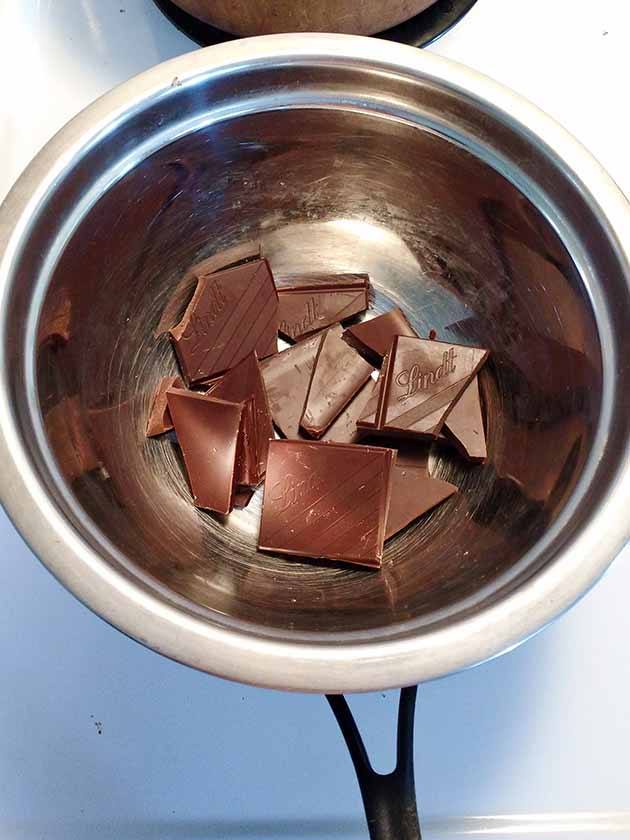
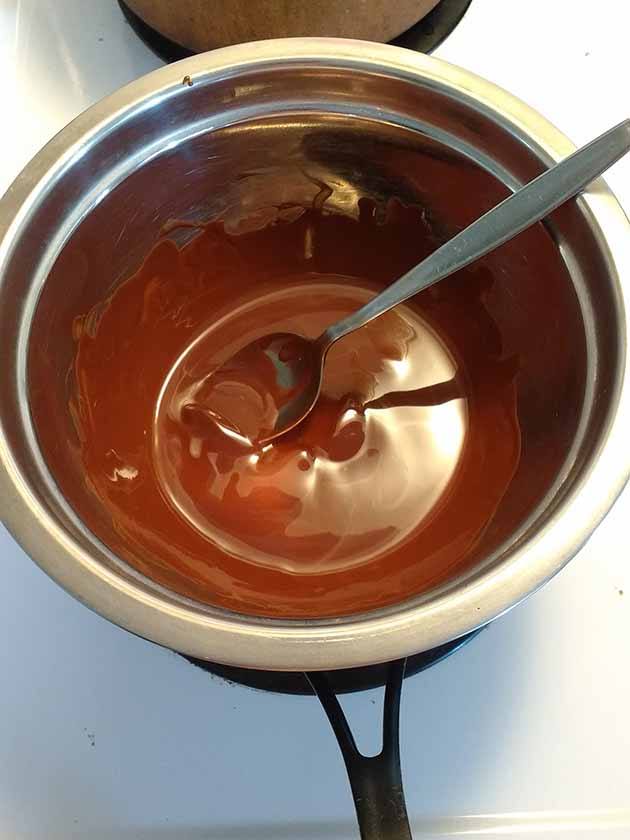
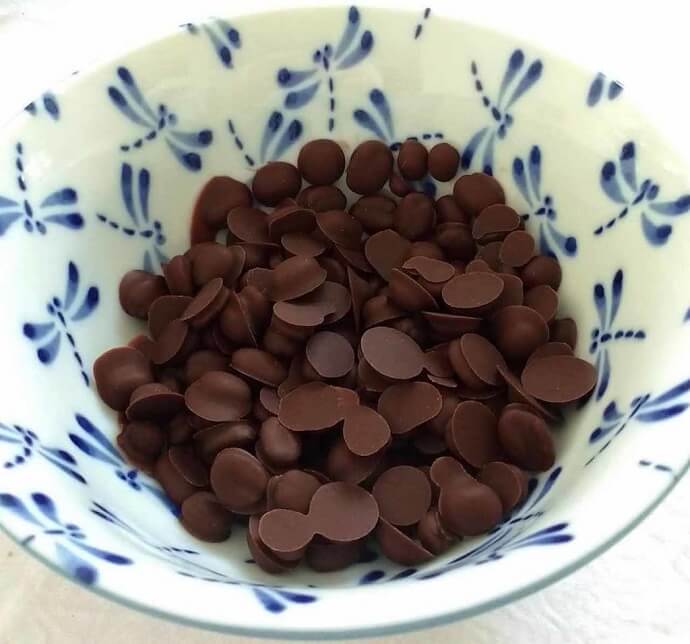
Melt the chocolate gently using a double boiler. Stir continuously until the chocolate is completely melted.
You can also melt chocolate in the microwave. Place the chocolate in a microwave-safe bowl and microwave in 30 second intervals, stirring in between, until it is fully melted.
PRO TIP: You can easily make your own double boiler by placing a glass or metal bowl over a saucepan of simmering water.
Step 2: Coat The Beans In Chocolate
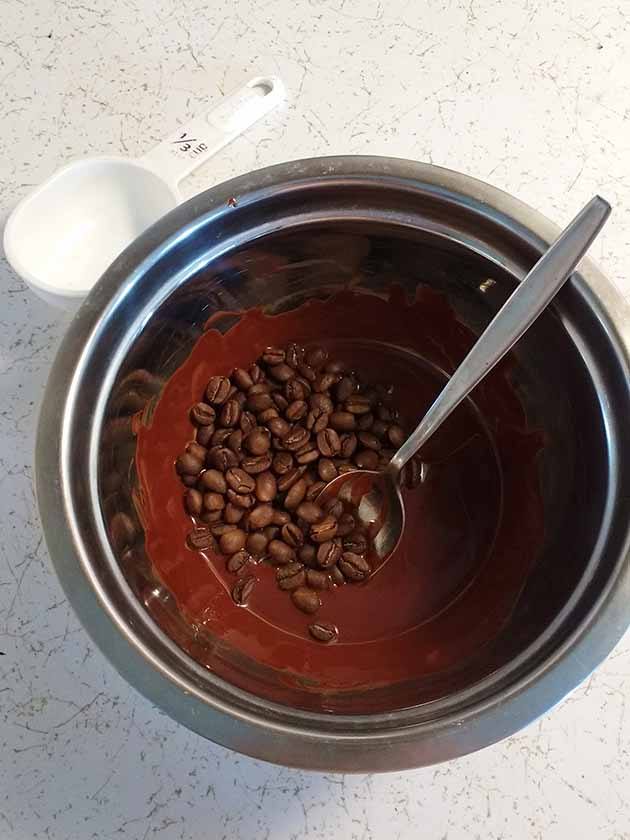
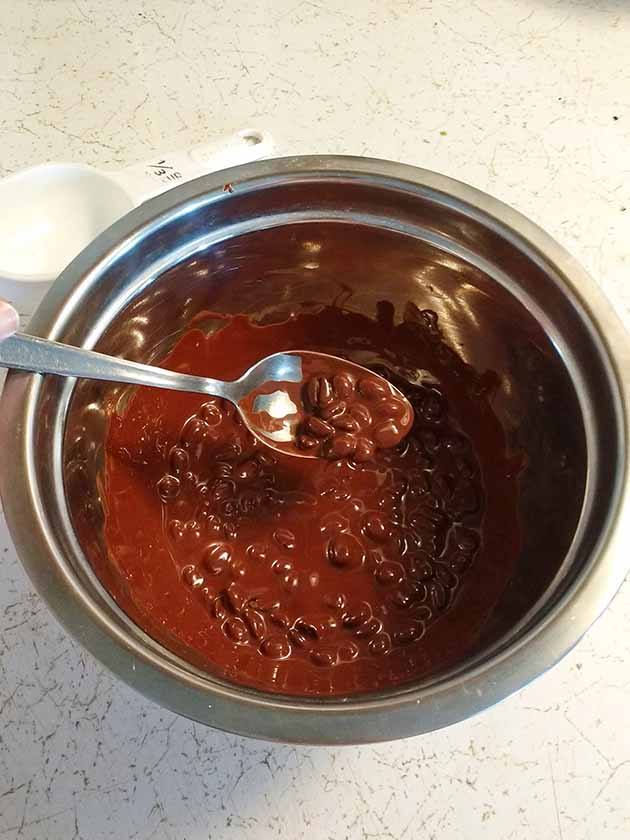
Remove the chocolate from the heat and add the coffee beans into the melted chocolate. Make sure each bean is completely coated and that none are clumped together.
PRO TIP: Wait a few minutes before continuing to the next step. Allowing the chocolate to cool a bit will cause it to thicken just enough to give the whole beans a heavier coating.
Step 3: Separate The Coffee Beans
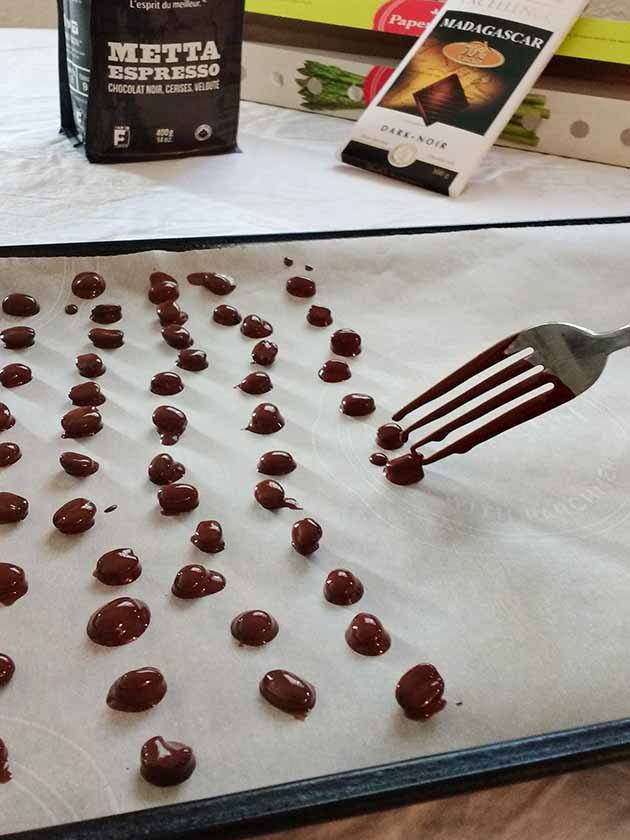
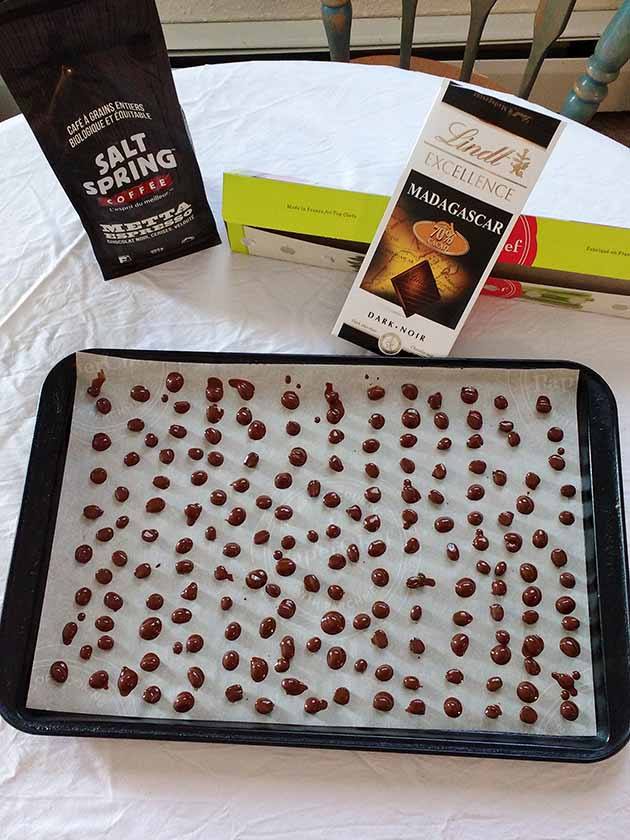
Using a fork, lift one bean at a time and allow the excess chocolate to drip off. Set the bean down on a baking sheet lined with parchment paper or wax paper.
This step is not difficult, but it can be tedious. Just remember that your efforts will be well rewarded.
If it’s taking a long time or you need a well-deserved break, your melted chocolate may start to firm up at room temperature. Just pop it back over the simmering water for a few seconds to melt it again.
PRO TIP: You can experiment with different toppings for your chocolate espresso beans while the chocolate is still soft. Try rolling in cocoa powder, sprinkling with chopped nuts, or drizzling with melted white chocolate.
Step 4: Chill The Beans
Put the beans in the fridge or freezer for at least an hour to let the chocolate set and the beans cool. Store in an airtight container in the fridge or freezer.
PRO TIP: If you’d like your beans to have a higher ratio of chocolate to coffee, simply repeat steps 1 through 4 as many times as you would like. You can even layer different types of chocolate.
Final Thoughts
These chocolate coffe beans are the perfect pick-me-up, whether you need to power up for a morning workout or power through an afternoon slump. They’re easy to make at home, and you can get creative with your choice of chocolate, coffee beans, and toppings to customize these tasty treats for any occasion.
Did you enjoy this recipe? Did you eat so many delectable chocolate coffee bites that you can hardly focus your eyes on these words? Take a deep breath, try and stop your hands from shaking, and let me know in the comments.
FAQs
Yes, chocolate-covered coffee beans have caffeine. There is roughly 6 to 12 milligrams of caffeine per chocolate bean, depending on your choice of coffee and chocolate. The caffeine content of a typical Arabica coffee bean is about 6 milligrams, while a Robusta bean contains roughly 11 mg (2). There is also caffeine in the chocolate; dark chocolate has more, while white chocolate has less.
Between 10 and 20 chocolate covered espresso beans have as much caffeine as an 8-ounce cup of brewed regular coffee. It is hard to be more precise because how the amount of caffeine can vary considerably depending on the roasted coffee beans you use, the choice of chocolate, or the brewing recipe.
You should not put chocolate-covered beans in your burr coffee grinder! If you want to grind them, use a blade grinder, where you at least won’t do any damage. But the best-case scenario is a grainy paste of chocolate and coffee, so I’m not sure why you would.
References
- Brown, H. (2020, March 17). What Are Peaberry Coffee Beans? The Myths & The Reality. Retrieved from https://perfectdailygrind.com/2020/03/what-are-peaberry-coffee-beans-the-myths-the-reality/
- The Roasters Pack. (n.d.). 10 Differences Between Robusta & Arabica Coffee. Retrieved from https://theroasterspack.com/blogs/news/15409365-10-differences-between-robusta-arabica-coffee
