
BODUM PEBO (SANTOS) REVIEW: A SIMPLIFIED SIPHON COFFEE MAKER
The Bodum Pebo is a simple and beautiful brewer that harnesses the power of science to make a bold and aromatic cup of coffee.
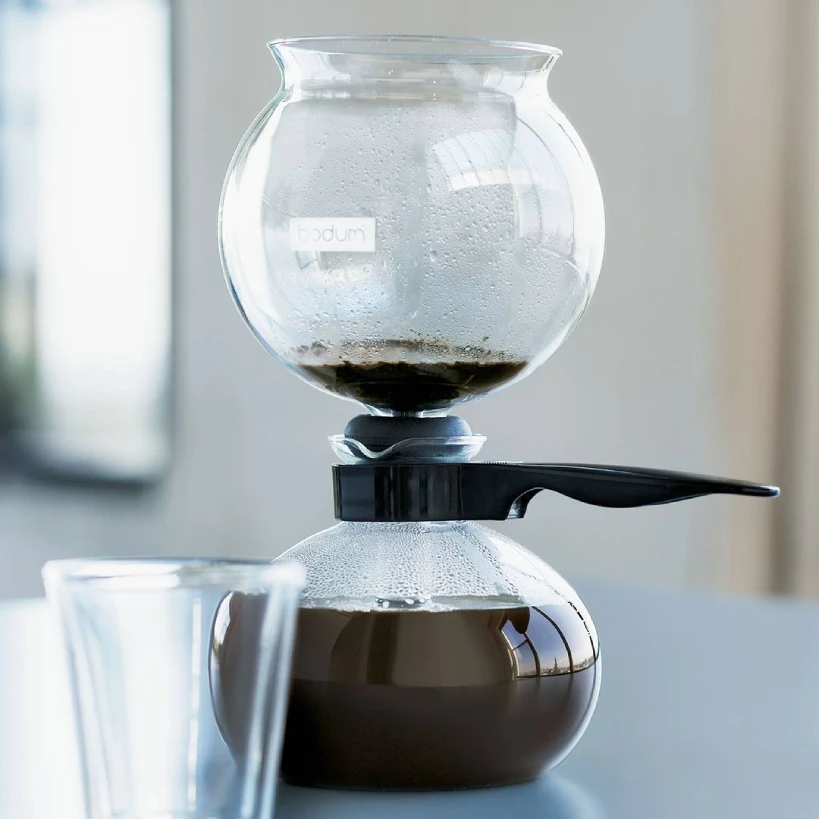
Making coffee with a siphon coffee maker, also known as a vacuum coffee maker, can be intimidating. Some of them look more like a science experiment than kitchen gear.
The Bodum Pebo reduces the siphon coffee maker to its bare essentials: two chambers with a filter between them. You can enjoy the wonderfully nuanced coffee of siphon brewing without feeling the need to don a lab coat.
I recently bought and tested the Bodum Pebo to bring you this hands-on review. Siphon brewers are notoriously finicky, and I was curious to see if this simple design could buck that trend.
What I Liked:
- Produces delicious bold yet clean coffee
- High-quality borosilicate glass
- Dishwasher safe and easy to clean
- Large 34-ounce capacity
What I Didn’t Like:
- Handle is a little awkward
- Plastic filter
- Requires constant attention while brewing
The Full Bodum Pebo Review
Previously known as the Bodum Santos, the Bodum Pebo vacuum coffee maker features a classic design, quality performance, and minimalist aesthetic.
How We Rated It
-
Brew Capacity
-
Ease of Use
-
Coffee Flavor
-
Build Quality
-
Value for Money
What Is The Bodum Pebo?
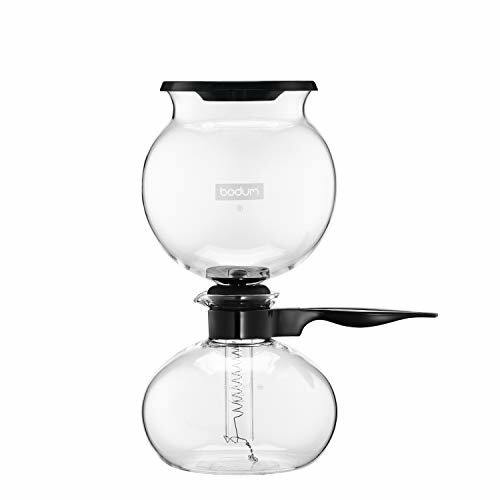
The Bodum Pebo is a vacuum coffee maker, which is also known as a siphon coffee brewer (1). It consists of two stacked glass chambers with a filter between them and a handle that extends out one side. During brewing, a vacuum forms in the lower chamber, which sucks the brewed coffee through the filter in order to separate it from the grounds – hence the name.
The vacuum pot, also called the siphon, is a beautiful and flashy way to make great coffee…This brew method can be rather finicky, but with some practice can certainly be mastered.
The Pebo is a stovetop model, which means that it doesn’t include a heat source or require an electrical socket. Rather, you fill the bottom chamber with water, add ground coffee to the top half, and set it on a gas or electric burner. The preparation is similar to a Moka pot, though the brewing details are unique.
A Simple Design With Quality Materials
The Bodum brand is well-known for high-quality borosilicate glassware. If your kitchen already includes other Bodum products, like their classic French press, you know what I mean. The Pebo is no exception.
The two chambers are built beautifully and have a smooth and tight fit, which is crucial to maintain a vacuum (2).
I never had any problems with leaks, cracks, or chips. However, even durable borosilicate glass is still glass; it will definitely break if you drop it.
The handle extends far enough that it stays cool during use, even with a pretty high-flame gas stove. That said, it feels like it was designed a bit more for form than function. I like its sleek look, but I think something a bit thicker, perhaps coated in cork or wood, would be more comfortable.
A Plastic Filter: Yay Or Nay
Most siphon coffee makers use a cloth or glass filter (the latter of which is known as a Corey Rod). The Pebo uses a plastic filter, which understandably will be a deal-breaker for some buyers.
Of course, it has been tested and certified safe, but I totally understand the desire to avoid plastic when it comes to hot food and drink prep (3). Frustrating, there doesn’t even seem to be an option to buy an aftermarket cloth filter to replace it.
On the other hand, plastic has definite advantages. It is easier to use, more durable, and easier to clean than cloth, glass, or paper filters. If you do break it or lose it, you can easily buy a replacement filter from Boum or other third-party sellers.
How To Use The Bodum Pebo
Brewing with the Bodum Pebo is more straightforward than most siphon coffee makers, but that still makes it trickier than a typical automatic coffee machine. You can muddle your way through and get decent coffee, the best siphon brew requires a bit of attention to detail.
- Attach the filter to the upper (brew) chamber by clipping it to the bottom of the tube extending from the brew chamber.
- Fill the lower carafe with 34 ounces of water. If you have a kettle handy, I suggest using already hot water. It speeds up the brewing process, which is convenient and avoids the risk of burnt-tasting coffee.
- Ensure that the exterior of the carafe is completely dry and set it on the stovetop over medium heat.
- Set the brewing chamber atop the carafe, and add 50 grams of medium-fine ground coffee.
- As the water in the bottom carafe begins to boil, the upper brew chamber will begin to fill. Lower the heat.
- Once all the water and ground coffee are in the upper chamber, remove the brewer from the heat. A vacuum will form in the lower chamber, sucking the brewed coffee back through the filter.
The whole process should take about 10 minutes – less if you’re brewing a smaller volume.
How Much Coffee Can You Make With The Bodum Pebo?
The Pebo has a 34-ounce capacity (1 liter), which is the same as a standard French press. Coffee brands generally refer to this as an 8-cup brewer, but keep in mind that those are fairly small cups – not standard baking cups. In my experience, the Pebo makes enough to serve four people.
You don’t need to brew the maximum amount, but I wouldn’t go any less than half full, which makes 16 ounces.
What Heat Sources Are Suitable?
The Pebo works best with a small gas burner like a Bunsen burner or camp stove, but I found it worked just fine on my electric cooktop. You can also use it on a standard home gas range, but Bodum recommends adding a heat diffuser for safety. Alas, it doesn’t work with induction stoves.
Cleaning And Maintenance Needs
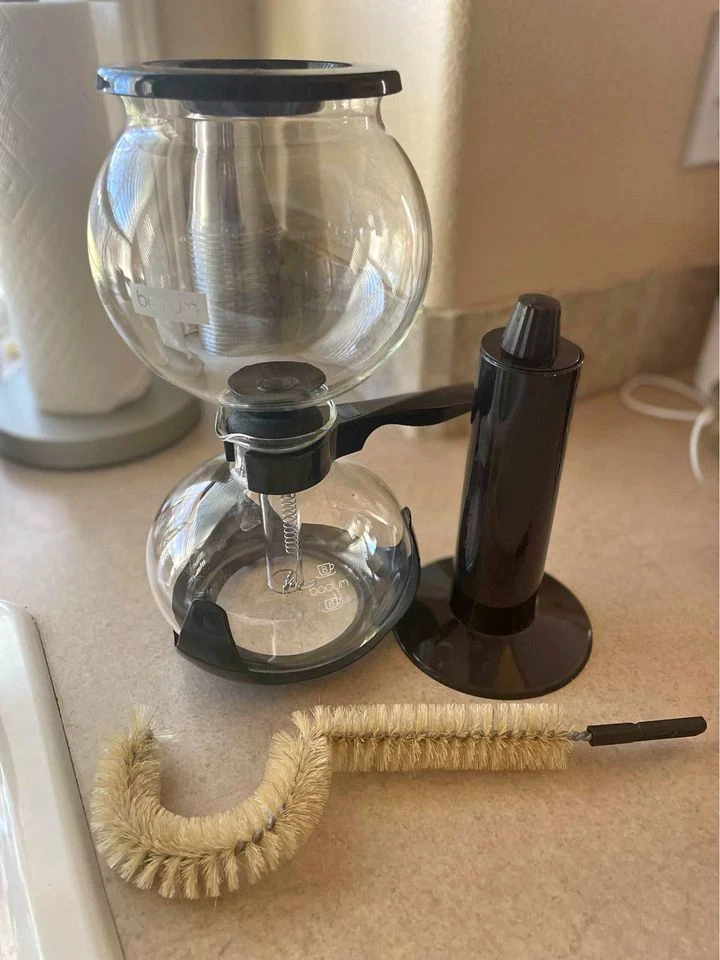
The Bodum Pebo is the easiest siphon coffee maker to clean out of all the ones I’ve tested. The glass parts are dishwasher safe, and the plastic filter easily trumps cloth or stainless steel filters, which tend to retain bits of old grounds.
How Does Vacuum-Brewed Coffee Taste?
The best coffee I brewed with the Bodum Pebo was complex, with a bold flavor, bright acidity, and a clean body. It had a noticeably powerful aroma compared to other brewing methods.
I found that the plastic filter resulted in a slightly fuller-bodied cup than siphon coffee makers I’ve tested with cloth filters.
Just as with a Moka pot or other brewing methods that use direct stovetop heat, there is a risk of producing burnt-tasting or bitter coffee. That’s why it’s important to use hot water to start, to lower the heat as soon as it starts boiling, and to take the brewer off the heat while it steeps. These measures all help avoid “overcooking” your coffee.
Is The Bodum Pebo Worth Its Price?
The Bodum Pebo costs around $100, which is kind of middle of the road among siphon brewers. Vacuum brewing, in general, isn’t one of the cheapest ways to make coffee as you’re paying for quality glassware with tight tolerances. This style of coffee maker tends to range between $50 and $150.
That said, the Bodum Pebo strikes me as a bit overpriced, given that it doesn’t include a heat source. Others at this price point are electric or have built-in alcohol burners. However, it does benefit from Bodum’s excellent customer service and a one-year warranty.
Don’t Buy The Bodum Pebo If…
- You want a showpiece as much as a coffee maker: One reason to choose a siphon coffee maker is for its lovely clean brews. Another is showmanship. If you want to impress your guests or indulge your inner mad scientist, there are some showy options to be had. Check out any Belgian Balance Siphon Coffee Maker, for example. I like the one from NSPIRA, but they all have the same funky and complex design.
- You don’t want a plastic filter: If you can’t wrap your head around a plastic coffee filter, the Hario Technica is a great alternative. Like Bodum, Hario is world-renowned for its quality glass. The Technica uses a cloth filter and even includes a small burner – at the same price.
- Siphon coffee is too much work: Siphon brewing is one of the slower and more involved ways to make coffee. If you want the same style of coffee without the challenge, I’ve found that the Clever Dripper and the Aeropress both deliver a similar bold-flavored but clean brew.
The Verdict
Bodum is known for its elegant glassware, and this siphon coffee maker is no exception. The Bodum Pebo is elegant in both form and function, delivering exceptionally flavorful and aromatic coffee from its sleek glass body. The included plastic filter might disappoint some coffee lovers, but it performs well and will withstand the test of time better than the alternatives.
References
- Jones, J. (2015, October 9). Syphon: The History & Brewing Guide. Retrieved from https://perfectdailygrind.com/2015/10/vacpot-syphon-the-history-brewing-guide/
- National Physical Laboratory. (n.d.). What is the scientific definition of a vacuum? Retrieved from https://www.npl.co.uk/resources/q-a/what-is-a-vacuum
- Cancer Council. (2023, October 20). It’s safe to drink water out of plastic bottles without a risk of cancer. Retrieved from https://www.cancer.org.au/iheard/does-drinking-water-from-plastic-drink-bottles-cause-cancer
