
BEST COSTA RICAN COFFEE IN 2024: OUR EXPERT’S TOP PICKS
Costa Rica is known for producing consistently high-quality Arabica beans with compelling flavors of chocolate and ripe fruit. In fact, some say Costa Rican coffees have the finest flavor profiles in the world.
AT A GLANCE
- BEST OVERALL: Volcanica Costa Rica Geisha
- RUNNER UP: Coffee Bros Costa Rica Aquiares Estate
- FOR COLD BREW LOVERS: Oren’s Costa Rica La Minita
Personally, I love Costa Rican coffees for their broad appeal. They’re crowd-pleasers, perfect whether I’m serving a specialty coffee geek or a coffee newbie. Today, I’m sharing six Costa Rican coffee beans I’ve enjoyed so far this year.
The 6 Best Costa Rican Coffees Of 2026
| IMAGE | PRODUCT | DETAILS | |
|---|---|---|---|

|
Volcanica Costa Rica Geisha Coffee |
|
|
|
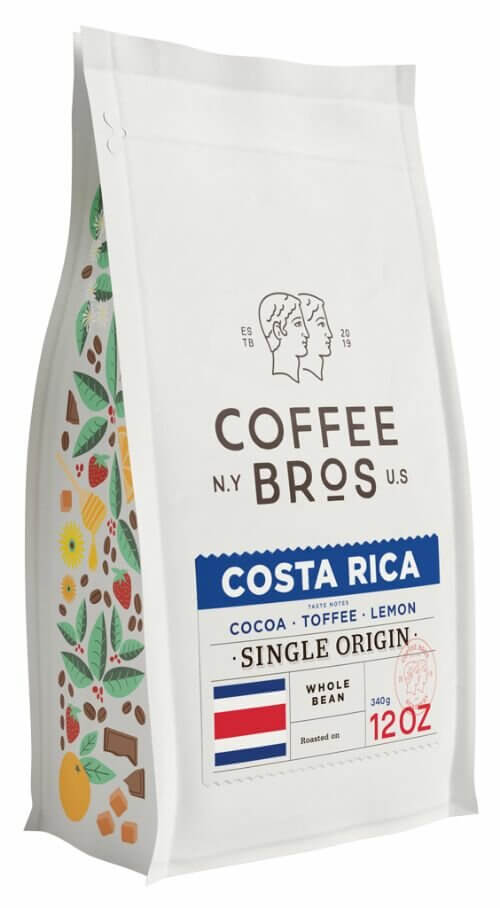
Coffee Bros. Costa Rica Aquiares Estate |
|
|
|
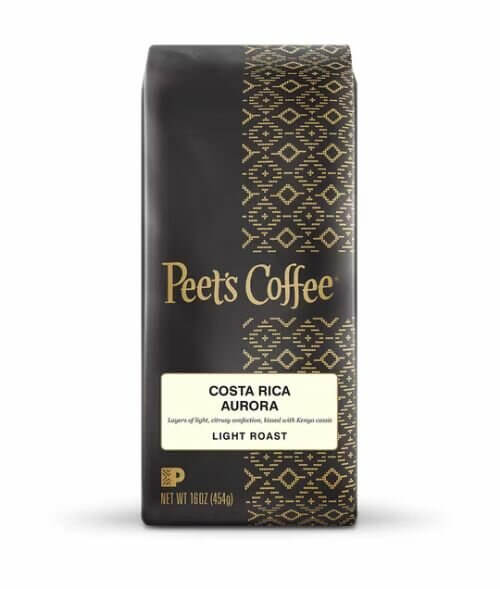
Peet’s Costa Rica Aurora |
|
|
|
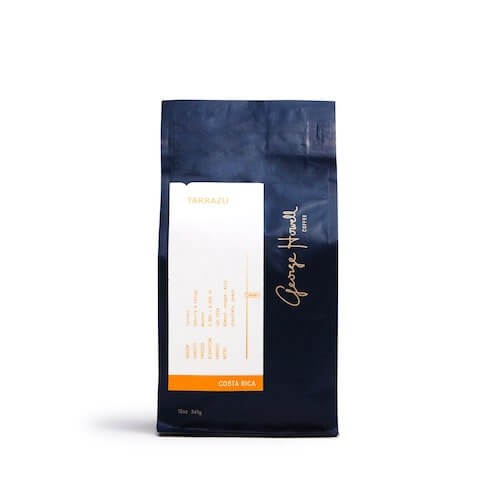
George Howell Dota |
|
|
|
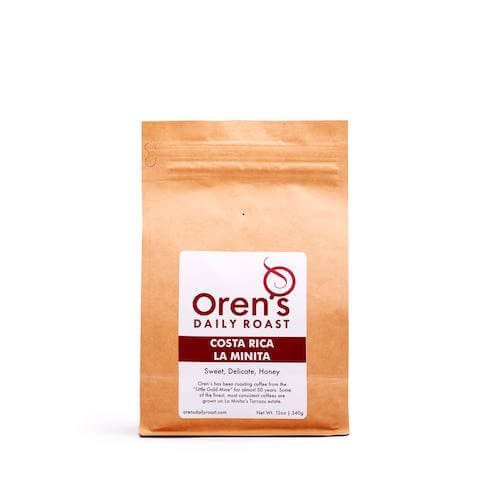
Oren’s Costa Rica La Minita |
|
|
|
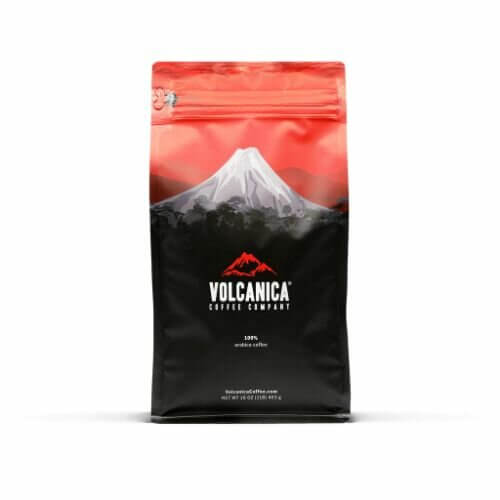
Volcanica Costa Rica |
|



Too much incredible coffee comes out of Costa Rica for me to try it all, so I’d be doing you a disservice to say this list has every Costa Rican bean worth sampling. But here are six brews I’ve enjoyed recently, all from reliably high-quality coffee roasters.
1. Volcanica Costa Rica Geisha Coffee
Roast level: Light-Medium
- Tasting notes: Sweet, Citric, Apple, Floral
- Processing: Natural
- Beans: Ground and whole
This Costa Rican Geisha coffee from Volcanica was an easy choice for my top pick; it knocked my socks off.
Costa Rica isn’t as well known for Geisha as Panama or Colombia, but I hope that changes because this coffee is stunning!
I tasted the citrus and floral complexity I expected from the varietal, with notes of lavender, cocoa, and green apple. But thanks to the natural processing, it was backed by an earthy depth I wasn’t anticipating – a richness that reminded me of molasses.
This is a microlot coffee, and its rarity makes it pricier than average, but in my opinion, it’s well worth the splurge. The quality and attention to detail in its growth and processing are evident in the cup. And to be fair, it’s still cheaper than most other Geisha coffee beans I’ve sampled.
Interestingly, Volcanica notes that this coffee has 30% less caffeine than the typical Arabica bean. So it’s a great choice for an afternoon sipper or for anyone prone to the jitters.
2. Coffee Bros. Costa Rica Aquiares Estate
Roast level: Medium
- Tasting notes: Caramel, Peach, Raspberry, Roasted Hazelnut
- Processing: Red Honey
- Beans: Whole bean
Coffee Bros. is a relatively new roaster that has quickly made a name for itself thanks to impeccable sourcing. I have yet to try a Coffee Bros coffee I didn’t enjoy. They focus on microlot coffees and seem to have a knack for tracking down the best lots in a given season.
The current Costa Rican offering comes from one of the country’s oldest and largest coffee farms, the Aquiares Estate, founded in 1890. I want to highlight it because it is red honey processed, a method that is common in Costa Rica but rare elsewhere – making this gourmet coffee a perfect showcase of what makes the region so special.
This is a wonderfully sweet and well-balanced single-origin coffee with bright flavors of caramel, ripe fruit, and toasted nuts. It’s impressively versatile. I typically brew it with my Hario W60 and drink it black, but I’ve also enjoyed some delicious and unusual espresso-based drinks. It will definitely be my go-to for iced Americanos this summer.
3. Peet’s Costa Rica Aurora
Roast level: Dark
- Tasting notes: Lemon Pie, Cocoa, Panela
- Certifications: Washed
- Beans: Ground or whole
This coffee surprised me in the best possible way. I typically don’t favor dark roasts for single origins because too much of the origin character is buried in the roast. But sometimes the exception proves the rule. This incredible dark roast coffee from Peet’s has the Costa Rican character turned up to 11.
Rather than losing the citrus acidity in the long roast, it’s amplified to a flavor note I can only describe as lemon curd. This is mellowed by a dark caramel sweetness and backed by a dry cocoa finish. This coffee feels like it went to the dessert buffet and loaded its plate.
Longtime dark roast fans will appreciate the bold flavor, heavy body, and rich mouthfeel of Peet’s Costa Rica Coffee, but I think light roast lovers will be equally impressed by its nuance. It’s delicious prepared as an espresso shot, Chemex brew, or (my pro tip) an unusual and exciting latte.
4. George Howell Dota
Roast level: Medium
- Tasting notes: Dark Chocolate, Cherry, Orange
- Processing: Washed
- Beans: Whole beans

These are the beans I’d brew if someone asked me what Costa Rica’s coffee tastes like. This medium roast perfectly demonstrates the country’s characteristic fruit and chocolate flavors.
Interestingly, these beans are sourced from the lesser-known Dota region in Costa Rica, which borders the far more famous Tarrazú. Dota coffee farms are smaller and often managed by a single family. George Howell claims the region produces Costa Rica’s finest beans, and while I’m sure there is room for debate, this high quality coffee certainly helps their case.
This is a wonderfully smooth and clean-tasting brew, with every flavor in perfect balance. I noted gently bitter dark chocolate, sweet stone fruit, and a subtle orange zest acidity. That balance makes it versatile enough for various brewing methods, but I’d recommend starting with a pour over brew for the full flavor experience.
5. Oren’s Costa Rica La Minita
Roast level: Medium
- Tasting notes: Milk Chocolate, Honey, Plum
- Processing: Natural
- Beans: Ground and whole
Cold brewing naturally yields a smooth and mild coffee with muted acidity, so I like to start with flavorful and full-bodied beans. This naturally processed coffee from Oren’s is ideal, with tons of sweetness and complexity that really shines when brewed cold. It’s a refreshing staple in my summer drink roster.
The La Minita coffee plantation is located in Costa Rica’s most prominent growing region, Tarrazu. Oren has been working with the farm directly for over 30 years, and that long relationship is apparent in the quality of this coffee.
It’s an easy-drinking medium roast coffee, whether brewed hot or cold. I tasted the expected notes of milk chocolate, but it was the fruity sweetness of honey and plums that kept me coming back. It has a long finish and a bright acidity that keeps your tastebuds engaged.
Note that if you need to buy pre-ground coffee, Trade offers various grind sizes for these beans, including an extra-coarse grind specifically for cold brew.
6. Volcanica Costa Rica
Roast level: Medium
- Tasting notes: Apricot, Citrus, Tropical Fruit
- Processing: Washed
- Beans: Ground and whole
Costa Rican coffee is never cheap (or if it is, it probably isn’t very good), but that doesn’t mean you need to totally blow your caffeination budget to sample some of the country’s premium beans. These single-estate Costa Rica Original beans from Volcanica are well within reach.
They are officially certified as Tarrazu beans – something worth looking for when you’re shopping on a budget. Because that coffee growing region has become so renowned, many exporters are trying to pass off lower-quality blends as Tarrazu beans. Spare yourself that disappointment by paying a tad more for the real thing from Volcanica.
Tarrazu’s famous high-elevation farms yield complex and pleasantly acidic coffees. I found this medium roast to be bright an juicy, definitely closer to the lighter end of medium. I enjoyed it most brewed with my Hario W60, which yielded a sweet and subtle brew with flavors of apricot, orange zest, and passionfruit. For more of a flavor punch, try it with an Aeropress or Clever Dripper.
How To Choose The Best Costa Rican Coffee
Costa Rica is renowned for gourmet Arabica coffee, thanks to a directive from the Costa Rican government that banned the growing of lower-quality Robusta for decades (1). Fortunately, the country’s terrain and climate are ideal for specialty Arabica beans (2).
With its volcanic soil, high altitudes, and good climate, the coffee here is high quality with good acidity.
As a result, most single-origin coffee grown in Costa Rica is excellent quality. All you need to do is find a quality roaster and a flavor profile you enjoy. And I can help you with that!
Roast Levels, Processing Methods, And Flavor Profiles
Coffee from Costa Rica is diverse. With its multitude of growing regions, microclimates, and small farms, the country grows coffee to suit any preference.
Most roasters opt for a light to medium roast to showcase the unique characteristics of coffee from the region, though you’ll also find some lovely darker roasts.
Here is a rough guideline to help you decide which roast level suits your tastes:
- Light roast Costa Rica coffees taste very clean and have a sweet, mild acidity. Typical flavor notes include honey, florals, and ripe fruits. I like brewing lighter roasts with a pour-over dripper and paper filter to highlight their clean complexity.
- Medium roasts have a fuller body, lower acidity, and pleasant caramelized sweetness, often with tasting notes of fruit, cocoa, and nuts. They are the most versatile when it comes to brewing methods, suitable for espresso, drip coffee, and immersion brewing.
- Dark roast Costa Rican beans are smooth, sweet, and richly flavorful. They are full-bodied and usually include flavors of toasted nuts, dark chocolate, and molasses. The acidity is muted and fruity. They make stunning single-origin espresso shots, thanks to a natural balance that’s almost reminiscent of a blend.
How Processing Impacts Flavor
It’s impossible to talk about Costa Rican coffee production without talking about processing. Processing turns a coffee cherry into a dry green coffee bean ready for roasting, and it can have a huge impact on the coffee’s flavor.
Worldwide, the two most common forms of processing are dry (natural) and wet (washed). I won’t go into detail here, but in short, dry-processed coffees tend to be sweeter, juicier, and funkier, while wet-processed coffees are cleaner, brighter, and crisper.
Costa Rica is home to honey processing, a third method that splits the difference between wet and dry. Honey-processed coffees combine the fruity complexity of naturals with the clean consistency of washed beans. They are well worth seeking out for a true taste of the country.
Whole Beans Or Pre-Ground?
I always recommend buying whole bean coffee and grinding it yourself with a burr grinder. This is even more important when buying single-origin coffees, which tend to have more complex and subtle flavor notes.
As soon as coffee is ground, it begins to lose flavor and go stale. Soon, your unique Costa Rican microlot tastes as one-note as the blend from the grocery store.
This is a particular concern when buying coffee online because the shipping time adds to the delay between grinding and brewing. However, if you don’t have access to a good burr grinder and must buy pre-ground coffee, here are a few things to keep in mind.
First, ensure you buy the correct grind size for your brewing method. That means coarse for French press, medium for drip coffee, and fine for espresso. Not all brands offer grind size options, so shop around if you need to.
Second, look for companies that roast and grind coffee to order and offer fast shipping. This ensures that your coffee doesn’t have much time to lose flavor before it reaches you.
Take Certifications With A Grain Of Salt.
Coffee industry certifications are a useful way of gauging the environmental and socioeconomic impact of the coffee you’re drinking (3).
I would never discourage you from looking for Organic, Rainforest Alliance, or Fairtrade-certified coffees. That said, an increasing number of coffee certifications these days confuse consumers. Any advocacy group can create a certificate with criteria and enforcement of their choosing.
Some of the best coffee in Costa Rica is grown on small family farms. These farms use responsible growing practices and treat their workers (sometimes just family members) fairly, but they lack the connections and finances to get officially certified.
When shopping for Costa Rican coffee, look for certifications that match your values. But I suggest also looking for details about the coffee producer and growing region. Don’t immediately discount a brand just because it doesn’t say “organic” on the label.
The Verdict
Thanks to ideal growing conditions and solid infrastructure, Costa Rican coffee beans are finding their rightful place among the best in the world. They charm coffee drinkers with their bright acidity and sweet flavors.
For an authentic taste of the country, my favorite this year is the Costa Rica Geisha from Volcanica. This delicious coffee is both balanced and exciting, a combination I’m confident you’ll love as much as I did!
FAQs
Costa Ricans make their coffee using a chorreador, a brewing device unique to the country. It’s a simple cloth filter that you suspend from a wireframe over a waiting mug. It yields a strong cup similar to drip coffee. Most Costa Ricans then add milk and sugar (4).
Costa Rican coffee is no more expensive than most premium coffee, in my experience. Its high price is commensurate with its quality. Costa Rica produces exclusively Arabica coffee beans, most of which have been hand-picked and sorted. The price reflects the fact that coffee farmers deserve a fair wage and consumers are willing to pay more for a gourmet product.
It is impossible to define the country with the best coffee in the world. The coffee experience is influenced not just by the origin but also by the roaster, the barista, and the tastebuds of the coffee drinker. However, there is a strong case to be made for Ethiopia, the homeland of Arabica coffee.
References
- Pretel, E.A. (2018, February 9). Exclusive: Costa Rica to lift 30-year ban on planting robusta coffee trees. Retrieved from https://www.reuters.com/article/idUSKBN1FT2UH/?edition-redirect=ca
- Mendez, X. (2017, November 29). The Story Behind Costa Rica’s Disappearing Coffee Farms. Retrieved from https://perfectdailygrind.com/2017/11/the-story-behind-costa-ricas-disappearing-coffee-farms/
- Bradley, E. (2017, August 10). Coffee Certifications. Retrieved from https://freshcup.com/coffee-certifications/
- Metcalf, H. (2015). 8 Things You Never Knew About Costa Rican Coffee. Retrieved from https://www.contiki.com/six-two/article/8-things-never-knew-costa-rican-coffee/
