
9 BEST COMMERCIAL ESPRESSO MACHINES FOR YOUR COFFEE SHOP
The espresso machine can easily be the focal point of your cafe, so choose wisely!
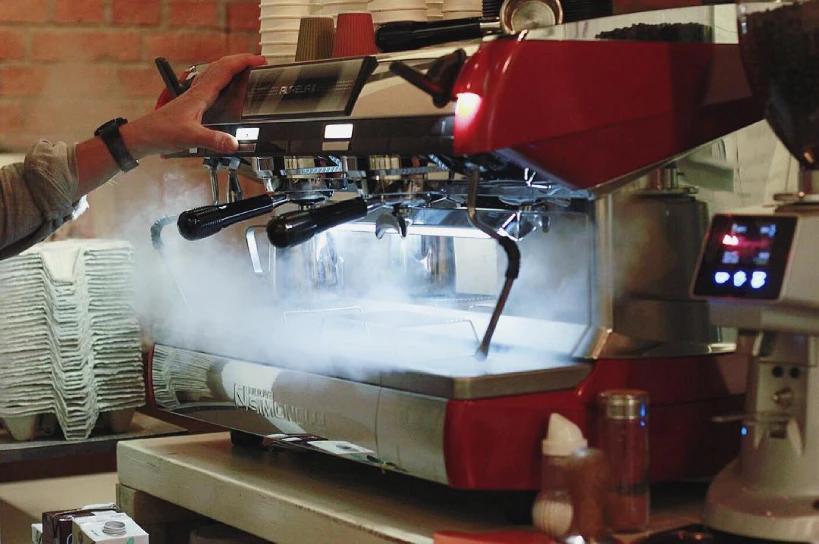
Imagine a bustling cafe with a steady influx of customers, the gentle murmur of conversation, and the wafting aroma of freshly brewed coffee. This is what small coffee shop dreams are made of, and you’ve decided to bring this vision to life by opening your own.
As an intelligent coffee business owner, you know that investing in superior hardware is crucial to earning more revenue – not to mention keeping staff and customers happy.
You’ve done the research. You know your requirements and budget. Now, you just want an overview of the best commercial espresso machines from someone who’s tried and tested them all. So let’s dive in.
At A Glance:
- TOP PICK:La Marzocco Strada AV
- GREAT VALUE:La Spaziale S2 EK Spazio
- BEST FOR SPECIALTY CAFES:Slayer Steam LP
The Best Commercial Espresso Machines In 2026
A casual search for commercial espresso machines can leave you inundated with hundreds of options. It’s more than a little overwhelming. That’s why I’ve shortlisted some of the best available in 2026:
| image | product | details | |
|---|---|---|---|
|
La Marzocco Strada AV |
|
|
|
Victoria Arduino Black Eagle 3-Group |
|
|
|
Synesso MVP Hydra 2-Group |
|
|
|
La Marzocco Linea Mini |
|
|
|
Slayer Steam LP 2-Group |
|
|
|
Nuova Simonelli Appia Life 1-Group |
|
|
|
La Spaziale S2 EK Spazio 2-Group |
|
|
|
Nuova Simonelli Aurelia Wave Volumetric 2-Group |
|
|
|
Bezzera Magica |
|




Which espresso machine you buy depends on the needs of your café and your priorities. To help you make this critical decision, here’s a quick review of each machine listed above:
There are many commercial machines to choose from. Which espresso machine you end up buying depends on the needs of your business and your personal preference. So to help you make this critical decision, here’s a review of each machine listed above:
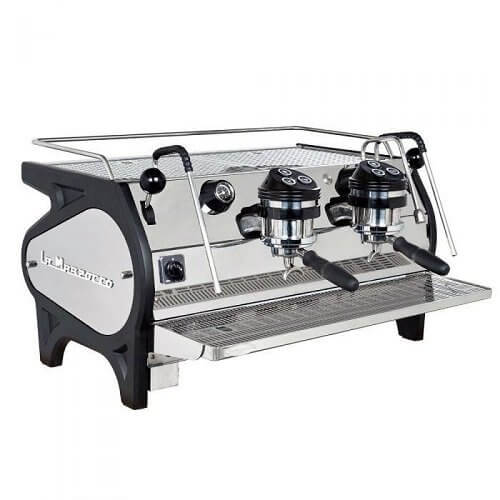
1. La Marzocco Strada AV
-
Brew boiler size: 1.3 L per group
- Steam boiler size: 8.2 L
- Groups: 2 or 3
- Operation: Auto Volumetric
The La Marzocco Strada is a legend among commercial espresso machines. It was the first designed using feedback from baristas and industry professionals, and it has continued to evolve to meet the needs of that demographic.
There are four models available, each with a different degree of control for the barista. I’m partial to the Auto Volumetric for high-volume settings where consistency is paramount, but you might opt for something less automated and more affordable for smaller cafes.
The Strada uses La Marzocco’s famous saturated groups (instead of the more common E61), which provide a noticeable improvement in temperature stability, albeit at a premium price point. Each group has an individual brew boiler whose temperature can be set independently using a PID controller — ideal when pulling shots with different roasts on the same machine.
The groups are nicely exposed, which as a barista, I’ve always appreciated for the better ergonomics and visibility.
You’ll also find the new Performance Touch steam wand on the Strata. It uses a steel rather than plastic inner wall, so you get perfect dry steam AND a cool-to-the-touch wand.
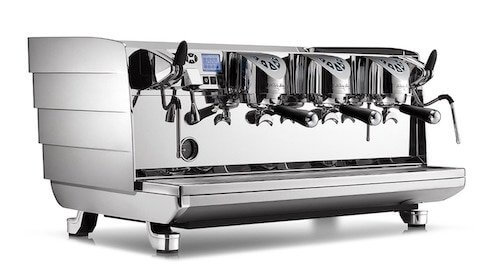
2. Victoria Arduino Black Eagle 3-Group
-
Brew boiler size: 0.7 L per group
- Steam boiler size: 18 L
- Groups: 2 or 3
- Operation: Auto Gravimetric
If your coffee shop’s line snakes out the door every morning, an espresso machine designed to handle the load will pay dividends — both in happy customers and baristas. For this, you can’t beat the Victoria Arduino Black Eagle.
Its most notable feature is the programmable gravimetric dosing using scales built into the drip tray. Combined with a soft pre-infusion system, this leads to incredible shot-to-shot consistency, even in a hectic environment.
A TFT screen atop each group gives access to all the programming. Like the Victoria Arduino Eagle One, the Black Eagle uses the T3 system. It lets baristas control the temperatures of individual brew groups, steam, and water infusion while providing constant real-time feedback.
A vital aspect of a high-volume machine is ergonomics. Barista comfort is paramount when preparing hundreds of drinks a day. The Black Eagle absolutely impressed me in this category. The steam wands have been updated with more ergonomic levers, and the back plate is polished with a mirror finish, so you can watch shots from below without bending over.
In keeping with current trends, the latest model is greener as well. The interior is better insulated to avoid energy loss, and the premium materials used are all recyclable.
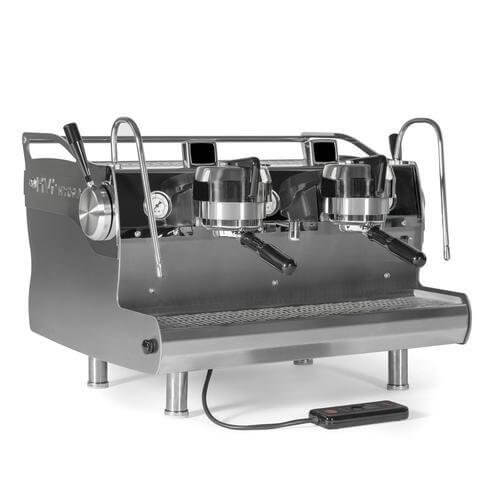
3. Synesso MVP Hydra 2-Group
-
Brew boiler size: 1.9 L per group
- Steam boiler size: 7.7 L
- Groups: 1, 2 or 3
- Operation: Manual, Manual Program, or Volumetric Program
Synesso espresso machines are hand-crafted in Seattle, which has become a hub for specialty coffee and espresso machine innovation. The MVP Hydra is a showcase of that innovation and, in my opinion, a perfect choice for your mid-sized cafe.
The Hydra is the latest update in the immensely successful MVP line. In this case, MVP stands for Manual or Volumetric Program, but Most Valuable Player would be just as true.
Synesso machines are renowned for their degree of programmability, and the Hydra takes this to the next level.
You can program six brew modes per group, along with the temperature of the boilers and hot water tap, and each includes a digital shot timer.
New to this model is the ability to fine-tune your recipe by adjusting pressure. Each group acts like an individual espresso machine, and a unique bypass system allows you to adjust the flow rate during each stage of the shot. It gives espresso geeks like me near limitless variables to tinker in the quest for the perfect brew!
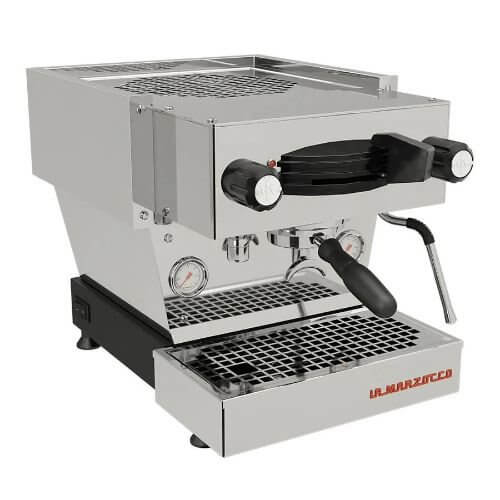
4. La Marzocco Linea Mini
-
Brew boiler size: 0.6 L
- Steam boiler size: 3.5 L
- Groups: 1
- Operation: Semi-automatic Paddle
The Linea Mini, modeled after the iconic Linea, has been a top seller for La Marzocco since its release. Admittedly, this is partly due to its cool aesthetic. But it also perfectly rides the line between commercial and home use, appealing to small businesses and avid home users alike.
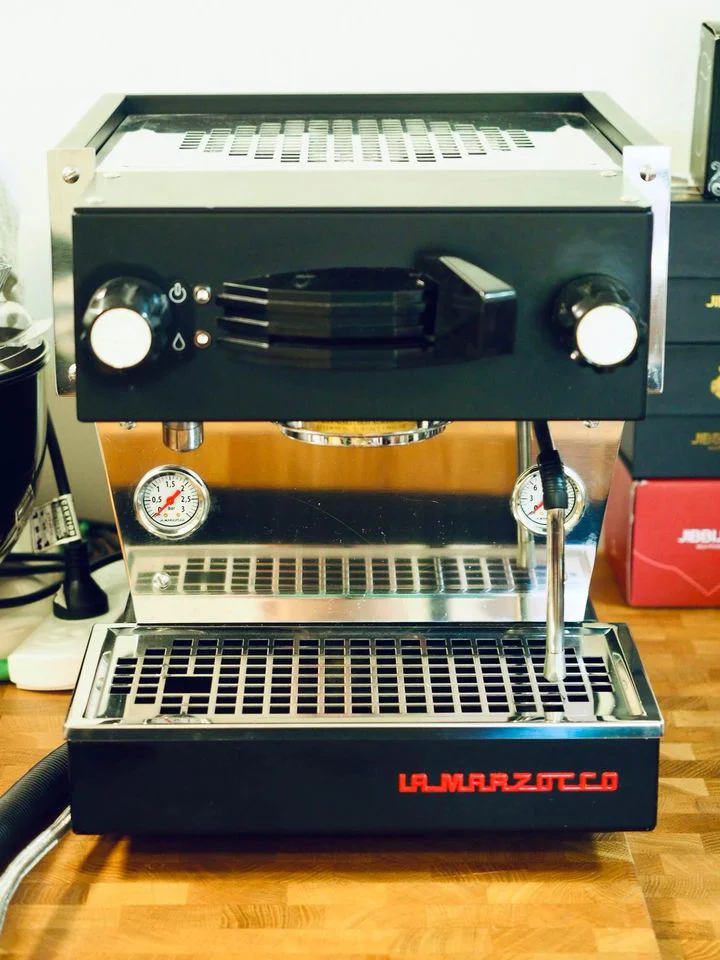
It lacks the programmability of the bigger commercial models, but I actually like the simple user interface. The brew paddle acts solely as an on-off switch, with the pre-infusion pre-programmed, which is nice for consistency and workflow efficiency.
That said, if you’d prefer more control, check out La Marzocco’s next model up, the GS3.
The steaming power is one thing that sets the Linea Mini apart from other home machines, making it a great choice in a commercial setting. This double boiler machine has a small brew boiler, at just 0.6 liters, but that extra space is occupied by the 3.5-liter steam boiler. With some practice, I was churning out lattes in under 30 seconds.
The Linea Mini has a unique integrated group, an innovation that allows for the same temperature stability as La Marzocco’s saturated group but in a more compact frame. The temperature is set using a stepped wheel, which I must say feels a little clunky compared to a digital display.
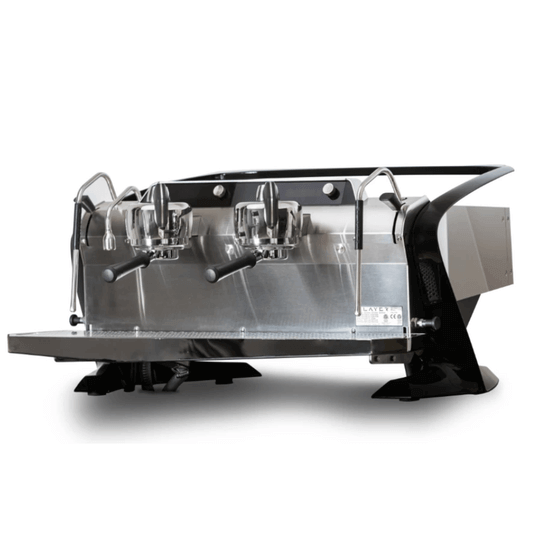
5. Slayer Steam LP 2-Group
-
Brew boiler size: 1.7 L per group
- Steam boiler size: 7.4 L
- Groups: 2 or 3
- Operation: Manual or Volumetric
A third wave coffee shop is basically an anti-Starbucks, a place for tasting specialty coffee beans brewed to showcase their unique qualities. If that’s the shop you want to run, then Slayer is a brand you need to know.
Slayer first made waves with their patented flow profiling technology. By using a needle valve for an ultra-slow pre-infusion, beans can be ground finer and flavor extraction maximized. With the Slayer Steam, that technology is paired with an equally exciting innovation in milk steaming.
Slayer developed a proprietary vaporizer that lies between the steam boiler and steam wand and produces hotter, drier steam.
The difference was immediately apparent in testing, and I noticed even more improvement when frothing plant-based milk. The steam wands also use electronic solenoid valves, which are more responsive, efficient, and durable than mechanical valves.
Slayer machines are renowned for impeccable style. Yes, quality trumps aesthetics, but it’s even better when they go hand in hand. Their sleek machines keep a low profile, which is especially important in third wave cafes, where guests take a more active interest in their brew.
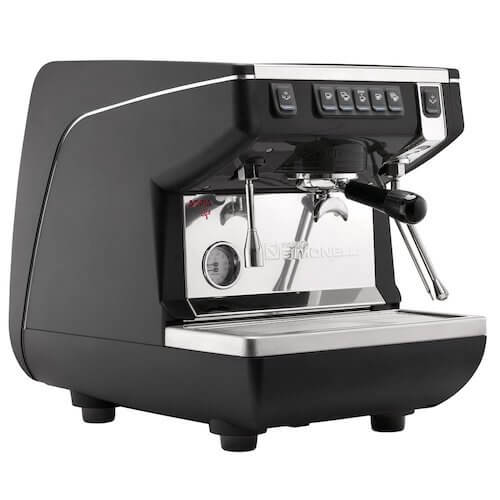
6. Nuova Simonelli Appia Life 1-Group
-
Brew boiler size: n/a
- Steam boiler size: 5 L
- Groups: 1, 2, or 3
- Operation: Auto Volumetric
The Nuova Simonelli Appia models have long been staples in coffee shops, and the new Appia Life continues that tradition. It’s available in semi-automatic, compact, and volumetric versions, but if ease of use is your priority, the latter is the one for you.
The Appia Life is ideal in a scenario where extensive barista training isn’t a priority, like a restaurant, hotel, or office. It allows virtually anyone can produce reliably incredible espresso. You might also consider the Unic Mira. It’s a similar machine around the same price, though, to my eye, it’s much less attractive.
Each group has four programmable shot buttons, and an upgrade to the XT version adds a digital display, making programming even easier. You also have the option to add the brand’s Easy Cream automatic frothing system.
The name of the new Appia Life comes from Nuova Simonelli’s increased focus on sustainability. Independent analysis confirms that it is 13% more energy efficient and has 20% less environmental impact than previous models.
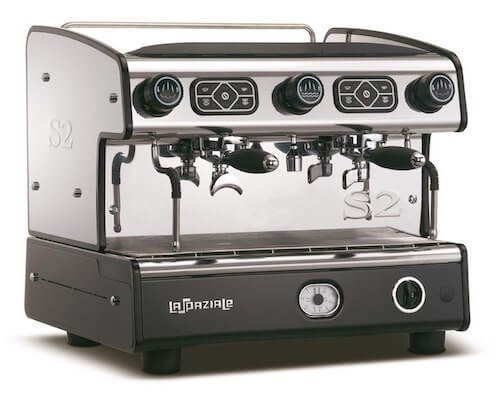
7. La Spaziale S2 EK Spazio 2-Group
-
Brew boiler size: n/a
- Steam boiler size: 5 L
- Groups: 2
- Operation: Auto Volumetric
The La Spaziale S2 Spazio 2-Group is the little brother of the famous S2, and aside from a slightly smaller 5-liter boiler, it matches its larger counterpart in nearly every way. And it’s priced about the same as the single-group Linea Mini.
The S2 Spazio uses the same copper heat-exchange boiler and volumetric dosing system as the S2 but with a lower price and smaller footprint. I noticed that La Spaziale has cleverly added extra long steam arms with more range of motion, so even with this compact design, two baristas can comfortably work side by side.
This S2 is available in a volumetric (EK) or semi-automatic version (EP). The volumetric model allows a more efficient workflow in high-volume settings because dosing can be pre-programmed. That said, the semi-automatic option is a great choice if you have skilled staff because it leaves more control in the hands of the barista and comes at a lower price point.
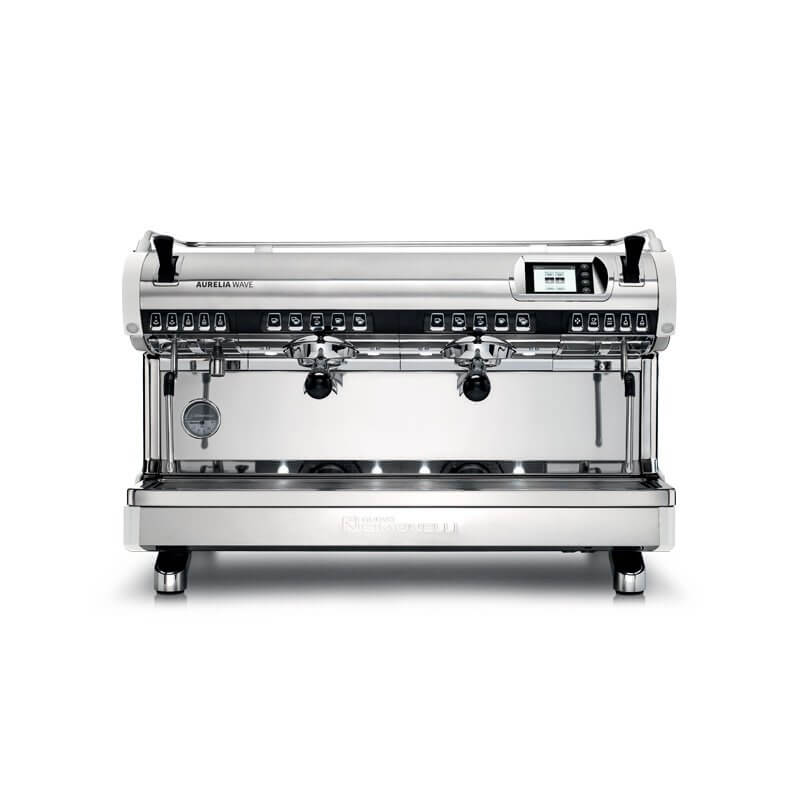
8. Nuova Simonelli Aurelia Wave Volumetric 2-Group
-
Brew boiler size: n/a
- Steam boiler size: 14 L
- Groups: 2 or 3
- Operation: Auto Volumetric
A beautiful espresso machine can easily serve as the focal point of a cafe, and the iconic Nuova Simonelli Aurelia Wave is the perfect example. The defining style feature is the distinct wave shape of its side profile. It’s available in matte black, pearl white, or glossy red, or can be customized in a thousand ways to match your decor.
The Aurelia is much more than just a pretty face – which should be no surprise given its elevated price point. Its real claim to fame is that it’s built on the platform of the official World Barista Championship espresso machine.
Each group has four programmable shot volumes managed via the large LCD display. You can also program boiler temperature, on/off time, cleaning functions, hot water temperature, access various other smart features, and use the display as a timer. While I was initially overwhelmed by all the options, I quickly realized how much a machine with this level of technology improves efficiency in a busy space.
The latest version of the Wave offers the new Smart Water Technology to monitor water quality. In an era when the importance of water for coffee is becoming more apparent, I’m happy to see brands like Nuova Simonelli keeping pace.
9. Bezzera Magica
-
Brew boiler size: n/a
- Steam boiler size: 2 L
- Groups: 1
- Operation: Semi-Automatic
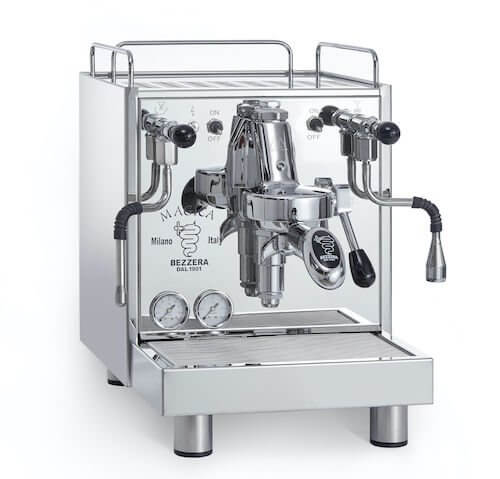
Bezzera was the first company to patent an espresso machine in the early 1900s, and I always feel like their century-plus of experience is clear in the quality of their products. The Bezzera Magica combines the best of classic, time-tested elements with modern, practical features.
The Magica uses the industry-standard E61 group head coupled with a copper heat-exchange boiler, so you can pull a shot and steam milk simultaneously. Two gauges on the front panel allow you to monitor boiler and pump pressure, making it easy to achieve consistent results.
It’s a semi-automatic machine, so it requires a bit more barista skill and attention than an automatic, which I why I suggest it for lower-volume settings. The steam and hot water wands are operated with ergonomic joysticks rather than knobs, something I always appreciate when making a lot of consecutive drinks.
The mirror-polished stainless steel casing adds a touch of glamor to your set-up and is ultra-durable, which is essential if you plan on regularly transporting it to and from gigs.
Though the Bezzera Magica is small compared to most commercial machines, its 4-liter water reservoir is one of the largest in its class – perfect for mobile businesses like catering companies or espresso carts, where plumbing isn’t an option.
How to Choose the Right Commercial Espresso Machine for A Coffee Shop
Commercial espresso machines exist to keep up with the requirements of a café business. Even the smallest ones are very different from home espresso machines, especially the ones made for beginners. They also have different specs from espresso machines for office use.
The espresso machine you buy can significantly impact your business, just like choosing the right name for your coffee shop. So you don’t want to rush this decision. I recommend reading up on how espresso machines work and then considering the four factors below.
1. Semi-Automatic Vs Automatic?
Professional coffee makers have come a long way from the days of steam-powered coffee machines (1). What once was a painstaking process of manually operating heavy levers has become a breeze with today’s semi-automatic and automatic machines.
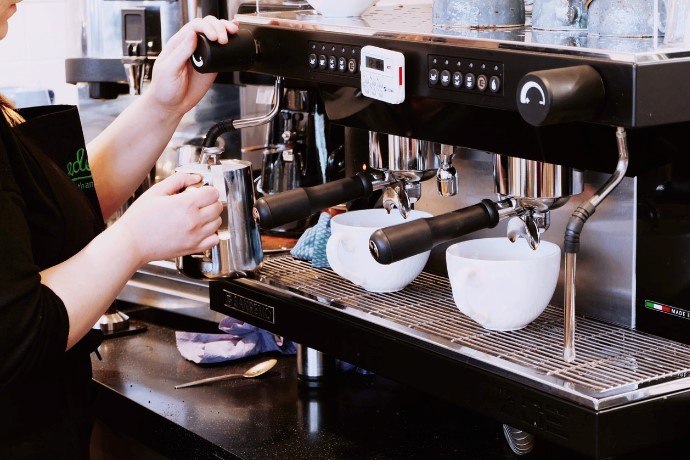
An automatic machine, often called volumetric or auto volumetric, provides greater efficiency and ease of operation. These machines have built-in flowmeters that stop a shot automatically at a pre-programmed volume.
Some of the fancier versions are gravimetric rather than volumetric. They use built-in scales to stop the shot at a preset weight, which is even more reliable than dosing by volume.
The advantages of an automatic machine are that it improves consistency and frees the barista to multitask or interact with customers, which is particularly valuable in a busy shop. More automation also limits the need for extensive staff training (2).
A semi-automatic machine is perfect if you have skilled baristas and want to give them the freedom to tweak the extraction process manually, especially if you don’t foresee serving hundreds of cups of coffee daily. These models are less expensive and add a touch of craft that lends your café a brand image that will appeal to serious coffee lovers.
Super-automatic machines include a built-in grinder and take charge of puck prep and extraction. They’re best in situations where consistency and efficiency trump quality (think Starbucks), and I haven’t recommended any on this list.
2. Capacity of the Espresso Machine
The capacity of the commercial espresso machine you should choose depends on the scale of your business (3). If your capacity is too low, the machine won’t be able to keep up with demand, leading to frustrated customers and baristas. If the capacity is too high, you’re wasting money and counterspace.
Will your café be serving hundreds of ‘to-go’ cups every day? Are you a local roastery serving specialty brews to a small number of discerning customers? How much space do you have to store the machine? How many baristas do you want to be able to operate the machine simultaneously?
The machine’s capacity is dictated by the number of groupheads and the size of the boiler.
Most professional coffee machines have 1, 2, 3, or 4 group heads. The number of groups dictates how many baristas can work the machine and how many drinks can be made simultaneously.
Boiler capacity should be large enough to provide enough hot water during peak hours. You don’t want to be waiting for the boiler to refill and reheat as a line snakes out the door. Usually, the more number of heads a machine has, the larger its boiler capacity.
3. Ease Of Use and Maintenance
As with all professional, high-performance equipment, maintenance is a key issue. This refers to everyday routines like cleaning the machine and the ease of getting it repaired in case of technical issues.
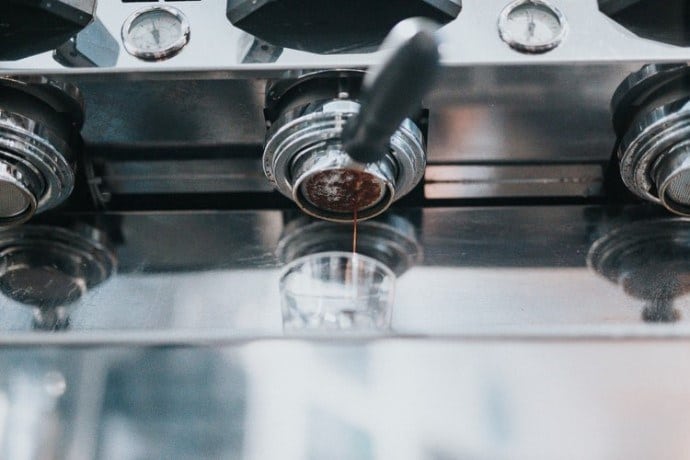
Almost all automatic espresso machines on the market today are designed to free you and your staff from the menial tasks of everyday maintenance. However, it is worth researching the practical aspects of each individual model.
Machines with more automation tend to have self-cleaning cycles, water monitoring, and alerts that inform you what’s needed and when. The trade-off is that automatic machines with digital screens and in-built computers can be more complicated to service if something goes wrong.
The old expression, “An ounce of prevention is worth a pound of cure,” applies very well to commercial espresso machines. Buy a machine with a reputation for durability, choose a seller with a reputation for excellent service, and stick to the manufacturer’s recommended cleaning and maintenance cycles.
4. The Espresso Shot
I saved the most important for last. After you’ve narrowed your choice to two or three machines based on the factors above, I recommend finding a place to see the machine in action and taste the results. While I’ve personally tried and enjoyed shots from every model recommended above, my palate is not yours – and this is a big investment.
You may also want to consider the types of coffee beans you plan to feature and the drinks on your menu. Some machines do a better job with different roast levels.
THE VERDICT
The bottom line is that buying a commercial espresso machine is a significant investment, perhaps the biggest you’ll make for your cafe. So it’s worth taking some time to consider your options. I hope this article is a helpful starting point that will guide you in the right direction.
Every machine in this review can produce delicious espresso with minimum fuss, and the best choice depends on your specific business requirements, personal preferences, and budget.
If I had to choose an overall favorite, it would be the La Marzocco Strada AV. It’s not cheap, but you’re paying for incredible quality, a barista-friendly design, and an iconic style. Putting a Strada front and center in your cafe immediately identifies you as a place to enjoy incredible espresso.
FAQs
How much does a commercial espresso machine cost?
The cost of a commercial espresso machine can vary widely depending on features, capacity, quality, and brand. At the cheapest, you’re looking at $1,000 for a single-group prosumer machine with a commercial rating. From there, prices can easily reach $40,000+ for a multi-group automatic machine from a premium brand. Plus you need to budget for big and small accessories, like a commercial coffee grinder, knock boxes, and demitasse cups.
Why are commercial espresso machines so expensive?
Commercial espresso machines are some of the most expensive coffee machines because they are built to handle the heavy workload of a busy cafe. They use heavy-duty components and often have multiple groups. Building such a machine and getting it commercially certified means adhering to stringent engineering and safety standards that come at a steep price.
How much does it cost to open a coffee shop?
The costs of opening a coffee shop depend on many factors, including your menu, location, and local regulations. A conservative estimate for a sit-down cafe is $50,000 to $80,000, but this can easily run to half a million (4).
References
- Stamp, J. (2012, June 19). The Long History of the Espresso Machine. Retrieved from https://www.smithsonianmag.com/arts-culture/the-long-history-of-the-espresso-machine-126012814/
- Peaberrys Coffee Roasters. (2016, February 23). The Importance Of Cafe Staff Training. Retrieved from https://www.peaberrys.com.au/the-importance-of-cafe-staff-training/
- Rossi, R. (2018, October 3). What You Need to Know Before Buying an Espresso Machine. Retrieved From https://perfectdailygrind.com/2018/10/what-you-need-to-know-before-buying-an-espresso-machine/
- Neugarten, J. (2023, April 6). How to Run Your Own Coffee Shop. Retrieved from https://www.investopedia.com/articles/personal-finance/010816/economics-owning-coffee-shop.asp
