How to Store Coffee Beans Properly to Keep Them Fresh Longer
You’ve just picked up a bag of single-origin Ethiopian Yirgacheffe from your local roaster, or maybe you’ve splashed out on a subscription from a specialty roastery like Pact Coffee or Rave Coffee. Either way, you want that bag to taste just as good on day fourteen as it did on day one. The problem is, most people unknowingly sabotage their coffee the moment they get home. Improper storage is one of the most common reasons a decent bag of beans turns flat, stale, or downright disappointing long before it should.
This guide covers everything you need to know about storing coffee beans properly — from the science behind why beans go stale, to the practical steps you can take in a typical British kitchen to keep your coffee tasting its best for as long as possible.
Why Coffee Beans Go Stale in the First Place
To store coffee well, it helps to understand what you’re actually protecting against. Coffee beans have four main enemies: oxygen, moisture, light, and heat. Once roasted, beans are essentially in a slow state of decay — that’s not being dramatic, it’s just chemistry. The roasting process drives out moisture and creates hundreds of volatile aromatic compounds that give coffee its flavour. Those compounds begin evaporating almost immediately after roasting, and exposure to the elements speeds that process up considerably.
Oxidation is the biggest culprit. When coffee comes into contact with oxygen, the oils on the surface of the bean begin to break down. You’ll notice this if you’ve ever tasted a bag that’s been left open for a week — there’s a flatness to it, a kind of cardboard quality that wasn’t there before. Moisture compounds the problem by introducing conditions that accelerate the breakdown of those same oils and can even lead to mould in extreme cases.
Light, particularly direct sunlight, degrades the chlorogenic acids in coffee and contributes to rancidity. And heat — which is relevant in most British kitchens where the counter next to the kettle seems like the obvious place to keep coffee — accelerates all of the above.
How Long Do Roasted Coffee Beans Actually Last?
This is where a lot of people have unrealistic expectations. Roasted coffee beans are at their absolute peak between about four days and three weeks after the roast date. Most specialty roasters in the UK print a roast date on their bags, not a “best before” in the traditional sense, and that’s intentional — it’s an indicator of freshness, not safety.
Whole beans stored correctly in a sealed, opaque container at room temperature will remain very drinkable for up to a month after roasting, and acceptable (though noticeably less vibrant) for up to two months. Ground coffee degrades far faster — within a day or two of grinding, you’ll lose a significant amount of the aroma and complexity that made the beans worth buying in the first place. That’s why grinding fresh, just before brewing, makes such a noticeable difference.
Supermarket coffee with a long shelf life is typically either heavily roasted (which masks staleness) or packed using specialised nitrogen flushing, which displaces oxygen inside the bag. Neither of these is an indication that the coffee is fresher — it simply means it’s been preserved differently.
The Best Containers for Storing Coffee Beans
Airtight, Opaque Canisters
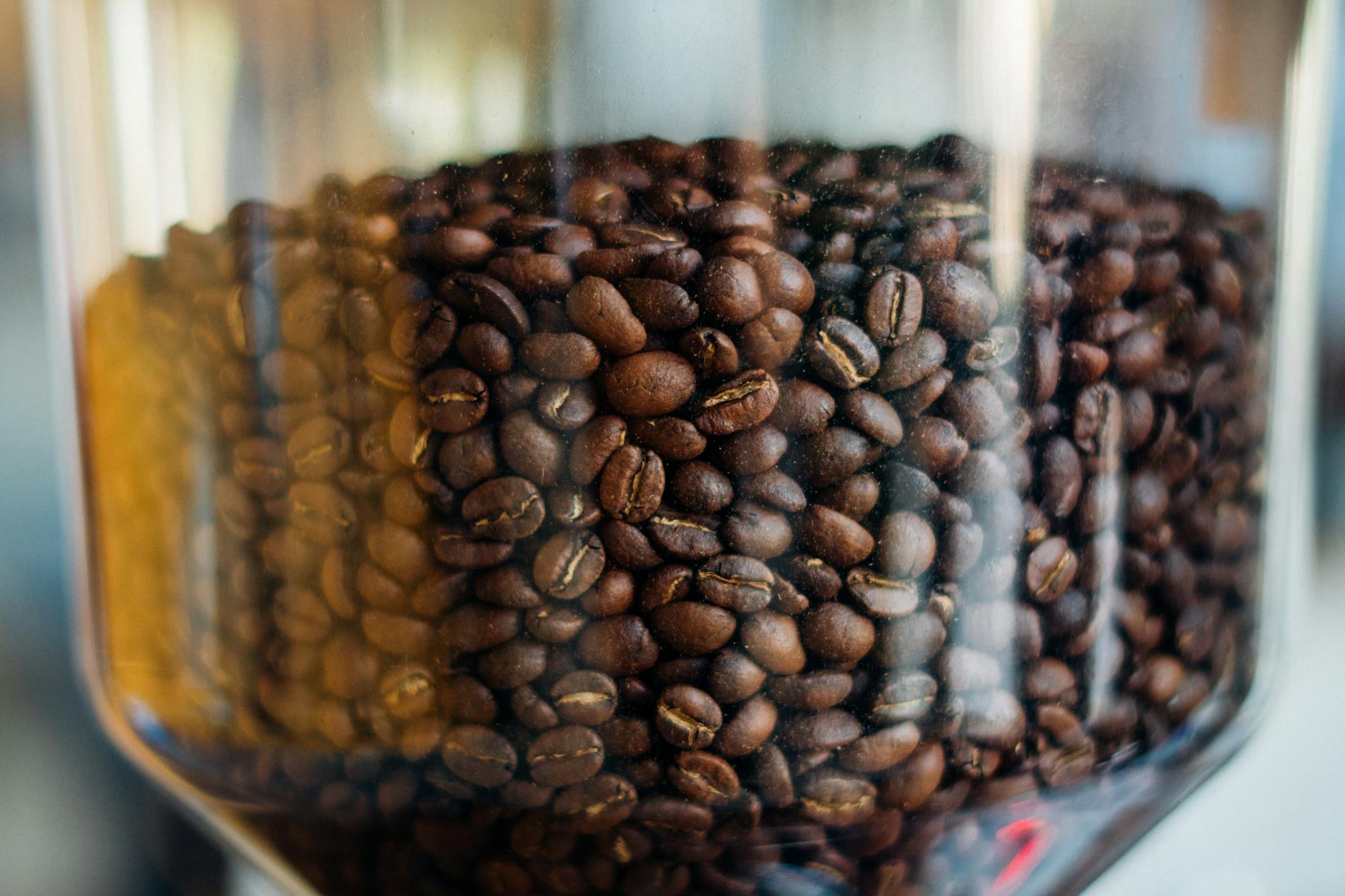
The gold standard for home storage is an airtight, opaque canister kept at room temperature. There are plenty of options available in the UK across a wide price range. Kilner jars are popular and widely available from places like John Lewis, Lakeland, or Amazon UK, typically costing between £8 and £15. They’re airtight and look good on a counter, but they’re clear — so you’d want to keep them in a cupboard rather than on display.
Dedicated coffee canisters with CO2 valves, like those from Airscape or Fellow, are a better option if you’re serious about freshness. These canisters have a plunger or valve mechanism that pushes out excess air as you close them, reducing the oxygen exposure significantly. The Fellow Atmos, for example, retails in the UK for around £35–£45 and is genuinely effective. The Airscape range starts from around £25 and is available from specialty coffee shops and online retailers.
The Original Bag
Many specialty roasters — including Has Bean, Square Mile Coffee, and Climpson & Sons — package their beans in resealable bags with one-way degassing valves. These valves allow CO2 (which is naturally released by freshly roasted beans) to escape without letting oxygen in. If your bag has one of these valves and a proper resealable zip, it’s actually a perfectly decent storage solution in the short term. Roll the top of the bag down tightly after each use and clip or seal it firmly.
The key word there is short term. Once you’re past the first week, transferring the beans to a proper canister is a worthwhile step, particularly if your kitchen is warm.
Avoid These Common Mistakes
- Clear glass jars on the counter: They look attractive, but light exposure degrades the coffee. If you use a glass jar, keep it in a cupboard.
- Leaving the bag loosely folded: A bag that’s not properly sealed allows air in constantly. Even a few hours of exposure makes a difference over the life of the bag.
- Using a container that previously held something strong-smelling: Coffee is highly porous and absorbs odours readily. A canister that held herbs, spices, or anything else will taint your beans.
- Storing in a container that’s too large: The more air space above the beans, the more oxygen exposure. Match your container size to your quantity of beans.
Should You Store Coffee in the Fridge?
This is probably the most hotly debated topic in home coffee storage, and the answer — for whole beans you’re using regularly — is no. The fridge introduces several problems. First, condensation. Every time you take your beans out, the temperature difference between the cold container and the warm kitchen air causes moisture to form on the surface of the beans. That moisture accelerates staling and can affect extraction. Second, fridges are full of odours. Even in a sealed container, there’s a risk of your coffee picking up hints of last night’s curry or the cheese in the back of the dairy drawer.
The fridge is also simply unnecessary if you’re buying the right quantities and storing correctly at room temperature. If your kitchen regularly hits above 25°C — unusual in most of the UK, admittedly, but possible in a south-facing flat in summer — then a cool, dark cupboard is a better solution than the fridge.
What About Freezing Coffee Beans?
Freezing is a different matter, and when done correctly, it’s actually a legitimate long-term storage solution. The key distinction is that freezing is for beans you won’t be using for a while, not for your daily supply.
If you’ve bought a larger quantity — perhaps you found a fantastic roast at a trade show like London Coffee Festival, or a roaster you love ran a promotion — you can freeze a portion for later use. The rules are straightforward:
- Divide the beans into single-use portions before freezing, using small airtight bags or containers. Never refreeze beans that have been thawed.
- Use a proper freezer bag with the air squeezed out, or a vacuum-sealed bag if you have one. Freezer burn is caused by air exposure, not by the cold itself.
- When you’re ready to use a portion, take the bag out and leave it on the counter — still sealed — to come to room temperature before opening. This prevents condensation forming on the beans.
- Use within a day or two of thawing, just as you would with freshly roasted beans at peak freshness.
Some specialty coffee professionals and home enthusiasts use a technique called “freezer portioning” routinely, even keeping their regular supply frozen in weekly portions. For the average home brewer, it’s probably more effort than it’s worth unless you’re buying in bulk or have access to coffee that isn’t easy to reorder.
Where to Keep Your Coffee in a Typical British Kitchen
British kitchens vary wildly in size and layout, but most have a few things in common: a kettle (often on the counter near the wall), a toaster nearby, and frequently some form of central heating radiator on an adjacent wall. These are exactly the conditions you want to avoid for coffee storage — warm, potentially humid, and often near a window.
The best spot in most UK kitchens is a cupboard that:
- Is away from the oven, hob, and kettle
- Isn’t directly above a radiator or on an external wall that gets direct afternoon sun
- Stays at a relatively consistent temperature — ideally between 15°C and 20°C
- Is dry and not prone to steam (so not the cupboard directly above the kettle or beside the dishwasher)
A larder cupboard, a higher shelf in a cooler part of the kitchen, or even a dedicated spot in a pantry if you’re lucky enough to have one — all of these work well. The point is consistency. Coffee handles a slightly warm environment better than it handles constant temperature fluctuations.
Buying Habits Matter as Much as Storage
Even the best storage system can’t fix the problem of buying too much coffee at once. One of the most practical changes you can make is simply buying in smaller quantities, more frequently. A 250g bag from a specialty roaster will typically cost between £8 and £14 in the UK depending on the origin and roast profile, and at a consumption rate of two espressos a day, it’ll last a single person about two weeks — which is well within the optimal freshness window.
Buying a 1kg bag might seem economical, but if it takes you six weeks to finish, the second half will be considerably less enjoyable than the first, regardless of how well you store it. For households brewing multiple cups a day, larger quantities make more sense. For solo drinkers, smaller and more frequent purchases almost always produce a better result in the cup.
Coffee subscriptions have become genuinely popular in the UK, and one of their underappreciated benefits is that they encourage regular, right-sized purchasing. Services like Pact Coffee, Batch
Coffee and Rave Coffee can be particularly useful because they let you tailor delivery frequency and bag size to match your actual consumption. That means fewer stale leftovers languishing at the back of a cupboard and a much better chance of brewing coffee while it is still within its ideal freshness window.
It is also worth thinking about how your brewing method affects storage decisions. Espresso drinkers often go through beans faster, which makes buying slightly larger bags more practical. If you brew only at weekends with a cafetière or V60, smaller bags are the wiser choice. Matching your purchase size to your habits is one of the simplest and most effective ways to preserve quality without overcomplicating your routine.
If you do buy more coffee than you can reasonably use within a few weeks, freezing can be a sensible backup option. The key is to do it properly. Divide the beans into small, airtight portions before freezing so you only remove what you need each time. Avoid repeatedly opening and refreezing the same bag, as that introduces moisture and temperature fluctuations that can damage flavour. When you are ready to use a frozen portion, let it come fully to room temperature before opening the container to prevent condensation forming on the beans.
Just as importantly, resist the temptation to store beans in the fridge. Refrigerators are humid environments full of odours, and coffee readily absorbs both moisture and smells. Even the best packaging struggles in those conditions. A cool, dark cupboard away from the oven, radiator and direct sunlight is a far better everyday home for your beans.
In practical terms, proper coffee storage is fairly simple: keep beans whole until needed, protect them from air, light, heat and moisture, and buy only as much as you can enjoy while it is still tasting its best. A good airtight container and sensible buying habits will do more for freshness than any gimmick. Treat your beans with a bit of care, and every cup will reward you with more aroma, more sweetness and a noticeably better brew.